The Hidden Cost of Coordination in Finance
UK businesses are losing significant time each month to manual finance administration, a frustration quantified by recent fintech research. While headlines often point to spreadsheets as the culprit, the reality is far more nuanced. Spreadsheets are rarely the root cause of this inefficiency. Instead, the problem lies in the intricate web of handoffs, exception handling, approval processes, and evidence verification that characterize modern finance work. These complex sequences are poorly modeled by any single, isolated system.
This distinction is critical for engineers developing financial products. Simply replacing a clunky spreadsheet with a sleek dashboard doesn't eliminate the underlying manual effort. Often, it merely transfers the same reconciliation, chasing, and review tasks into a more aesthetically pleasing interface. The true target for automation and improvement should be the workflow that surrounds the numbers, not just the presentation of the numbers themselves.
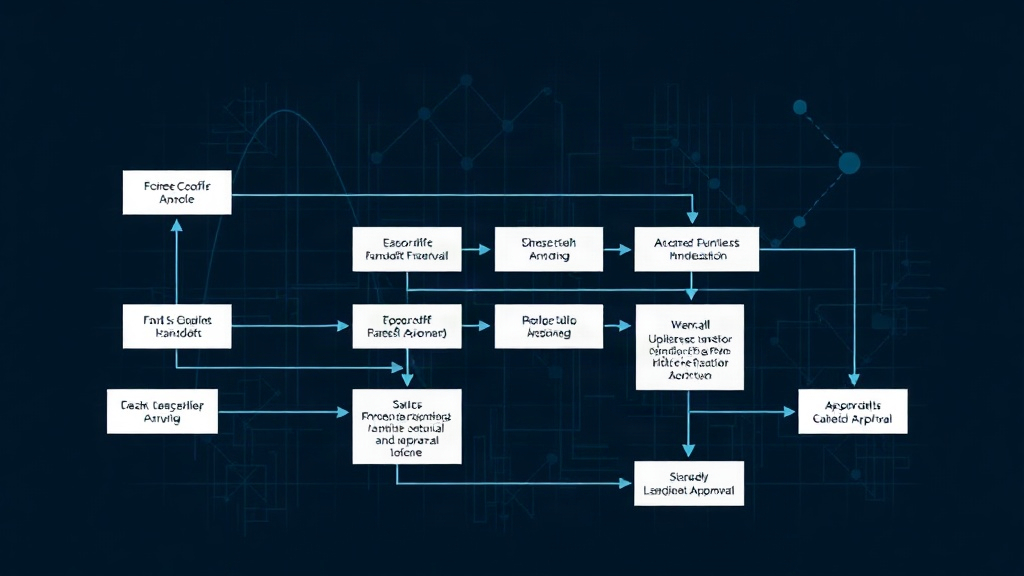
Consider a common scenario: processing a routine supplier payment. This process typically involves multiple individuals and systems. One person might download a bank statement, another verifies an invoice against purchase orders, a third person might query whether the expenditure was properly approved, and a manager then reviews any exceptions, often through informal channels like chat threads. The final payment authorization is a culmination of these fragmented steps. The real cost isn't in the data entry or the calculation; it's in the coordination, communication, and the time spent chasing down information and approvals across disparate tools and people.
Beyond the Spreadsheet: Rethinking Financial Workflows
The core issue is that financial operations are inherently sequential and relational. They involve a chain of dependencies where one task cannot be completed until another is finished, and each step requires verification or approval from different stakeholders. Traditional financial software, from accounting packages to ERP systems, often focuses on specific functions—general ledger, accounts payable, accounts receivable—but struggles to model the end-to-end workflow. They operate in silos, requiring manual data extraction and re-entry to move information between them, or relying on manual processes to bridge the gaps.
For instance, a company might use an accounting system for bookkeeping, a separate tool for expense management, and a third for payroll. When a supplier invoice arrives, it needs to be matched against a purchase order (potentially in an ERP), approved by a department head (perhaps via email or a workflow tool), and then entered into the accounting system for payment. Each of these steps involves handoffs, potential delays, and the risk of errors. The spreadsheet, in this context, often becomes a de facto workflow tool—a place where people consolidate information from various sources, track statuses, and manage approvals because no other system adequately supports the entire process.
This reliance on spreadsheets for workflow management creates several problems. Firstly, it leads to data fragmentation and inconsistencies. Information is duplicated, updated in multiple places, and prone to errors. Secondly, it obscures accountability. When a process breaks down or an error occurs, it can be difficult to pinpoint exactly where in the chain the failure happened. Was it the invoice entry, the approval, or the payment processing? Thirdly, it hinders scalability. As a business grows, the volume of transactions and the complexity of approvals increase, quickly overwhelming manual spreadsheet-based processes.
The Engineering Challenge: Modeling Coordination
For product teams in fintech and enterprise software, the challenge is to build systems that understand and manage these complex workflows. This means moving beyond data presentation and focusing on process orchestration. It requires tools that can:
- Model Dependencies: Clearly define the sequence of tasks and the conditions under which each can proceed.
- Automate Handoffs: Seamlessly pass information and tasks between different users, teams, or even systems.
- Manage Exceptions: Provide clear pathways for identifying, flagging, and resolving deviations from the standard process.
- Integrate Evidence: Link supporting documents, approvals, and audit trails directly to the relevant transaction.
- Provide Visibility: Offer real-time status updates on where each transaction is in the workflow, for whom.
Building systems that excel at this level of process orchestration is significantly more complex than creating a reporting dashboard. It requires a deep understanding of business logic, user roles, and the intricate interdependencies that define financial operations. It’s about engineering the coordination itself.
What This Means for the Future of Finance Tools
The implication for engineers and product managers is clear: the next generation of financial tools must prioritize workflow automation over simple data visualization. This means developing platforms that can act as central orchestrators, integrating with existing systems (like accounting software, CRMs, and banking APIs) to manage the entire lifecycle of financial processes. These tools need to be flexible enough to accommodate the exceptions and variations that are inevitable in real-world business operations, but structured enough to ensure consistency and compliance.
Companies that successfully tackle this workflow automation gap will not only reduce the administrative burden on finance teams but also improve accuracy, enhance compliance, and enable faster decision-making. It's a shift from presenting numbers to managing the processes that generate and validate those numbers. The automation gap isn't about making spreadsheets prettier; it's about fundamentally redesigning how financial work gets done.