
The Memory Challenge in Large-Scale Systems
Operating at internet scale demands relentless optimization of resource utilization. For Cloudflare, a company at the forefront of web performance and security, memory management is a constant battleground. Even seemingly small inefficiencies can balloon into massive infrastructure costs when multiplied across petabytes of data and millions of requests. The recent initiative to reclaim 100 terabytes of RAM is a testament to this ongoing effort, showcasing how algorithmic thinking and modern tooling can yield dramatic savings.
The core of the problem lay within a specific system component responsible for managing a large in-memory data structure. While the exact nature of this component is not detailed publicly, its function is critical enough to warrant significant memory allocation. As systems evolve and data volumes grow, the naive approach of simply adding more hardware to accommodate increased memory footprints becomes unsustainable. This is where Cloudflare's engineering team turned to mathematical principles and efficient implementation to solve the problem. The goal was not just to reduce memory consumption but to do so without compromising performance or reliability—a common trade-off in optimization efforts.
Algorithmic Innovation for Memory Efficiency
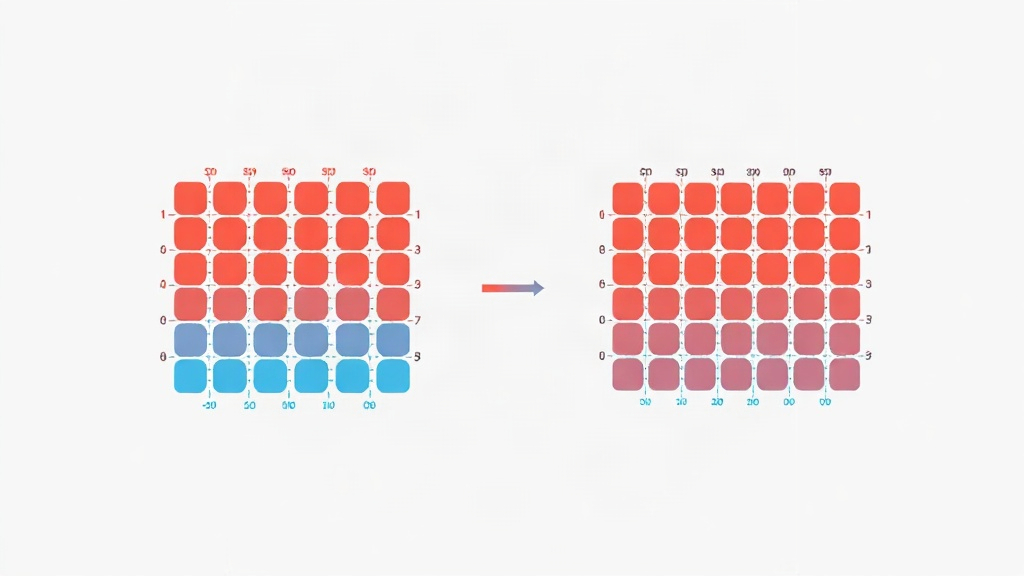
The breakthrough didn't come from a new hardware paradigm or a revolutionary database technology. Instead, it stemmed from a deep dive into the underlying algorithms governing how data was stored and accessed. Think of it less like upgrading to a bigger warehouse and more like redesigning the inventory system so that fewer shelves are needed, and items are easier to find. The engineers identified opportunities to represent the data more compactly, reducing redundancy and improving cache locality. This often involves exploring probabilistic data structures or more efficient serialization formats that can encode information with fewer bits.
One key area of focus would likely be the trade-offs between accuracy and memory footprint. Many large-scale systems utilize approximate data structures, like Bloom filters or HyperLogLog, which offer significant memory savings by accepting a small, controllable probability of error. By refining these structures or developing novel variants, it's possible to achieve greater compression. Another avenue is re-evaluating the indexing strategies. A well-designed index can drastically reduce the amount of data that needs to be read into memory at any given time. The team likely spent considerable effort analyzing access patterns and redesigning indices to be more space-efficient while maintaining fast lookups.
The Role of Rust in Implementation
While the algorithmic insights are crucial, translating them into a high-performance, memory-efficient implementation is equally important. This is where the choice of programming language becomes significant. Cloudflare's adoption of Rust for this optimization effort is strategic. Rust offers a unique combination of low-level control, memory safety without a garbage collector, and excellent performance characteristics. Unlike languages with automatic garbage collection, Rust allows developers to manage memory precisely, preventing the unpredictable pauses and overhead that garbage collectors can introduce.
The memory safety guarantees of Rust are particularly valuable in large, complex systems where bugs can lead to critical failures. Developers can reason about memory usage with confidence, knowing that the compiler will prevent common pitfalls like use-after-free errors or buffer overflows. This enables engineers to push the boundaries of performance and memory optimization without sacrificing the robustness required for a global service. The language's concurrency features also likely played a role, allowing the team to build a system that could efficiently utilize modern multi-core processors while managing its memory footprint.
The Magnitude of the Savings
Reclaiming 100 terabytes of RAM is not a trivial feat. To put this into perspective, this is equivalent to the memory capacity of tens of thousands of high-end servers. Such a reduction in memory consumption translates directly into substantial cost savings on hardware, power, and cooling. It also frees up valuable resources that can be repurposed for other critical functions, such as handling more traffic, improving latency, or enabling new features. This kind of optimization is a continuous process for companies like Cloudflare, where even marginal gains can have a significant impact on the bottom line and operational efficiency.
The surprising detail here is not just the sheer volume of RAM saved, but the fact that such a significant reduction was achieved through a combination of mathematical insight and careful implementation, rather than a fundamental shift in infrastructure. It underscores the principle that in computer science, elegant solutions to algorithmic problems can often yield more impactful results than brute-force hardware scaling. What remains unaddressed is the specific technical domain where this optimization was applied, leaving room for speculation about its broader applicability across Cloudflare's vast service portfolio.
Broader Implications for Large-Scale Systems
Cloudflare's achievement serves as a powerful case study for any organization managing large-scale distributed systems. It highlights that significant gains in efficiency are often found not in the latest buzzword technologies, but in a rigorous application of computer science fundamentals. Developers and system architects should look to their algorithms and data structures first when facing resource constraints. The choice of implementation language, as demonstrated by the use of Rust, can be a critical enabler for achieving these optimizations safely and effectively.
For companies operating at scale, continuous profiling and optimization of memory usage should be a core part of the engineering culture. This isn't a one-time fix but an ongoing process of refinement. By investing in deep understanding of system behavior and algorithmic design, organizations can unlock substantial cost savings and performance improvements, ensuring their infrastructure remains competitive and sustainable in the long run. The success of this initiative suggests that similar opportunities may exist within other components of Cloudflare's infrastructure and across the industry.