
The Quiet Deployment That Wasn't
Sunday night deployments are typically reserved for low-traffic windows, a strategic choice to minimize risk during critical changes. This particular deployment was scheduled for such a slot, aiming to rename a single column, legacy_flag, to status_code. This was part of a larger, long-overdue cleanup effort. The migration script itself was technically correct, but the fundamental issue was that it never executed in production.
The root cause lay in the application's configuration properties file. A setting intended solely for the staging environment, spring.flyway.enabled=false, had been inadvertently copied into the production configuration months prior. This oversight, stemming from an inadequately audited environment setup, effectively disabled Flyway, the database migration tool. Consequently, the intended schema change was never applied.
Hibernate Fills the Gap
With Flyway disabled, the application startup process proceeded without the expected schema modification. This is where the second critical misconfiguration came into play: spring.jpa.hibernate.ddl-auto=update. This setting, also meant only for staging, instructs Hibernate to inspect the mapped domain objects at application startup and automatically alter the database schema to match. In essence, Hibernate became the de facto schema manager for production, a role it was never intended to play in that environment.
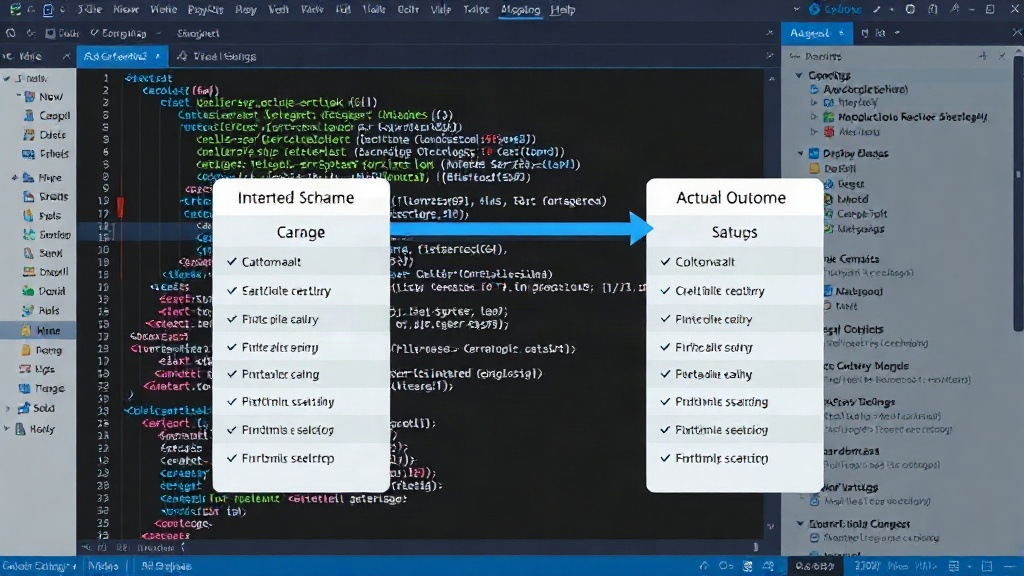
As Hibernate analyzed the domain objects, it detected a discrepancy. The application code expected a column named status_code, but the database schema, having not run the Flyway migration, still contained the old legacy_flag column. To reconcile this, Hibernate, operating under the update mode, did not rename the existing column as the migration script would have. Instead, it created a new column, status_code, alongside the original legacy_flag. The production database, therefore, ended up with two columns representing status information where only one, status_code, was intended.
The Unforeseen Consequences
The immediate impact was a subtle but significant deviation from the expected data model. While the application might have continued to function for some operations, relying on the newly created status_code column, this created a state of data inconsistency and technical debt. Any downstream processes, reporting tools, or other services that relied on the specific schema structure or the presence of only a single, correctly named status column would now encounter errors or produce incorrect results. The cleanup effort, meant to simplify the database, had instead introduced a new layer of complexity and potential fragility.
The problem highlights a common pitfall in managing application configurations across different environments. Settings like ddl-auto=update are invaluable for local development and sometimes staging to quickly iterate on schema changes. However, enabling them in production is exceptionally risky. It bypasses the controlled, auditable process of schema migrations, replacing it with automated, potentially unpredictable database alterations. This can lead to data loss, corruption, or, as in this case, unintended schema drift.
Lessons Learned: Configuration Management and Auditing
This incident underscores the critical importance of rigorous configuration management and regular auditing of environment setups. The practice of copying configuration files between environments without a thorough review is a direct pathway to such errors. Each environment’s configuration should be treated as immutable and specific to its purpose. For production, explicit, version-controlled migration scripts managed by tools like Flyway or Liquibase are the industry standard for a reason: they provide a clear, auditable, and repeatable process for schema changes.
The engineer responsible for the deployment, Kamen Ivanov, detailed the incident on Dev.to, emphasizing the need for better checks and balances. The mistake wasn't malicious or a result of incompetence, but a consequence of a process gap. It serves as a stark reminder that even in quiet deployment windows, the devil is in the details, particularly when it comes to how applications interact with their databases. The scenario begs the question: how many other dormant, environment-specific settings are lurking in production configurations, waiting for a similar quiet deployment to trigger an unexpected outcome?
Preventing Recurrence
To prevent similar incidents, teams should implement several best practices:
- Environment-Specific Configurations: Maintain distinct configuration files or profiles for each environment (development, staging, production). Avoid copying entire files; instead, manage environment-specific overrides carefully.
- Disable `ddl-auto` in Production: Ensure
spring.jpa.hibernate.ddl-autois set tononeorvalidatein production environments. Use dedicated migration tools for schema changes. - Automated Auditing: Implement automated checks that scan configuration files for potentially dangerous settings in production environments before deployment.
- Code Reviews for Configuration Changes: Treat changes to configuration files with the same rigor as code changes, requiring reviews and approvals.
- Rollback Plans: Always have a tested rollback plan for schema changes, even for seemingly simple renames.
This incident, while disruptive, offers a valuable learning opportunity. It highlights that robust development practices extend beyond writing clean code to meticulously managing the environments where that code runs. The silent execution of Hibernate's DDL, spurred by a disabled migration tool and an inappropriate `update` setting, is a potent illustration of how small configuration oversights can lead to significant production issues.