The Problem: Data Silos and Scale
The recurring challenge of ensuring data consistency across systems often hits a wall when dealing with large files. When two systems are expected to produce identical data exports – for instance, a CSV from an old data pipeline versus one from a new one – a simple check becomes an arduous task. This complexity escalates dramatically when files exceed hundreds of thousands of rows, involve comparisons of more than two sources, or contain columns with inconsistent naming conventions across exports.
Traditional tools, relied upon for data validation, falter under these demands. Microsoft Excel, for example, typically buckles after approximately 100,000 rows, rendering it useless for substantial datasets. Command-line utilities like diff or fc are order-dependent and report only one mismatch per line, making them impractical for structured data where row order is irrelevant and multiple differences may exist within a single line. Even powerful libraries like pandas, while capable of handling two files that fit within memory, become cumbersome and inefficient for larger datasets and lack built-in support for comparing more than two files simultaneously. While custom scripts can be written, they often lack reusability and require significant development effort for each new scenario.
This gap in tooling led to the development of duckdiff, a Python package designed to address these specific pain points.
Introducing Duckdiff: N-Way, Order-Independent Comparison
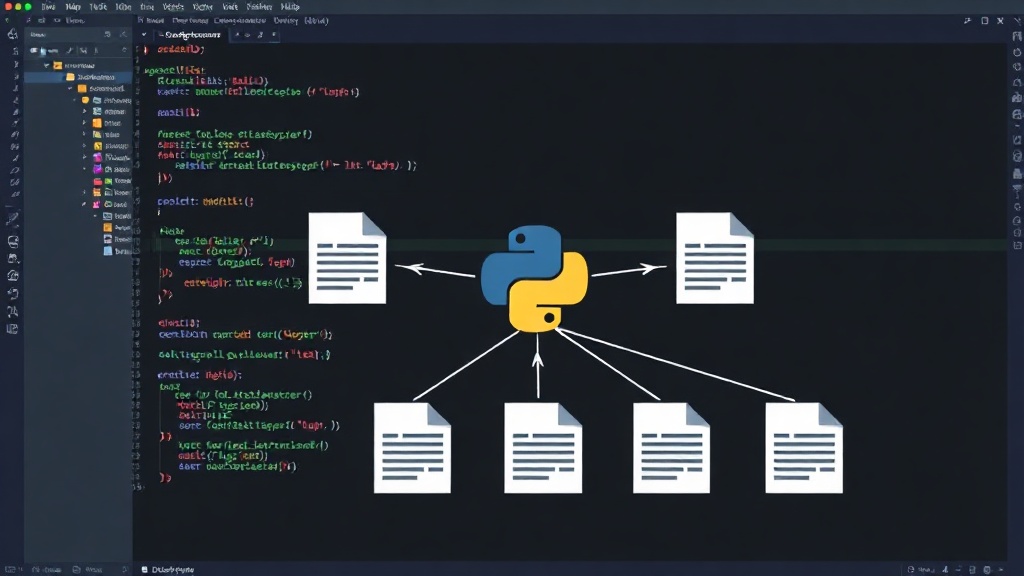
duckdiff is engineered as a Python package specifically for performing N-way, order-independent comparisons of large structured files. It supports common formats such as CSV and TSV, and crucially, it is designed to handle files that exceed the memory capacity of standard tools. The core philosophy behind duckdiff is to provide a robust, efficient, and reusable solution for data validation tasks that are common in data engineering and analysis workflows.
The package's ability to handle N-way comparisons means users can compare three, four, or any number of files simultaneously. This is a significant advantage over tools that are limited to pairwise comparisons. Furthermore, its order-independent nature means that the sequence of rows in the input files does not affect the comparison results. This is fundamental for structured data where the logical content of a row matters, not its position in the file.
Key Features and How They Address Limitations
duckdiff distinguishes itself through several key features that directly counter the shortcomings of existing solutions:
- Large File Handling: Unlike pandas or Excel,
duckdiffis built to process files that do not fit into RAM. It employs techniques that allow it to stream and process data efficiently, making it suitable for datasets measured in gigabytes or even terabytes. This is achieved through chunking and careful memory management, ensuring that even massive files can be compared without crashing the system. - N-Way Comparison Support: The package natively supports comparing multiple files at once. This eliminates the need for complex scripting or sequential pairwise comparisons, which can be error-prone and time-consuming. Users can specify any number of input files, and
duckdiffwill identify discrepancies across all of them. - Order Independence: Row order is not a factor in
duckdiff's comparisons. It uses unique identifiers within the data (or user-defined keys) to match corresponding rows across different files, ensuring that differences are accurately reported regardless of their position. This makes it ideal for comparing data exports where row order can vary due to different processing times or internal ordering mechanisms. - Column Name Normalization:
duckdiffincludes mechanisms to handle variations in column names. Users can provide mappings or rules to normalize disparate column names before comparison, ensuring that logically equivalent columns are compared even if they are labeled differently in the source files. This is a common pain point in integrating data from heterogeneous systems. - Detailed Reporting: The package generates comprehensive reports that clearly outline the differences found. This includes identifying rows that are unique to specific files, rows that have differing values across multiple files, and detailed breakdowns of which columns contain discrepancies. This level of detail is crucial for pinpointing the root cause of data inconsistencies.
Under the Hood: Design Choices for Performance
The performance of duckdiff relies on several strategic design choices. Firstly, it leverages Python's efficient data handling capabilities, often interacting with underlying C libraries for performance-critical operations. When dealing with files larger than memory, duckdiff employs a strategy similar to external sorting algorithms. It reads data in manageable chunks, processes these chunks, and uses hashing or other indexing techniques to group similar rows. For N-way comparisons, it maintains a state across these chunks, accumulating differences as new data streams in. The use of hash-based comparisons for row identification is a key enabler of order independence and scalability. By hashing the relevant columns of a row (or a set of key columns), duckdiff can quickly group identical rows across files without needing to sort the entire dataset.
The choice of Python as the implementation language makes duckdiff accessible to a vast community of developers and data professionals. Its extensibility allows for future support of additional file formats and comparison strategies. The package aims to be a drop-in solution for many common data validation tasks, reducing the need for bespoke scripting and accelerating the data quality assurance process.
The Broader Impact on Data Validation Workflows
duckdiff offers a compelling alternative for scenarios where data integrity is paramount and file sizes push the limits of conventional tools. For data engineers, it provides a reliable method to verify ETL processes and data migrations. For analysts, it ensures that datasets used for reporting and decision-making are consistent and accurate. The availability of a reusable, efficient tool like duckdiff can significantly reduce the time spent on manual data reconciliation and debugging, freeing up valuable resources for more analytical tasks.
The surprising aspect here is not the existence of a new diff tool, but its specific focus on the intersection of large data volumes, multi-file comparisons, and order independence – a combination that existing, widely-used tools largely ignore or handle poorly. This suggests a growing need for specialized data validation utilities as datasets continue to grow and system complexity increases.
What remains to be seen is how duckdiff will integrate into broader data quality frameworks and CI/CD pipelines. Its command-line interface and Python API suggest good potential for automation, but standardized reporting formats and integration patterns will be key to its widespread adoption in enterprise environments.