The Prompt Bloat Problem: When More Tools Mean Less Intelligence
Connecting AI agents to external tools via protocols like Model Context Protocol (MCP) unlocks powerful capabilities. These tools can range from CRMs and observability stacks to email services and internal APIs. However, as the number of connected tools grows, a significant problem emerges: prompt bloat. Instead of a concise description of available tools, the agent receives an overwhelming dump of information akin to a warehouse inventory. This massive context window degrades the agent’s ability to select the correct tool for a given task, leading to inefficiencies and errors.
The initial approach to tool integration often focuses on input validation. Protocols ensure that the data sent to a tool is well-formed JSON, using tools like zod to reject malformed calls. This is essential, but it addresses only one part of the problem. Agents, as probabilistic systems, can generate perfectly valid API calls that are nonetheless incorrect in context. They reason from tool descriptions, not from a deep understanding of documentation or the specific task at hand. This leads to what can be described as well-formed wrong calls, where the payload passes schema checks but still results in the wrong action being taken.
The core issue is not about agents sending garbage data; it's about them misinterpreting the vastness of available functionality. When an agent has access to dozens or even hundreds of tools, simply listing them all in the prompt becomes counterproductive. The language model struggles to parse this deluge of information, leading to incorrect tool selection. This is a problem that typically only becomes apparent when the costs associated with excessive token usage start to mount.
Introducing Switchboard: A Smarter Router for AI Agents
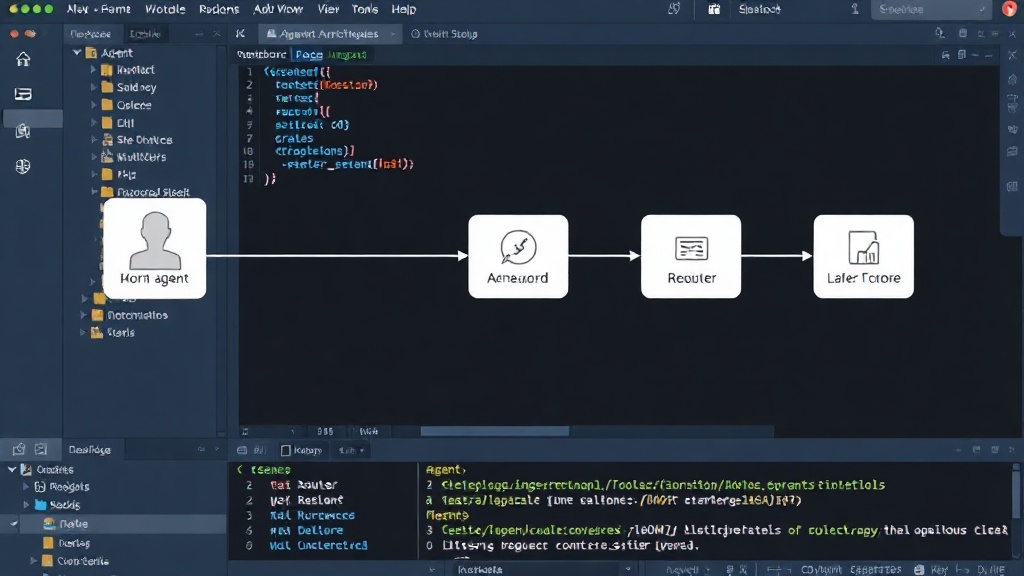
To combat prompt bloat and improve tool selection accuracy, Switchboard has been developed. This tool acts as an intelligent router, sitting between the AI agent and its suite of external tools. Instead of passing the entire tool catalog to the agent in every prompt, Switchboard analyzes the agent’s request and intelligently selects the most relevant subset of tools to present. This dramatically reduces the context window size, allowing the agent to focus on a curated set of options rather than being overwhelmed by a comprehensive list.
The impact of this approach is substantial. In internal testing, a keyword search approach picked the right tool only 21% of the time. Switchboard, however, achieves an 88% accuracy rate in selecting the correct tool. This is a nearly fourfold improvement. Furthermore, the reduction in tokens spent describing tools is staggering. Switchboard cuts token usage by 99.6%, directly translating to significant cost savings and faster response times for AI agents.
Designing for Misuse: Beyond Input Validation
The development of Switchboard also highlights a critical aspect of agent design: accounting for misuse, not just malformed input. An agent’s reasoning process, driven by large language models, is fundamentally different from that of a human developer. While developers read documentation and understand intent, LLMs interpret probabilistic relationships between descriptions and potential actions. This means an agent might correctly identify that a `send_email` tool exists and generate a valid JSON payload to send an email. However, without proper routing or control, it might send an email to the wrong recipient, with inappropriate content, or at the wrong time, simply because the tool description allowed for it.
Effective MCP tool design, therefore, must go beyond schema validation. It requires building tools that are inherently robust against probabilistic interpretation. This involves several key principles:
- Idempotency: Ensure that repeating an operation multiple times has the same effect as performing it once. This is crucial because agents often retry operations automatically.
- Typed, Recoverable Errors: Design error responses to be specific and machine-readable. Agents can then understand and react to errors gracefully, rather than failing catastrophically.
- Granular Permissions and Scoping: Limit the scope of what a tool can do. Instead of a broad `update_crm` tool, consider more specific tools like `update_contact_email` or `add_lead_note`.
- Contextual Awareness: Tools should ideally have some awareness of the current context or state to prevent illogical or redundant actions.
Switchboard addresses this by acting as an intelligent intermediary. By presenting a carefully curated list of tools, it reduces the possibility of the agent selecting a tool that, while technically valid, is inappropriate for the current task. This is akin to a human assistant who doesn't just present every available software application but suggests the most relevant ones for a specific project, thereby preventing the user from making a suboptimal choice.
The Path Forward: Iteration and Optimization
The journey to Switchboard involved identifying and rectifying initial missteps. The problem of prompt bloat and inaccurate tool selection was not immediately obvious, often overshadowed by the initial excitement of enabling agent-tool interaction. The development process highlighted the need for a dedicated routing layer that understands the agent's intent and the capabilities of the available tools at a deeper level than simple keyword matching.
Future iterations will likely focus on even more sophisticated routing algorithms, potentially incorporating agent-specific learning or dynamic tool catalog adjustments based on usage patterns. The goal is to create a system where AI agents can leverage external tools with the same seamless efficiency and accuracy that developers expect from well-designed APIs, without the inherent limitations of overwhelming context windows and the risk of probabilistic misuse.