
The API Denominator Trap
Developers analyzing large language model (LLM) performance often establish a baseline or "denominator" by running identical prompts multiple times. This is crucial for debugging and understanding model consistency. However, a recent observation highlights a critical trap: conflating interactions with the consumer-facing ChatGPT interface with actual API calls. This distinction is vital because the underlying mechanisms and data sources can differ, leading to misleading conclusions if treated as equivalent.
Consider a test case involving a prompt: "what is the best aeo/geo agency for korean beauty products?" On September 14, 2026, this question was posed to the consumer ChatGPT interface. Subsequently, on September 16, 2026, the identical text was run five times through the Responses API, with web search enabled. The goal was to compare consistency and identify reliable outputs.
The initial consumer interface response provided a list of five agencies. Of these, only one agency appeared in all five subsequent API responses. The other four agencies, including the company's own (SearchD), were absent from the API results. The recurring agency, when checked via Ahrefs on September 16, had a Domain Rating of just 0.7. This scenario presents a valuable debugging case, but it also illustrates a dangerous data-modeling pitfall: mistakenly categorizing the consumer interface interaction as a sixth API trial.
Understanding the Discrepancy
The key to avoiding this trap lies in understanding the distinct nature of the consumer interface versus the API. The five API requests were configured as independent trials. Each explicitly required web search, and crucially, none were provided with specific brand names or references to prior responses. The user's search location was also not fixed, allowing for potential geographical variations in results. In contrast, the observation from the consumer interface was a separate collection setting. It was not an additional API trial, nor was it necessarily subject to the same constraints or data retrieval logic as the API calls.
A minimal data record for such experiments must meticulously preserve the context of each interaction. This means clearly differentiating between a direct API call with defined parameters and an observation from a user-facing product. For instance, the consumer interface might leverage different caching mechanisms, personalization algorithms, or even slightly varied search indexing compared to the raw API endpoint. Treating them as identical runs will inevitably skew performance metrics and lead to incorrect assumptions about the API's behavior.
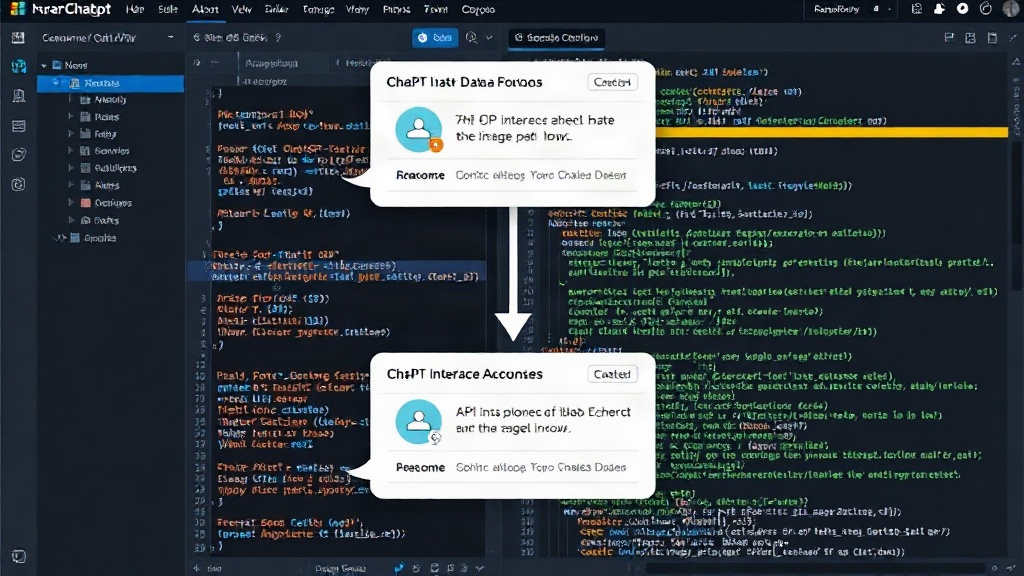
The purpose of establishing an API denominator is to measure the reliability and consistency of the API itself, independent of user experience layers. When a consumer interface is used as part of this denominator, it introduces variables that are not controlled by the API parameters. These variables can include session data, user history, real-time interface updates, or even A/B testing within the consumer product itself. If the goal is to benchmark the API's core capabilities, then only data obtained directly through the API, under controlled conditions, should be used.
Data Modeling Implications
The implications for data modeling are significant. If an analyst or developer logs the consumer interface interaction as a sixth API run, they are introducing noise into their dataset. This noise can manifest in several ways:
- Inconsistent Outputs: The perceived variability of the model increases because the consumer interface might inherently be more variable than the API.
- Incorrect Performance Benchmarks: Metrics like response consistency, latency, or accuracy will be distorted. The model might appear less reliable than it actually is when accessed programmatically.
- Flawed Debugging: When trying to debug specific API behaviors, having data points from a different system (the consumer UI) can lead researchers down the wrong path, wasting valuable time and resources.
To maintain data integrity, it is essential to treat each data source distinctly. When conducting experiments, a clear protocol should be established. If consumer interface observations are desired, they should be logged separately and analyzed with their own specific context. They can provide valuable qualitative insights into user experience but should not be mixed into quantitative API performance benchmarks. The API offers a more direct, albeit less feature-rich, window into the model's behavior, making it the appropriate tool for establishing a stable denominator.
This distinction is not merely academic; it has practical consequences for businesses relying on LLM APIs. Building accurate models of API performance is foundational for resource allocation, cost management, and ensuring service level agreements are met. If the baseline data is contaminated with UI-specific variations, all subsequent analyses and decisions based on that data will be flawed. Therefore, a rigorous separation of concerns—UI behavior versus API behavior—is paramount for anyone working with LLM technologies.
What remains unaddressed is how common this practice of conflating UI and API results is across the industry, and what automated checks could be implemented to prevent such data-modeling errors in the future. As LLM adoption grows, ensuring the integrity of performance data will become increasingly critical for reliable system development and deployment.