The First Token Illusion
Product dashboards often highlight the "first token" latency of AI models. This single metric, while shiny, can be misleading. It represents the time until the model begins generating its response, but it doesn't account for the total user experience. For many applications, particularly those involving longer text generation, the wait after the first token is delivered is far more significant and often perceived as a heavier stall.
This disconnect between hyped metrics and user-perceived performance is a common pitfall. Developers and product managers must look beyond easily quantifiable, early-stage metrics to understand the true performance bottlenecks that impact end-users. The work after the last token, or the cumulative time spent in generation, is frequently the real culprit for perceived slowness, not the initial model wake-up time.
Local Experimentation for Defensible Metrics
To cut through the noise and establish more defensible performance data, a small-scale local experiment was conducted. The goal was to isolate and measure specific aspects of AI model generation without the complexities of production traffic or the potential obfuscation of aggregated, prettier charts. This approach allows for a focused examination of performance characteristics that directly affect user experience.
The experimental setup was deliberately kept simple. A fixture payload was used to ensure consistent input, and a timer was employed to capture precise duration measurements. The experiment focused on comparing the generation time of a remote model against the subsequent application-level processing time. This comparison aims to shed light on where the bulk of the user's waiting time is actually spent.
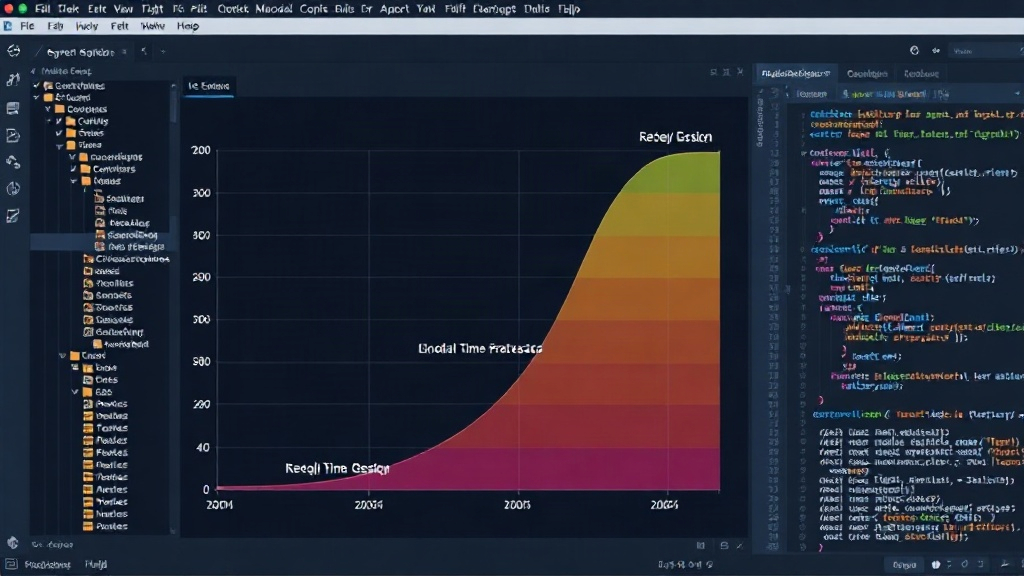
The results indicated a significant disparity. The actual AI model generation received one distinct time span on the performance graph. In contrast, the application-level processing that followed received five distinct spans, indicating a more fragmented and potentially longer duration of work. This suggests that while the model itself might respond quickly to produce the first piece of output, the subsequent steps in the application's workflow are where the real delays occur.
The Role of Fsync and Post-Generation Work
The experiment implicitly touches upon the concept of synchronous operations, like `fsync`, which can halt execution until an operation completes. While not explicitly detailed as the sole focus, the observation that "Apply received five distinct spans" implies that post-generation tasks within the application are not necessarily asynchronous or are themselves introducing sequential blocking operations. These post-generation tasks could include data formatting, validation, database writes, or further processing before the final output is presented to the user.
The author acknowledges that this was a controlled, isolated run. There was no production traffic, and the setup was designed for clarity rather than replicating a live environment. This isolation is crucial for understanding the isolated impact of different stages in the generation pipeline. The remote generator was still necessary for contrast, highlighting the differences between a standalone model's performance and the end-to-end application flow.
The intention was not to claim a specific speedup number for the model itself. Instead, the focus was on understanding the distribution of latency across the entire process. By isolating the model's contribution and comparing it to the application's subsequent work, the experiment reveals that the perceived slowness is often a result of how the generated output is handled, rather than solely the model's generation speed.
Disclosure and Context
This article was prepared as part of MonkeyCode's product outreach. The author used MonkeyCode's free model access and free server option for the remote contrast runs. This disclosure is important for understanding the context of the experiment and the tools used. While the experiment's methodology appears sound for its stated purpose of dissecting latency components, the use of a specific vendor's tools for comparison warrants consideration by readers evaluating the results.
The core takeaway remains: developers and product teams should be wary of relying solely on first-token latency as a performance indicator. The cumulative time spent processing and handling model output within the application is often a more critical factor in user satisfaction and perceived performance. Focusing optimization efforts on these post-generation workflows, where five distinct latency spans were observed in this experiment, could yield more significant improvements than solely chasing faster initial token delivery.