The Genesis of Miso
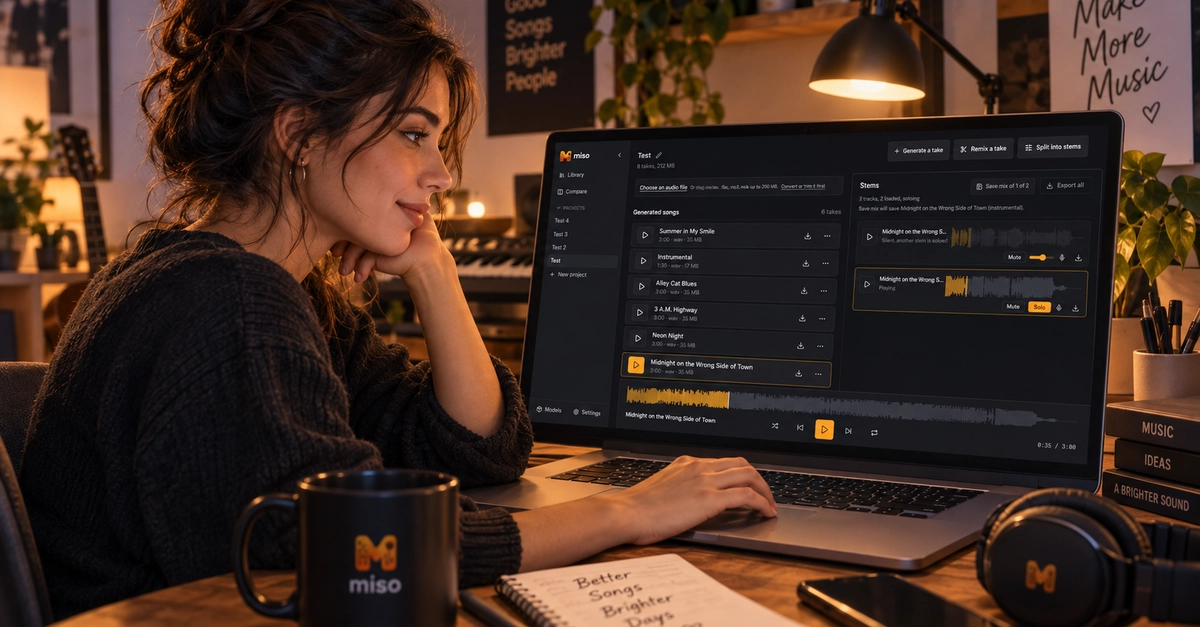
Many ambitious projects begin with a singular, often mundane, need. For one developer, that need spiraled into the creation of Miso, a comprehensive, self-hosted local AI music generation and remix studio. What started as a desire for a specific functionality rapidly expanded, encompassing a robust technical stack including a database, a Docker Compose setup, a job queue, a model manager, an audio editor, a waveform player, and a significant GPU model footprint consuming 40 GB of disk space.
The project, now live at miso.pinkpixel.dev, leverages the audio.cpp library as its foundational component. This evolution from a simple experiment to a feature-rich application is a testament to the iterative nature of software development, where solving one problem often uncovers a cascade of related challenges and opportunities.
Technical Architecture and Core Components
Miso’s architecture is built to support complex audio processing and AI-driven music generation locally. The integration of a database suggests a need for managing user projects, generated audio assets, model configurations, and potentially training data. A Docker Compose stack ensures that all these disparate services – from the AI models to the audio processing pipeline – can be deployed and managed consistently across different local environments. This approach simplifies setup for users and developers alike, abstracting away the complexities of dependency management.
The inclusion of a job queue is critical for handling computationally intensive tasks, such as AI model inference for music generation or remixing. This allows the application to remain responsive, queueing up requests and processing them asynchronously in the background. A dedicated model manager is essential for handling the various AI models that Miso employs. Given the 40 GB disk space requirement, these are likely sophisticated deep learning models for music synthesis, style transfer, or source separation, each requiring careful versioning and deployment.
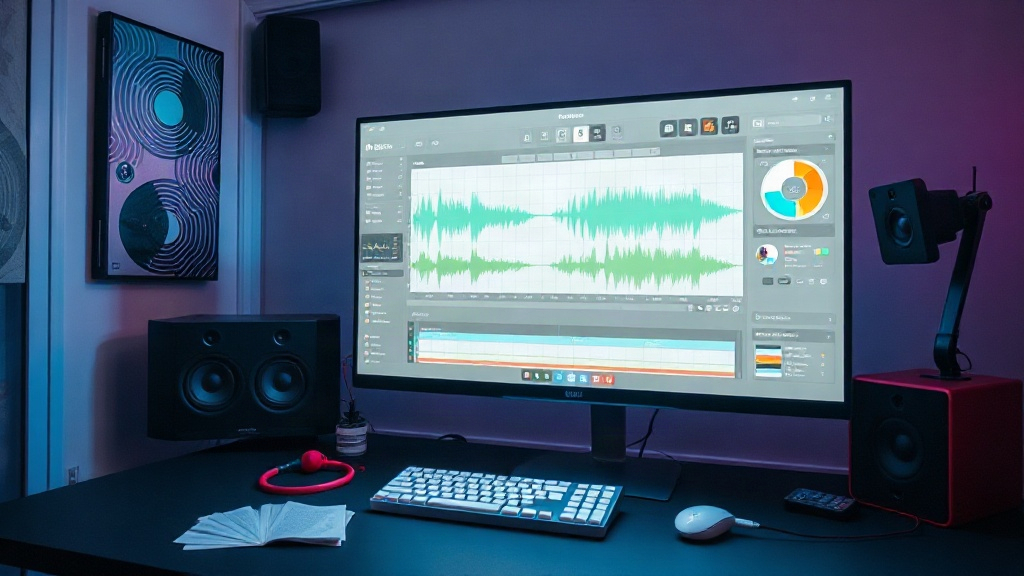
The user-facing components, an audio editor and a waveform player, are vital for a practical music studio. The audio editor provides tools for manipulating generated or remixed audio, while the waveform player offers visual feedback on the audio content, enabling precise editing and playback. These elements transform Miso from a purely generative AI tool into a functional digital audio workstation (DAW) tailored for AI-assisted music creation.
Audio Processing with audio.cpp
The choice of audio.cpp as the underlying library for Miso is significant. This library is known for its efficiency and performance in handling audio synthesis and manipulation. By building on audio.cpp, Miso gains a powerful and performant engine for real-time audio playback, effects processing, and potentially direct audio synthesis, which are crucial for a responsive music studio experience. It provides the low-level primitives necessary to turn AI model outputs into audible sound and to integrate these with traditional audio editing workflows.
The library likely handles tasks such as loading audio files, applying digital signal processing (DSP) effects, mixing multiple audio streams, and managing audio device input/output. For Miso, this means that the AI-generated musical segments can be seamlessly integrated, edited, and mixed with other audio elements within the studio environment. The efficiency of audio.cpp is particularly important for a local application, as it minimizes the computational overhead on the user's machine, allowing for smoother operation even when dealing with complex AI models and high-fidelity audio.
The Evolution of a Local AI Studio
Miso’s journey from a specific, unmet need to a multifaceted local studio highlights a common developer pattern: the desire to build exactly what one needs, often leading to the creation of something far more comprehensive than initially envisioned. The developer's own description—moving from a simple experiment to a full stack with databases, job queues, and extensive model storage—is a narrative familiar to many in the tech industry. This iterative expansion means Miso is not just a proof-of-concept but a robust tool capable of handling serious music production tasks.
The decision to make Miso a self-hosted, local application is also noteworthy. In an era dominated by cloud-based services, offering a local alternative provides users with greater control over their data, privacy, and creative workflow. It bypasses the need for constant internet connectivity and subscription fees, making it an attractive option for musicians and producers who prefer to work offline or manage their own infrastructure. This local-first approach, combined with powerful AI capabilities, positions Miso as a unique offering in the music creation software landscape.
Future Implications
The existence of Miso raises questions about the future of music production tools. As AI models become more sophisticated and accessible, the trend toward local, AI-powered creative studios is likely to grow. Developers and musicians alike will be looking for tools that offer both cutting-edge AI capabilities and the granular control that local applications provide. Miso, as an early entrant and a fully realized project, serves as a compelling example of what is possible when AI meets local audio production, potentially influencing the design and features of future music software.