Automated Documentary Production Pipeline Unveiled
Summit Singh has developed an open-source Python pipeline, named AI Video Factory, capable of transforming a single topic into a fully produced 20-30 minute documentary. This ambitious project automates the entire production workflow, from initial research and scriptwriting to final video assembly and metadata generation. The pipeline is released under the MIT license, making it freely available for developers and creators to use and modify.
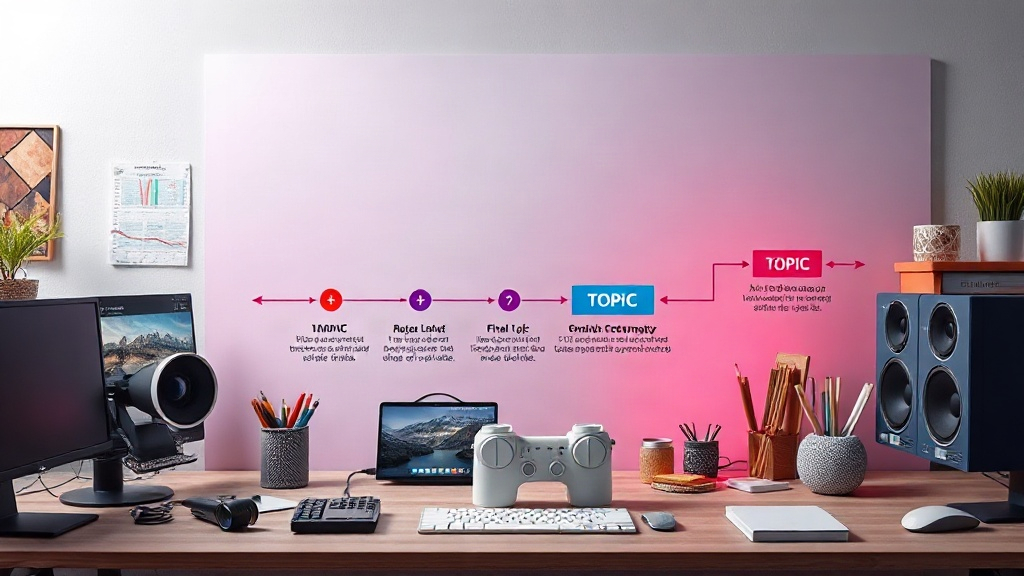
The core functionality begins with a user-provided topic. AI Video Factory then undertakes a comprehensive research phase, generating a script that includes citations for its claims. Visuals are sourced from a curated selection of stock media libraries, including Pexels, Pixabay, and NASA imagery, ensuring per-scene relevance. Narration is handled by local Text-to-Speech (TTS) engines, providing an alternative to cloud-based services. A music bed is added to set the tone, and karaoke-style captions are burned directly into the video for accessibility and engagement. The final assembly is managed by FFmpeg, followed by a quality control (QC) gate. To facilitate distribution, the pipeline also generates a thumbnail image and YouTube metadata.
The project offers seven distinct presets, catering to a variety of documentary styles. These include "business autopsy," which dissects the rise and fall of companies, "history reconstruction," offering deep dives into past events, "science doc," exploring scientific concepts, and "horror anthology," for crafting chilling narratives. This versatility allows the pipeline to serve a broad spectrum of content creation needs.
Key Challenges and Learnings in AI Automation
Developing such a complex automated system presented several significant challenges, as highlighted by Singh's experience. One of the most critical hurdles encountered was the tendency for Large Language Models (LLMs) to fabricate citations. Early iterations of the script generation produced references that appeared entirely legitimate, complete with plausible-sounding sources, yet upon investigation, these URLs led to dead ends or irrelevant content. This issue underscores the need for robust validation mechanisms when relying on LLMs for factual content and sourcing.
To address this, a rigorous HTTP check was implemented. Every cited URL is now programmatically verified to ensure it returns a successful HTTP status code, confirming the existence and accessibility of the source material. This systematic approach to citation verification is crucial for maintaining the credibility of AI-generated content, especially in documentary formats that rely on factual accuracy.
Another learning curve involved the effective integration of diverse AI models and tools. Orchestrating components such as LLMs for scripting, image retrieval APIs, TTS engines, and video editing software requires careful management of dependencies and data flow. Ensuring seamless transitions between these modules, each with its own potential failure points and output formats, demanded considerable engineering effort. The pipeline's architecture had to be flexible enough to accommodate variations in output quality and format from each stage.
The third major learning was the importance of a dedicated quality control (QC) phase. Automated systems, while efficient, can still produce errors or suboptimal content. Implementing a QC gate, even if partially automated, is essential. This might involve checking for visual glitches, audio inconsistencies, script coherence, or adherence to the chosen documentary style. Without a QC step, the risk of releasing flawed content increases significantly, undermining the entire production effort.
Implications for Content Creation and AI Development
The AI Video Factory pipeline represents a significant step towards democratizing high-quality video production. By automating labor-intensive tasks such as research, scriptwriting, and editing, it lowers the barrier to entry for aspiring documentary filmmakers and content creators. Individuals and small teams can now potentially produce polished, long-form video content with significantly fewer resources and less specialized expertise.
For developers, the project serves as a practical case study in building complex AI-driven workflows. It demonstrates how various AI models and traditional software tools can be integrated into a cohesive pipeline. The lessons learned regarding citation hallucination, system integration, and the necessity of QC are broadly applicable to other AI development projects, particularly those involving content generation and factual reporting.
The open-source nature of AI Video Factory encourages community contribution and further development. Users can adapt the pipeline for different content types, improve its existing modules, or experiment with new AI models. This collaborative approach accelerates innovation in the field of automated media production. As LLMs and other AI technologies continue to advance, pipelines like this will likely become more sophisticated, capable of producing even more nuanced and compelling video content with minimal human intervention.
The potential impact on platforms like YouTube is substantial. If creators can efficiently generate a steady stream of well-researched and engaging documentaries, the volume and diversity of educational and informational content could increase dramatically. This could lead to new trends in online video consumption and further push the boundaries of what is possible with AI-assisted creativity.
What remains to be seen is how audiences will react to increasingly AI-generated documentary content. While efficiency and accessibility are clear benefits, the human element of storytelling—the unique perspective, emotional depth, and narrative intuition—is something AI currently struggles to replicate authentically. The long-term success of such pipelines may depend on finding the right balance between AI automation and human creative oversight, ensuring that the produced content resonates on a deeper level with viewers.