The Inevitability of Data Divergence
In complex software systems, the temptation to store the same piece of information in multiple places is strong. You might count the number of items in a database table and also store that count in a separate field. An order might have a status, and its associated payment might have its own status. An email address could live in a user profile service and also in a list used for sending out notifications.
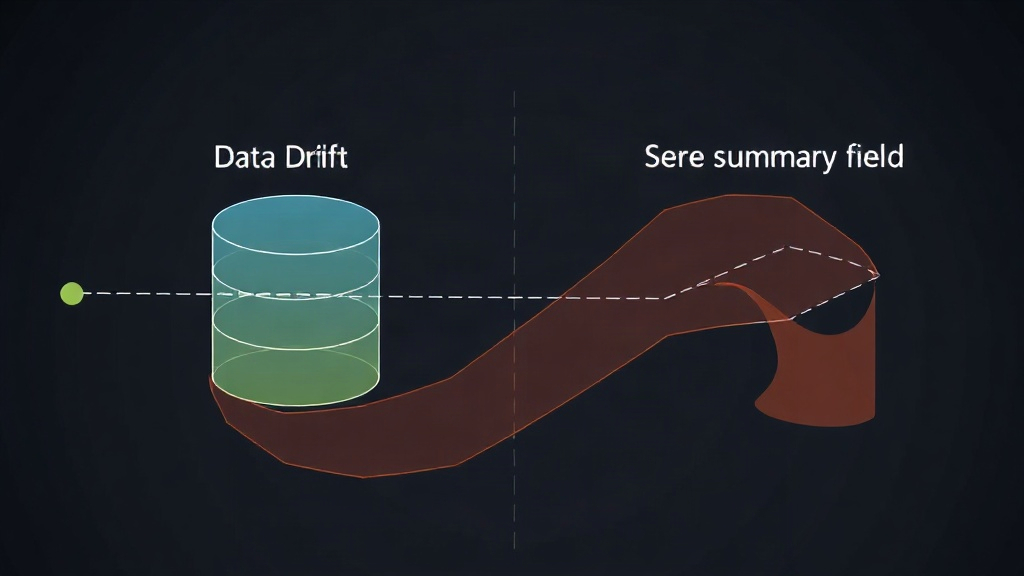
For a time, these redundant data points will agree. They are, after all, derived from the same original source or synchronized through a common process. This period of agreement lulls teams into a false sense of security. They operate under the assumption that their data is consistent, that the system is a monolith of truth. But this is a dangerous illusion. Eventually, these two sources of truth will disagree. This divergence, often termed data drift, doesn't require a catastrophic bug or a deliberate act of sabotage.
It can arise from the mundane failures that plague any distributed system. A single write operation might succeed in one location but fail silently in another due to a transient network issue. A background job, perhaps a nightly data aggregation or a migration script, might update one data store but miss a related cache or secondary index. A database migration might touch a primary table but not a denormalized view used for reporting. These small, often unnoticed failures are the seeds of inconsistency.
The consequence is that the two numbers, the two statuses, the two email addresses, are simply different. Critically, the system itself often doesn't register this as an error. The database rows still exist, the payment status still shows *something*, the email address is still present in both locations. No explicit error is thrown, no alert fires in the middle of the night. The system hums along, oblivious to the growing discrepancy.
The problem only surfaces when a human- or a process that relies on the data being perfectly synchronized encounters the inconsistency. A report generated from one source will not match a report generated from another. A customer service representative looking at two different screens will see conflicting information. This is often when the issue is discovered, weeks or months after the initial divergence, leaving teams scrambling to understand which data point is correct and which is lying. The original intention of having redundant data for performance or convenience has backfired, creating a mystery that erodes trust and causes operational pain.
The Root Causes of Data Drift
Understanding the mechanisms of data drift is key to preventing it. At its core, drift occurs when the processes responsible for maintaining data consistency fail. This can manifest in several ways:
- Asynchronous Operations: Many modern systems rely on asynchronous communication, such as message queues or event streams, to decouple services. While this offers scalability and resilience, it introduces a window of time where data can be inconsistent. A message might be published but not yet consumed, or a consumer might fail partway through processing.
- Partial Failures: In distributed systems, it's common for operations to succeed partially. A multi-step transaction might commit successfully to one database but fail to update a related cache or a search index. This is particularly prevalent in microservices architectures where a single logical operation might involve calls to multiple independent services.
- Background Jobs and Migrations: Scheduled tasks, such as data aggregation jobs, cleanup routines, or database schema migrations, are frequent culprits. If a migration script updates a table but fails to update a denormalized column or a materialized view that relies on it, drift occurs. Similarly, a batch process might update a primary dataset but fail to synchronize with a reporting database.
- Eventual Consistency Models: While often beneficial for performance and availability, eventual consistency guarantees that data will *eventually* become consistent, not that it is *always* consistent. During the period before consistency is achieved, different read operations might return different results.
- External System Integration: When integrating with third-party services or external data sources, discrepancies can arise due to differing update cadences, API limitations, or data transformation errors. If your system relies on an external status update that is delayed or incorrect, your internal representation will diverge.
- Human Error: While drift doesn't *need* bugs, manual interventions, incorrect configurations, or flawed operational procedures by humans can also introduce inconsistencies. A developer might manually update a database record but forget to update a corresponding cache entry.
The critical takeaway is that data drift is not a sign of a fundamentally broken system, but rather an inherent risk in any system that deviates from a single, atomic source of truth for a given fact. The problem is exacerbated by the fact that these inconsistencies often do not trigger immediate errors, allowing them to fester and grow over time.
Mitigation Strategies: Owning the Fact
The most effective strategy for combating data drift is to establish a single, authoritative source for each critical piece of information. This principle of