
The Need for Local AI Benchmarking
As the artificial intelligence landscape continues its rapid evolution, a critical gap has emerged: understanding how different hardware configurations perform when running AI models locally. While cloud-based AI services offer scalability and ease of use, a significant segment of developers, researchers, and hobbyists are opting for on-premises solutions. These users require precise data on AI model performance on their own machines, often driven by privacy concerns, cost considerations, or the desire for offline capabilities. However, consolidating and comparing this performance data has historically been a fragmented and manual process.
Enter Compute:Arena. This new platform aims to centralize community-submitted benchmarks for local AI inference and training. It provides a single source of truth for users to gauge the capabilities of their hardware against a growing database of community-contributed results. The motivation behind Compute:Arena is clear: to demystify local AI performance and empower users to make informed decisions about their hardware and software stack.
How Compute:Arena Works
Compute:Arena operates on a simple yet powerful principle: crowdsourced data. Users who have run AI models on their local machines can submit their benchmark results to the platform. These submissions typically include details about the hardware used (CPU, GPU, RAM, storage), the specific AI model being benchmarked (e.g., Llama 2, Stable Diffusion, Mistral), the task performed (inference, fine-tuning), and key performance metrics such as inference speed (tokens per second, images per second), training time, and resource utilization.
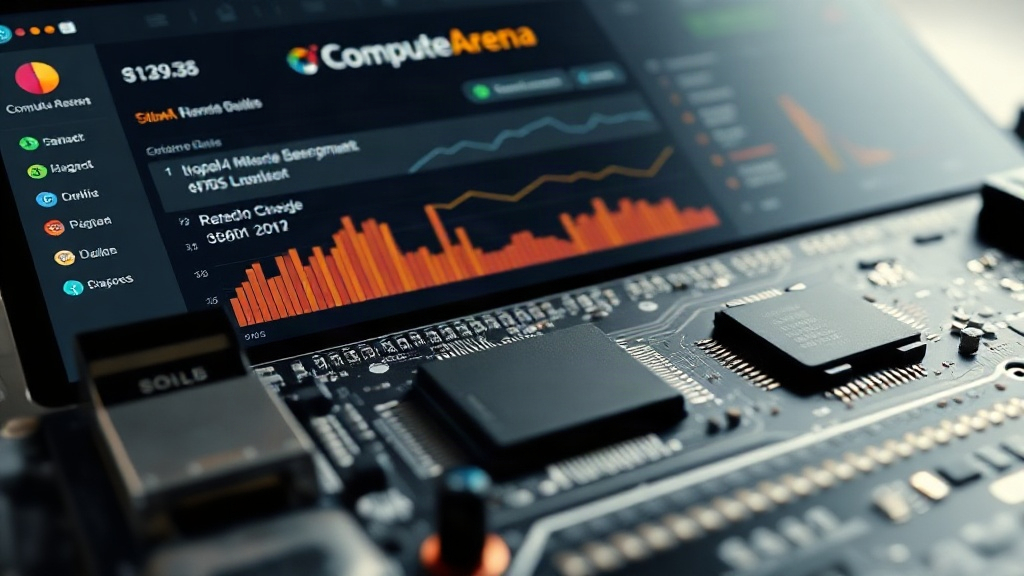
The platform then aggregates these submissions, creating a searchable and sortable database. This allows anyone to look up specific models or hardware configurations and see how they perform in real-world scenarios. The community-driven nature of Compute:Arena means the dataset is constantly growing and diversifying, reflecting a wide array of hardware and software combinations. This organic growth is crucial, as the performance of AI models can vary dramatically based on subtle differences in hardware, operating systems, drivers, and software libraries.
Key Features and Benefits
Compute:Arena offers several key benefits to its users:
- Centralized Data: It eliminates the need to scour multiple forums, GitHub repositories, and obscure blogs for performance data. Everything is in one place.
- Community-Driven Accuracy: By relying on submissions from actual users, the benchmarks reflect real-world performance rather than idealized lab conditions. This provides a more practical understanding of what to expect.
- Informed Hardware Decisions: Prospective buyers can use Compute:Arena to compare the performance of different GPUs, CPUs, or even entire system builds for their intended AI workloads. This can prevent costly mistakes and ensure users select hardware that meets their needs.
- Software Optimization Insights: Developers can use the data to understand how their models perform across different hardware and identify potential bottlenecks or areas for optimization. It also helps in validating the effectiveness of new AI frameworks or libraries.
- Democratization of Local AI: By making performance data accessible, Compute:Arena lowers the barrier to entry for individuals and smaller organizations looking to leverage powerful AI models without relying solely on expensive cloud services.
The Broader Context: The Rise of Local AI
Compute:Arena arrives at a pivotal moment for local AI. For years, cutting-edge AI models were primarily the domain of large corporations with access to massive compute clusters. However, recent advancements in model quantization, efficient inference engines, and increasingly powerful consumer hardware (especially GPUs) have made it feasible to run sophisticated models directly on personal computers, laptops, and even edge devices. This shift is driven by several factors:
- Privacy and Security: Running models locally ensures that sensitive data never leaves the user's environment, a critical concern for many applications, from healthcare to personal assistants.
- Cost Savings: For frequent or long-running AI tasks, the cumulative cost of cloud API calls or dedicated cloud instances can quickly become prohibitive. Local execution offers a more predictable and often cheaper alternative.
- Offline Capabilities: Local AI models function without an internet connection, enabling applications in remote areas, during network outages, or in environments with strict connectivity restrictions.
- Reduced Latency: For real-time applications, the inherent latency of sending data to a cloud server and receiving a response can be a dealbreaker. Local inference minimizes this delay.
Platforms like Compute:Arena are essential enablers of this local AI movement. They provide the necessary transparency into hardware performance, allowing users to build and deploy AI solutions with confidence, knowing exactly what to expect from their chosen hardware. The platform's success will hinge on its ability to foster a vibrant community of contributors and maintain a comprehensive, up-to-date database.
What's Next for Compute:Arena?
While Compute:Arena provides a valuable service, its potential extends beyond simply aggregating existing data. As the platform matures, we can anticipate several developments. One immediate need is standardization. Ensuring that all submitted benchmarks follow a consistent methodology is crucial for accurate comparisons. This might involve providing standardized scripts or tools for users to run their benchmarks, guaranteeing that variables like batch size, input resolution, and precision are controlled.
Furthermore, the platform could evolve to offer more sophisticated analysis. This might include comparative charting of different hardware under specific model loads, predictive tools to estimate performance on unbenchmarked hardware based on component specifications, or even integration with popular local AI frameworks like Ollama or LM Studio. The community aspect is also key; fostering discussion around specific benchmarks, troubleshooting performance issues, and sharing optimization tips could transform Compute:Arena from a data repository into a genuine community hub for local AI practitioners.
The challenge ahead is significant. The pace of AI model development and hardware innovation is relentless. Compute:Arena must continuously adapt to incorporate new models, hardware architectures, and software optimizations. However, by providing a transparent and accessible benchmark database, it addresses a fundamental need in the rapidly growing local AI ecosystem.