
The Insatiable Appetite for AI Power
The rapid ascent of artificial intelligence is placing unprecedented demands on the world's power infrastructure. As AI models grow larger and more complex, the computational power required to train and run them escalates exponentially. This surge in demand is not merely an abstract concept; it translates directly into a colossal need for electricity at data centers, the physical heart of AI operations. Innovations in power delivery are no longer a matter of incremental improvement but a critical necessity for the continued scalability, performance, and economic viability of AI technologies.
This isn't just about having enough watts; it's about delivering that power efficiently and reliably to the increasingly dense compute racks that house AI accelerators like GPUs and specialized AI chips. Traditional power distribution methods are straining under the load. Higher power densities mean more heat, which in turn requires more sophisticated cooling solutions, further increasing the overall energy footprint. The challenge is multifaceted: how to deliver more power to smaller footprints, manage the associated thermal loads, and do so with a focus on energy efficiency to mitigate both operational costs and environmental impact.
Innovation in Power Delivery Architecture
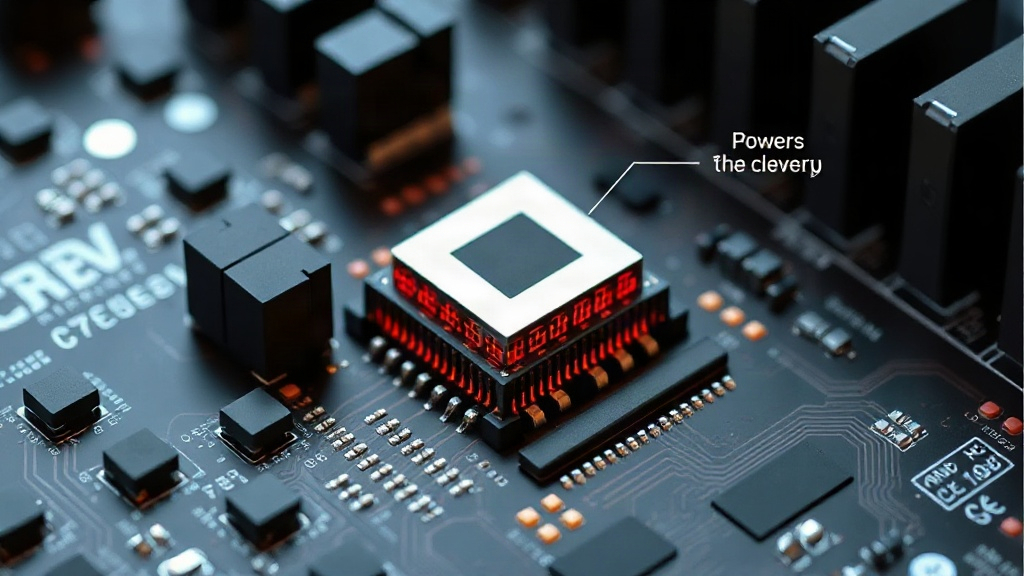
At the core of the problem lies the sheer power consumption of modern AI hardware. A single high-performance GPU can draw upwards of 700 watts, and racks can house dozens of these accelerators. This necessitates a fundamental rethinking of how power reaches these components. Innovations are emerging across the entire power chain, from the grid interface to the chip itself.
One key area of focus is the reduction of power conversion stages. Each conversion step, from AC to DC and through various voltage reductions, incurs energy loss. By developing more efficient power supply units (PSUs), voltage regulator modules (VRMs), and integrated power solutions, engineers are working to minimize these losses. This involves exploring new materials, advanced topologies, and tighter integration of components. For instance, GaN (Gallium Nitride) and SiC (Silicon Carbide) semiconductors are enabling smaller, more efficient power converters that can operate at higher frequencies, leading to reduced component sizes and improved thermal performance.
Furthermore, the physical layout and thermal management of power delivery systems are being re-evaluated. As power densities increase, traditional air cooling becomes less effective. Liquid cooling solutions, both direct-to-chip and immersion cooling, are becoming essential not only for processors but also for the power delivery components themselves. Efficient thermal management is directly linked to power delivery efficiency and component longevity.
The concept of distributed power architectures is also gaining traction. Instead of a single, large power supply unit for an entire rack, power is distributed closer to the point of load. This reduces the length of high-current traces, minimizes voltage drops, and can improve overall system reliability. Intelligent power management systems are also becoming critical, allowing for dynamic adjustment of power delivery based on workload demands, further optimizing energy usage.
The Environmental and Urban Collision
While technological innovation addresses the performance and efficiency aspects, the sheer scale of AI data center expansion is igniting significant public and environmental scrutiny. The immense power requirements translate directly into substantial energy consumption, and consequently, carbon emissions, especially when reliant on non-renewable energy sources. This has led to a growing backlash against the rapid proliferation of data centers, particularly in areas already bearing the scars of heavy industrial impact.
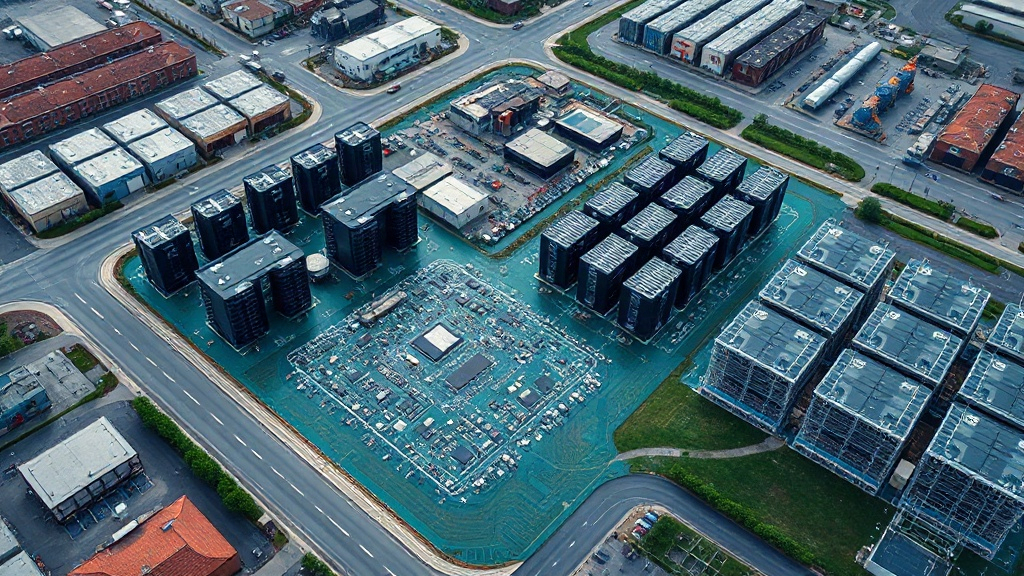
Cities are finding themselves at the nexus of this conflict. The boom in AI data center construction is colliding with the legacy of industrial pollution and the increasing awareness of environmental sustainability. In Philadelphia, for example, officials have considered siting new data centers in neighborhoods already burdened by environmental challenges, such as areas impacted by defunct industrial facilities. This reflects a broader trend where communities, increasingly aware of the environmental footprint of technology, are pushing back against the perceived inequitable distribution of the burdens associated with the digital economy.
The environmental concerns are not limited to emissions. The water usage for cooling, the land footprint, and the strain on local power grids are all becoming significant factors in the planning and approval of new data center projects. The industry faces pressure to not only innovate in power delivery efficiency but also to secure clean energy sources and engage more proactively with local communities to address these concerns.
Navigating the Future of AI Power
The path forward for AI data centers requires a delicate balance. Continued innovation in power delivery is paramount to enabling the next generation of AI capabilities. This includes advancements in high-density power supplies, efficient voltage regulation, advanced cooling for power components, and intelligent power management. The integration of new semiconductor materials like GaN and SiC will play a crucial role in achieving higher efficiencies and smaller form factors.
However, technological solutions alone are insufficient. The industry must also address the broader environmental and societal implications. This means a concerted effort to power data centers with renewable energy sources, minimize water usage, and engage transparently with communities about the impact of these facilities. The challenge is not merely to deliver more power, but to deliver it responsibly.
The conversation around AI data centers is shifting. While figures like Al Gore may offer a surprisingly calm perspective, suggesting that the industry's self-awareness about its trajectory is a more pressing concern than immediate emissions, the reality on the ground is one of growing tension. The AI industry's exponential growth depends on solving its power delivery challenges, but its social license to operate will depend on how it addresses the environmental and community impacts that come with that insatiable demand.