
The End of Manual Coding at Cognition?
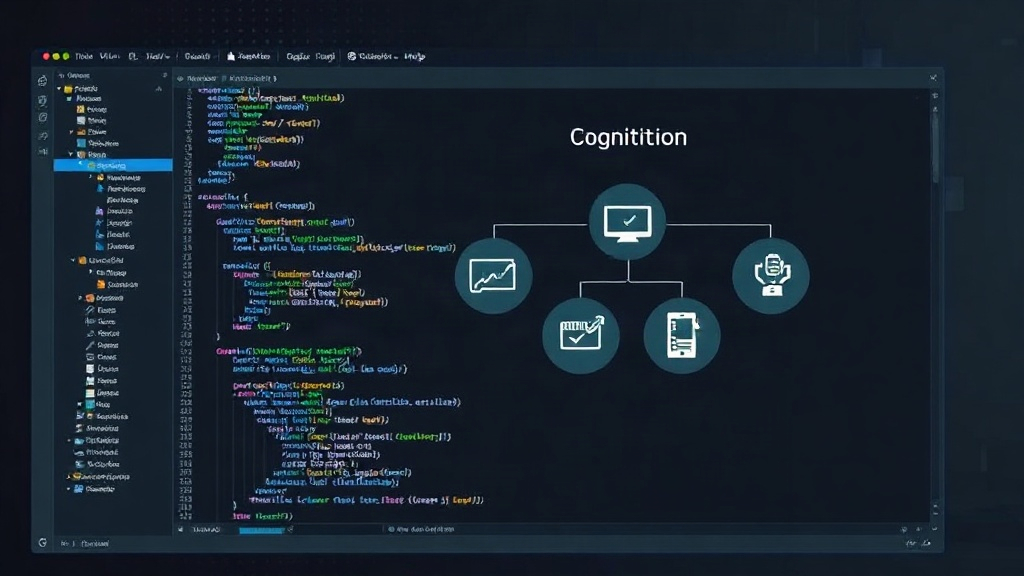
Cognition, a startup focused on AI-powered software development, is making a bold claim: its engineers no longer write code by hand. Silas Alberti, speaking mid-conversation, stated that not a single full-time engineer at the company engages in manual coding anymore. Instead, development tasks are handled by a suite of six AI agents per engineer. These agents are reportedly responsible for taking tickets from systems like Linear, spinning up development environments, and, crucially, writing the code to address those tickets.
This approach fundamentally redefines the role of a software engineer within the company. The engineers at Cognition are positioned as overseers and strategists, rather than direct coders. Their primary responsibility appears to be defining the problems, setting the objectives for the AI agents, and then evaluating the output. The statement that they are 'the only ones grading whether that's working' is particularly striking. It implies a self-referential system where human oversight is focused on the efficacy of the AI's output, rather than the mechanics of its creation.
This shift is not presented as a tentative experiment but as the current operational reality for Cognition's engineering team. The implication is that AI agents can handle the bulk of routine coding, debugging, and even initial testing, freeing up human engineers for higher-level architectural decisions, complex problem-solving, and strategic planning. The sheer number of agents deployed per engineer (six) suggests a sophisticated orchestration layer is in place, managing parallel tasks and coordinating agent actions.
Redefining the Developer Role
The traditional software development lifecycle involves engineers writing code, running tests, debugging, and iterating. Cognition's model appears to compress or entirely automate many of these steps. When a ticket arrives, it's not assigned to an engineer to start typing. Instead, it's fed into the AI agent system. These agents then take ownership of the task, from understanding the requirements to producing a functional code solution. This raises immediate questions about the nature of the 'grading' process. What metrics are being used? How is the quality of AI-generated code being assessed beyond mere functionality? Is it code style, efficiency, security, or a combination?
The absence of manual coding means engineers are likely spending more time on prompt engineering, defining test cases, reviewing AI-generated code for logic errors or security vulnerabilities that the AI might miss, and refining the AI's understanding of complex requirements. This is less about writing `if` statements and more about architecting the AI's approach to writing those `if` statements. The success of this model hinges on the sophistication of the AI agents and the clarity of the instructions provided by the human engineers. If the AI can reliably produce correct, efficient, and secure code for common tasks, it could dramatically accelerate development cycles.
Implications for the Industry
This approach, if scalable and effective, has profound implications for the software development industry. It suggests a future where the demand for highly skilled engineers who can direct and manage AI development tools might increase, while the demand for engineers focused purely on writing boilerplate code could decrease. The skills required would shift from proficiency in specific programming languages to expertise in AI interaction, system design, and rigorous evaluation.
The fact that Cognition is grading its own system presents an interesting, albeit potentially biased, feedback loop. While internal evaluation is common, the complete reliance on engineers who are no longer performing the core task they are evaluating creates a unique dynamic. This self-assessment model could be efficient for rapid iteration but might also risk overlooking fundamental flaws if the human evaluators are not sufficiently detached or if the AI's limitations are not fully understood by the evaluators themselves. The critical question remains: can an AI truly replicate the nuanced problem-solving and creative leaps that human developers often make, especially in novel or complex scenarios?
What remains unaddressed is the broader impact on the engineering job market. If this model proves successful and is adopted by other companies, it could lead to a significant restructuring of engineering teams and skill requirements. The industry might see a bifurcation: a smaller group of highly paid AI orchestrators and a larger pool of potentially displaced developers focused on manual coding. The transition for existing developers could be challenging, requiring significant reskilling to adapt to this new paradigm. The companies that can successfully implement and scale AI-driven development processes will likely gain a substantial competitive advantage in terms of speed and cost efficiency.