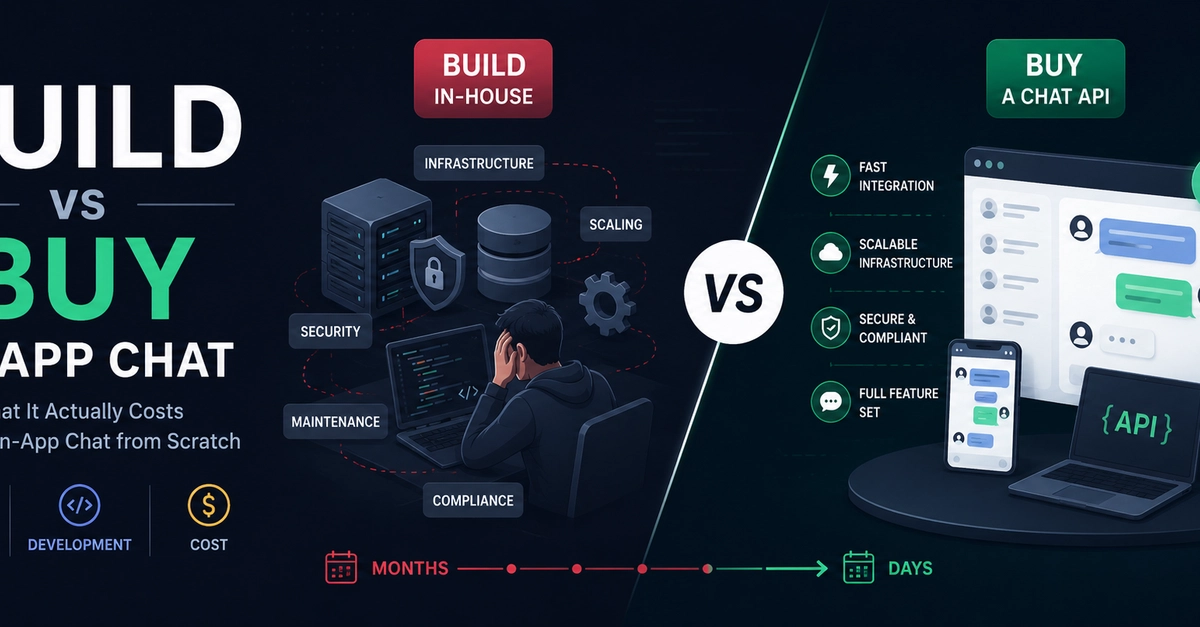
The Realities of Building In-House Chat
In today's digital landscape, integrated chat functionality is no longer a luxury but an expectation. Whether you're developing a marketplace, a healthcare platform, or a SaaS dashboard, users anticipate the ability to message others without leaving the application. When this feature is absent, it's immediately noticed. This shift forces product teams to confront an age-old dilemma: is it better to build chat infrastructure from scratch or to purchase an existing chat API?
The decision hinges on a clear understanding of what building an in-house chat system truly entails. It's far more than just designing a user interface; it requires architecting and maintaining a robust, real-time messaging system. This involves significant investment in infrastructure, development talent, and ongoing operational overhead. For many companies, the cost and complexity far outweigh the benefits.
What Building Chat In-House Actually Involves
Estimating the cost of an in-house chat solution demands a thorough grasp of its scope. The core challenge lies not just in creating a user-friendly messaging UI, but in establishing the underlying real-time chat system. This system must support persistent, bidirectional connections, a departure from the typical request-response patterns of standard web applications.
Real-Time Infrastructure: The foundation of any chat application is its real-time infrastructure. This typically involves technologies like WebSockets or similar protocols to maintain continuous, low-latency communication between clients and servers. Managing these persistent connections at scale is resource-intensive. It requires specialized server setups, load balancing, and sophisticated connection management to handle thousands, or even millions, of simultaneous users. Unlike stateless HTTP requests, these connections are stateful and demand constant monitoring and maintenance.
Backend Development: Building the backend involves creating services for user authentication, message routing, presence management (who is online), read receipts, typing indicators, and message history storage. Developers must design and implement robust APIs for these functions. This requires expertise in distributed systems, database management (often NoSQL for flexibility and scale), and real-time data synchronization.
Scalability and Reliability: A chat system must be highly available and scalable. This means architecting for failure, implementing redundancy, and ensuring the system can handle sudden spikes in traffic. Scaling real-time infrastructure is notoriously difficult. As the user base grows, the number of active connections increases exponentially, demanding significant server resources and complex orchestration.
Security: Security is paramount for any communication platform. Building in-house requires implementing end-to-end encryption (E2EE) or robust transport-layer security, secure user authentication, authorization mechanisms, and protection against common web vulnerabilities like SQL injection and cross-site scripting. Compliance with data privacy regulations (like GDPR or HIPAA, depending on the industry) adds another layer of complexity and cost. Often, companies underestimate the security expertise and ongoing effort required to maintain a secure communication channel.
Maintenance and Operations: Once built, the system requires continuous maintenance. This includes monitoring server health, managing deployments, applying security patches, debugging issues, and optimizing performance. The operational burden of running a real-time infrastructure is substantial and requires dedicated engineering resources.
The Cost Breakdown of Building In-House
The financial outlay for building a chat app from scratch can be substantial. While exact figures vary based on team location, experience, and feature set, a rough estimate involves several key cost centers:
- Development Team: Hiring skilled backend engineers, frontend developers, and potentially DevOps specialists is the largest expense. A team of 4-6 engineers working for 6-12 months can easily cost upwards of $200,000 to $500,000+ in salaries and overhead.
- Infrastructure Costs: Servers, databases, load balancers, and bandwidth for real-time communication can accumulate quickly. Monthly costs can range from thousands to tens of thousands of dollars, especially as the user base scales.
- Third-Party Integrations: Features like push notifications (APNS, FCM), media storage (S3), and potentially AI-powered moderation might require integrating with other services, adding to the cost.
- Security Audits and Compliance: Regular security audits and efforts to meet compliance standards are essential but expensive.
In total, a basic, production-ready in-house chat solution could easily cost $150,000 to $500,000+ to build and deploy, with ongoing monthly operational costs potentially reaching $5,000-$20,000+ and increasing with scale. This doesn't account for the opportunity cost of diverting engineering resources from core product development.
Referenced Sources
- verified