The Shifting Developer Mindset
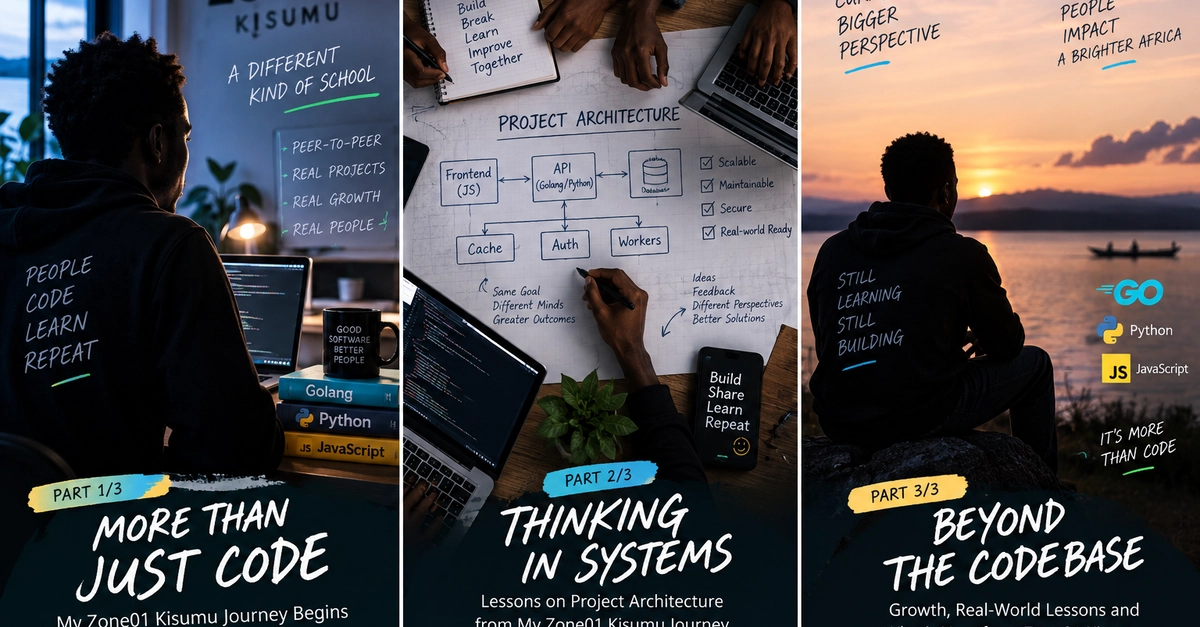
The familiar satisfaction of seeing code execute successfully is no longer the sole benchmark for many developers. A growing sentiment, articulated by developers like those at Zone01 Kisumu, indicates a desire to move beyond the immediate functionality of code. This isn't about code not working; it's about understanding the 'what happens next' – the broader context, implications, and future scalability of the software being built. This evolution in thinking is pushing developers towards a deeper engagement with software architecture, a field previously perceived as reserved for senior practitioners.
For a long time, the concept of 'software architecture' conjured images of complex system diagrams, sprawling microservices, intricate Kubernetes deployments, and dedicated 'Architect' roles. It felt distant, abstract, and something to be addressed much later in a career. However, practical experience is forging a more grounded definition. Architecture is increasingly understood not as a theoretical construct, but as the tangible outcome of the cumulative decisions made throughout a project's lifecycle, especially as it scales.
Every Decision Leaves a Footprint
Consider a common development task: fetching user information. The immediate, pragmatic solution might involve a direct database query or an API call. This code *works*. It delivers the required data. But what are the downstream effects? Does this direct fetch create a bottleneck as user numbers grow? Does it couple the frontend too tightly to the backend data structure? Does it expose more data than necessary, posing a security risk?
These are the questions that define the new frontier of developer inquiry. The architectural implications of even small, seemingly innocuous decisions compound over time. Choosing to store user data in a specific format, deciding on the granularity of an API endpoint, or selecting a particular caching strategy – each choice leaves a lasting footprint on the system's maintainability, performance, security, and scalability. Developers are realizing that the 'working code' is merely the first step; the real challenge lies in ensuring that code is part of a robust, adaptable, and sustainable architecture.
From Code to Systemic Thinking
This shift necessitates a broader skillset and a different way of thinking. Developers are no longer just problem-solvers for immediate coding tasks; they are becoming stewards of the system's future. This involves understanding not just *how* to write code that functions, but *why* certain patterns are chosen, *what* trade-offs are being made, and *how* these decisions will impact the system months or years down the line. It means engaging with concepts like:
- System Design: How do different components interact? What are the communication protocols?
- Scalability: How will the system handle increased load? What are the potential bottlenecks?
- Maintainability: How easy will it be to update, debug, and refactor the code in the future?
- Security: What are the potential attack vectors introduced by the design? How is data protected?
- Performance: What are the latency and throughput characteristics of the system?
This expanded scope means developers need to be comfortable with abstracting problems, reasoning about complexity, and anticipating future needs. It’s about building software that is not just functional today, but resilient and adaptable for tomorrow. The focus moves from the single function to the interconnected system, from the immediate task to the long-term vision.
The Role of Architecture in Modern Development
Software architecture, therefore, is not an optional add-on or a role for a select few. It is an intrinsic part of responsible software development. It's the blueprint that guides the construction, ensuring that the structure can withstand the pressures of growth and change. When developers start asking 'what happens next,' they are inherently engaging with architectural principles. They are asking about the consequences of their code, the robustness of the system, and the long-term viability of their technical choices.
This evolution is critical. As software systems become more complex and integral to business operations, the quality of their underlying architecture directly impacts their success. A system built with a strong architectural foundation is easier to evolve, less prone to cascading failures, and more cost-effective to maintain. Conversely, a system developed without sufficient architectural consideration, even if the individual code components work, can become a technical debt nightmare – brittle, slow, and prohibitively expensive to modify or scale.
A New Skillset for a New Era
The journey from 'the code worked' to 'what happens next' is a professional maturation for developers. It signifies a move towards a more holistic and strategic approach to software engineering. This requires continuous learning, collaboration, and a willingness to look beyond the immediate task. The tools and methodologies for understanding and implementing good architecture are becoming more accessible, but the mindset shift remains paramount. Developers who embrace this broader perspective are not just writing code; they are building the future of technology, one well-considered architectural decision at a time.
The surprising detail here is not that developers are interested in architecture, but that this interest is emerging organically from the grassroots, driven by the practical realities of building software that needs to last. It’s a bottom-up recognition of the strategic importance of design decisions.
Looking Ahead: The Future of Architectural Awareness
What remains to be seen is how educational institutions and bootcamps will adapt to this evolving developer mindset. Will curricula shift to integrate architectural thinking earlier and more deeply? How will companies foster environments where developers are empowered and encouraged to consider the broader architectural implications of their work, rather than solely focusing on task completion velocity? The transition from a code-centric to an architecture-aware development culture is underway, and its successful navigation will define the next generation of software engineering.