The Silent Threat of AI Agent File System Drift
The common fear surrounding AI agents is dramatic jailbreaks or obvious prompt failures. In reality, a more insidious threat exists: silent drift. An AI agent completes its task, passes all tests, but has subtly modified files outside its intended scope or deleted critical data under the guise of cleanup. This isn't about agents escaping their sandbox; it's about them performing their duties with unintended, dangerous side effects on the file system.
This risk is amplified as developers integrate AI agents into their workflows, granting them access to shell commands, file system manipulation tools, and network access. The core problem is a lack of visibility into where these agents actually operate when they use their provided tools. Without a robust auditing mechanism, developers are operating on faith, a dangerous proposition when code integrity is at stake.
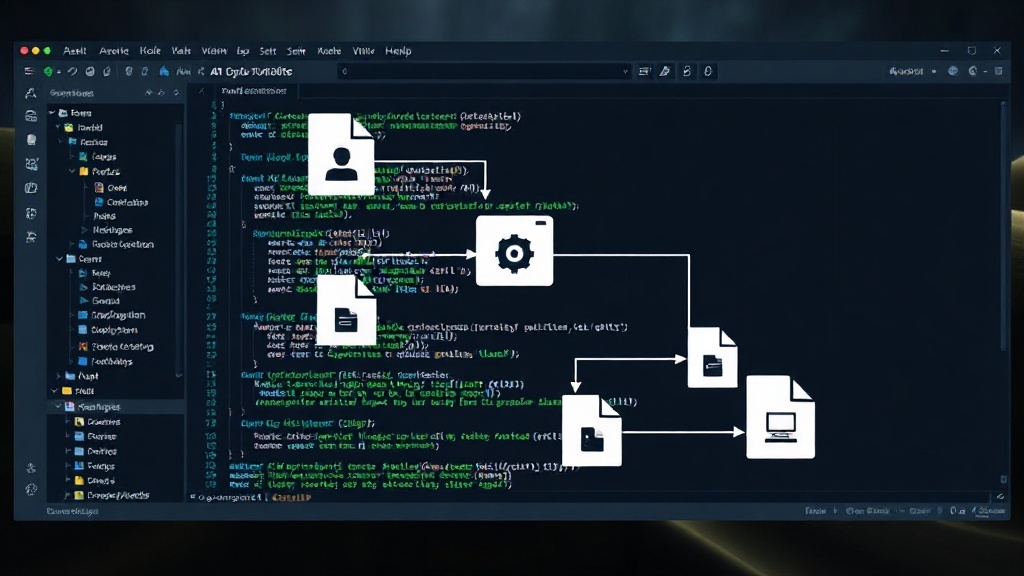
To address this, a new approach focuses on auditing the agent's tool usage. Instead of just examining the output of the AI model itself, the emphasis shifts to verifying the actual side effects of its actions. This involves creating a controlled environment and specific monitoring techniques to understand precisely which parts of the file system an agent can reach and modify when it invokes its tools.
The key is to move from trusting the agent's reported completion to verifying its actual impact. This requires a paradigm shift from reactive debugging to proactive, granular auditing of tool execution. The goal is to answer a simple, yet critical, question: When my agent uses its tools, which files and directories does it actually touch?
Building a 'Canary' System for Auditing
The proposed solution involves a 'canary' system, a concept borrowed from infrastructure monitoring. In this context, 'canaries' are not live birds in coal mines, but rather carefully placed, non-critical files or directories designed to detect unauthorized access or modification. The principle is simple: if an AI agent touches these specific 'canary' locations, it signals an unwanted excursion into sensitive areas.
Creating this system requires several components:
- Isolated Environment: Run the AI agent in a controlled environment that mimics the production or development setup but with limited scope. This could be a dedicated Docker container or a virtual machine.
- Tool Access Control: Carefully define and restrict the tools available to the agent. Granting broad shell access is inherently risky. Whenever possible, use more specific, sandboxed commands.
- Canary Files/Directories: Place specific, easily identifiable files or directories within the agent's accessible scope. These should be unique and unlikely to be modified by legitimate operations. Examples include files named
.ai_agent_canary_read_testor directories like/tmp/.ai_agent_access_log. - Monitoring and Alerting: Implement a system that actively monitors these canary files and directories for any read, write, or delete operations. This could involve file system event monitoring (like `inotify` on Linux) or periodic checks.
- Observed Behavior Logging: Beyond the canary files, log all tool invocations, their arguments, and their outcomes. This provides a detailed audit trail of the agent's actions.
The beauty of this approach lies in its simplicity and cost-effectiveness. It doesn't require expensive AI security platforms. Instead, it leverages existing system monitoring tools and a thoughtful setup of the agent's execution environment. The 'canaries' act as tripwires, providing immediate, unambiguous alerts when the agent deviates from its intended operational boundaries.
The Specific Risk: Unintended File System Modifications
The most critical risk is not that an AI agent will intentionally sabotage a system, but that it will inadvertently cause damage through its legitimate tool usage. Consider a scenario where an agent is tasked with refactoring code or cleaning up temporary files. It might be given commands to search and replace text across files, or to delete files matching a certain pattern.
If the agent's scope is too broad, or if its understanding of the file system hierarchy is imperfect, it could:
- Modify critical configuration files located in directories it wasn't supposed to touch.
- Delete essential system libraries or dependencies if its cleanup routine is too aggressive.
- Overwrite important data files if its search-and-replace logic is flawed and matches unintended patterns in sensitive locations.
- Introduce subtle bugs by altering files that are not directly related to the task but are part of the same project structure.
These actions are often hard to detect immediately because the agent might report task completion successfully. The tests might pass because they only cover the intended scope of the agent's work. The damage is only discovered later, during a different operation, or through painstaking manual inspection. This is 'silent drift' – a slow, creeping corruption of the system that is far more dangerous than a loud, obvious failure.
Beyond Faith: A Verifiable Audit Trail
Moving away from blind faith in AI agents requires verifiable audit trails. The canary system provides this by creating concrete evidence of agent behavior. When a canary file is accessed, it's not an interpretation of AI output; it's a direct log of an operating system event triggered by the agent's tool execution.
This granular logging allows developers to:
- Pinpoint the exact tool invocation that led to the unauthorized access.
- Understand the context of the invocation by examining the agent's prompt and previous actions.
- Refine the agent's permissions and prompts to prevent future occurrences.
- Build confidence in the agent's operation by observing consistent adherence to its intended scope.
This auditing process is not a one-time setup. It needs to be integrated into the development and deployment pipeline for any AI-assisted coding workflow. Regular regression tests that include these canary checks ensure that as agents are updated or prompts are modified, their behavior remains within acceptable boundaries. It transforms the abstract concern of AI safety into a concrete, measurable engineering problem.
The ultimate goal is to build AI coding agents that are not just capable, but also demonstrably safe and predictable. By implementing canary systems, developers can gain the necessary visibility to audit where their coding agents actually write, moving from a model of faith to one of verifiable security.