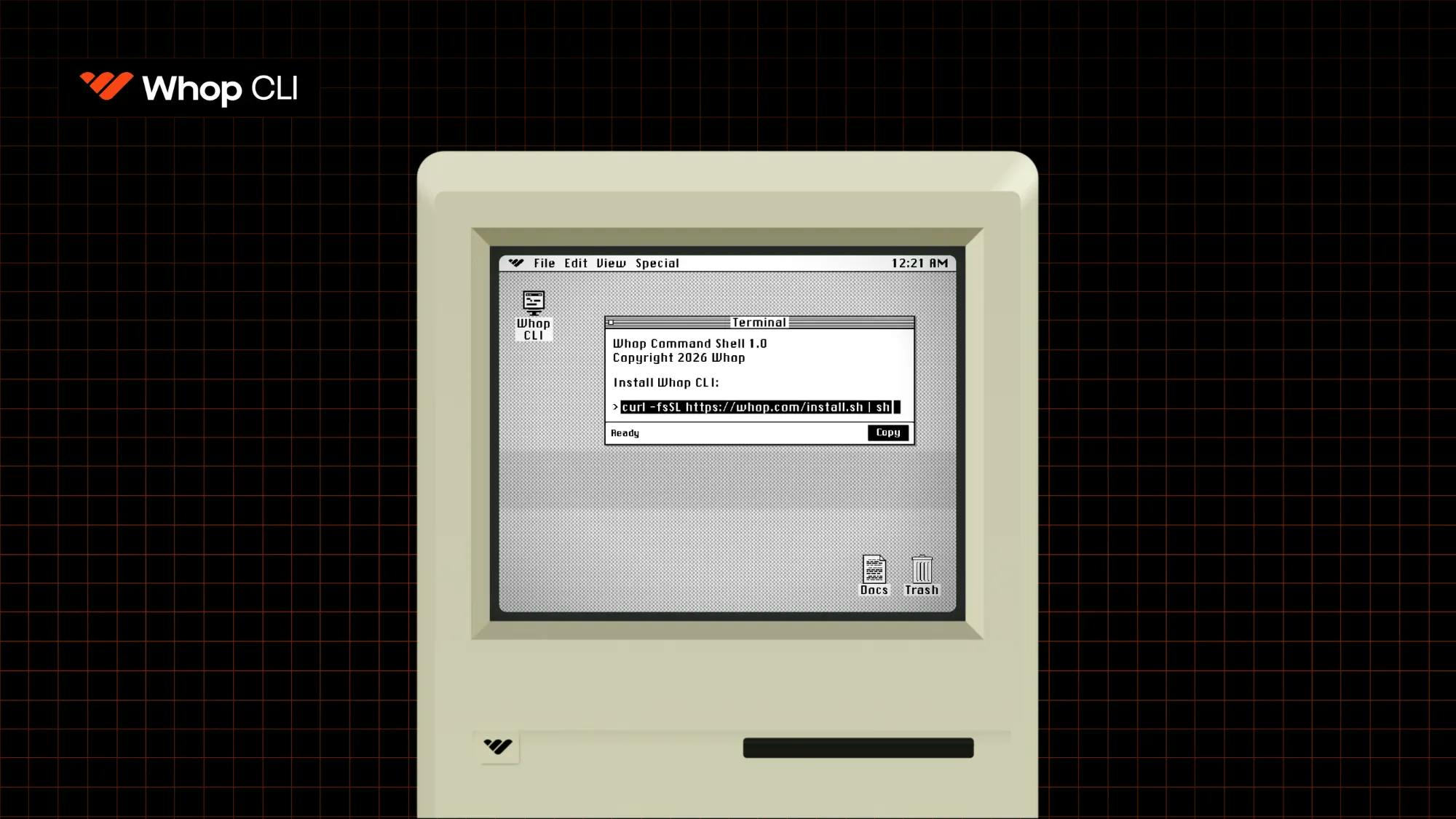
Whop CLI: Bringing Business Operations to the Command Line
The terminal, long the domain of developers and system administrators, is increasingly becoming a central hub for a wider range of professional tasks. Whop CLI, a new product from Whop, aims to extend this reach further by enabling users to manage their entire business operations directly from the command line interface. This move signals a growing trend toward consolidating complex workflows into a single, efficient environment, reducing the need to switch between multiple applications and web dashboards.
The core promise of Whop CLI is to provide a unified interface for managing various aspects of a business. This includes, but is not limited to, tasks such as customer management, sales tracking, subscription handling, and potentially even project management or support ticketing. By abstracting these functions into commands, Whop CLI targets users who value speed, efficiency, and a keyboard-centric workflow. The goal is to empower users to perform actions quickly without the visual overhead of graphical user interfaces, making it ideal for those who are already comfortable navigating and operating within a terminal environment.
Streamlining Operations with Command-Line Efficiency
For many professionals, especially those in technical fields or with a background in command-line operations, the terminal offers a superior experience for certain tasks. It allows for rapid execution of commands, scripting of repetitive actions, and a clear, uncluttered view of operations. Whop CLI capitalizes on this by offering a suite of commands designed to interact with a business's core functions. Imagine being able to check daily sales figures, update a customer’s subscription status, or generate a report, all with a few keystrokes. This not only saves time but also reduces the cognitive load associated with navigating complex web applications. The efficiency gains are particularly pronounced for users who manage multiple businesses or handle a high volume of transactions and customer interactions.
The underlying architecture of Whop CLI likely involves robust APIs that connect to various business services or Whop's own platform. This allows the CLI to act as a central control panel, translating user commands into actions performed by these backend systems. The product’s success will hinge on the breadth of its integrations and the intuitive nature of its command structure. A well-designed CLI is one where commands are predictable, options are clear, and errors are informative. Whop CLI aims to achieve this by providing a consistent user experience across all its functionalities.
Who Benefits from Whop CLI?
The primary audience for Whop CLI includes founders, small business owners, operations managers, and potentially even developers who wear multiple hats. Individuals who are already proficient with tools like Git, Docker, or other command-line utilities will find themselves at home with Whop CLI. It caters to a specific user preference for efficiency and control, offering an alternative to traditional SaaS dashboards. For these users, the ability to automate routine tasks through scripting or to quickly access critical business data without opening a browser can be a significant productivity booster.
Consider a founder who needs to quickly gauge their daily revenue. Instead of logging into a payment processor, a CRM, and an analytics dashboard, they could theoretically type `whop sales today` and get an immediate, consolidated answer. This is the power Whop CLI aims to deliver. Furthermore, for businesses that operate on lean teams or where individuals are expected to manage a wide array of responsibilities, a tool that centralizes and simplifies operations is invaluable. It democratizes access to critical business functions, making them available to anyone with terminal access and the right permissions.
The Future of Business Management Tools
Whop CLI represents a segment of a larger shift in software design: the move towards more focused, efficient, and often less visually complex interfaces for powerful tools. As businesses grow and their operational needs become more intricate, the demand for tools that can manage this complexity without becoming overwhelming will only increase. Command-line interfaces, with their inherent simplicity and power, are well-positioned to meet this demand for certain user segments. Whop CLI’s success could encourage further development in this area, potentially leading to more sophisticated business management tools that leverage the terminal.
The surprising detail here is not the existence of a CLI for business management, but the ambition to cover the *entire* business operation. Many tools offer command-line interfaces for specific functions (e.g., database management, cloud deployment), but a comprehensive suite for holistic business management is less common. This suggests Whop is betting on a significant user base that prioritizes terminal-based workflows over traditional graphical interfaces for their core business tasks. Whether this ambition is fully realized will depend on the depth of its integrations and the robustness of its command set. The challenge lies in making complex business logic accessible and manageable through simple text commands, a task that requires meticulous design and engineering.
As Whop CLI evolves, we can expect to see expanded integrations with popular business software, more advanced scripting capabilities, and potentially even features for collaborative terminal-based business management. The platform’s ability to adapt to the diverse needs of modern businesses will be key to its long-term viability and adoption.