
The Architectural Foundation: Zen 2 and Zen 3
The significant performance increase observed in AMD's Ryzen processors over a two-year span, roughly from the launch of the Zen 2 architecture to the widespread adoption of Zen 3, is not attributable to a single factor. Instead, it represents a confluence of targeted architectural refinements, enhanced manufacturing processes, and astute software optimizations. While increased core counts have been a consistent theme for AMD, the leap in performance per core and overall efficiency tells a more nuanced story.
The Zen 2 architecture, which debuted in 2019 with the Ryzen 3000 series, was a substantial step forward. It introduced a chiplet design, separating CPU cores from the I/O die. This modular approach allowed AMD to scale core counts more effectively and to use TSMC's advanced 7nm process for the core complexes, while the I/O die could remain on a more mature, cost-effective node. Key improvements in Zen 2 included a redesigned front-end, increased L3 cache, and significant IPC (instructions per clock) gains over its Zen+ predecessor. This architecture laid the groundwork for substantial performance improvements, particularly in multi-threaded workloads, by enabling higher clock speeds and better power efficiency.
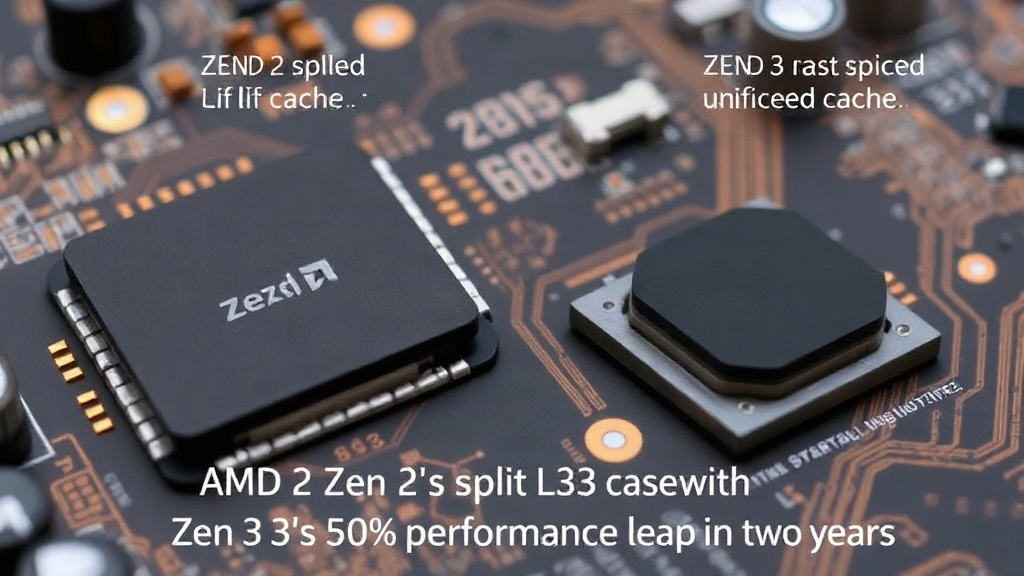
However, the real magic that propelled Ryzen's performance trajectory into its second major phase often points to the Zen 3 architecture, launched in late 2020 with the Ryzen 5000 series. Zen 3 delivered an average 19% IPC uplift across a wide range of applications compared to Zen 2. This was achieved through a complete redesign of the core complex. The most critical change was the unification of the L3 cache. In Zen 2, the L3 cache was split into two 16MB blocks per core complex die (CCD). Zen 3 consolidated this into a single, larger 32MB L3 cache per CCD. This effectively doubled the cache available to each core, drastically reducing latency when accessing frequently used data. Think of it less like giving each person a small, separate toolbox and more like giving them one large, shared workbench where all the tools are immediately accessible. This reduction in cache latency had a profound impact on gaming performance and other latency-sensitive applications, areas where Intel traditionally held an advantage.
Manufacturing Process Enhancements and Clock Speeds
Beyond the architectural leaps, the underlying manufacturing technology played a crucial role. AMD's strategic partnership with TSMC allowed them to leverage increasingly advanced fabrication nodes. The transition from 7nm for Zen 2 to an enhanced 7nm process for Zen 3, and subsequently to 6nm for later iterations, brought significant improvements in transistor density and power efficiency. This efficiency gain is not just about reduced power consumption; it directly translates into higher clock speeds. Processors can run faster and boost higher when they operate within a given thermal and power budget. The improved manufacturing allowed Ryzen CPUs to achieve higher sustained clock frequencies, further contributing to the overall performance increase. This synergy between architecture and process technology is a hallmark of modern CPU development.
The gains were not merely theoretical. Real-world benchmarks from late 2020 through 2022 consistently showed Ryzen 5000 series processors outperforming their predecessors by substantial margins. In gaming, the unified cache of Zen 3, combined with higher boost clocks, often put Ryzen neck-and-neck with, or even ahead of, Intel's offerings. Productivity tasks, benefiting from both IPC gains and the ability to scale core counts effectively with the chiplet design, also saw dramatic improvements. The 50% performance increase over two years isn't an exaggeration; it's a reflection of AMD's aggressive R&D and manufacturing strategy.
Software and Ecosystem Optimizations
While hardware is paramount, software plays an indispensable role in unlocking a processor's full potential. AMD has actively worked with software developers and operating system vendors to ensure their hardware is utilized optimally. This includes driver optimizations, compiler support, and direct engagement with game developers and application creators. For instance, improved thread scheduling in operating systems and more efficient utilization of SIMD instructions (like AVX2 and AVX-512 where applicable) can significantly boost performance without any hardware changes. AMD's commitment to providing robust software tools and engaging with the developer ecosystem ensures that the architectural advantages translate into tangible real-world performance gains for end-users.
Furthermore, AMD's focus on platform stability and features like Precision Boost 2 and Precision Boost Overdrive (PBO) evolved significantly. These technologies dynamically adjust CPU clock speeds based on workload, power, and thermal conditions, ensuring the processor always operates at its peak capability for the given scenario. The refinement of these algorithms over successive generations meant that Ryzen processors became more adept at squeezing out every last bit of performance, especially in bursty, mixed-workload environments common in everyday computing and gaming.
The Broader Context: Competition and Innovation
The rapid performance ascent of AMD Ryzen cannot be viewed in isolation. It occurred within a highly competitive landscape, primarily against Intel. Intel's own architectural challenges and delays in transitioning to more advanced manufacturing nodes created an opening that AMD capitalized on with relentless innovation. This competitive pressure is precisely what drives progress in the semiconductor industry. Users benefit immensely when two major players are pushing each other to deliver more performance, better efficiency, and new features at competitive price points. The period between 2019 and 2021 was a watershed moment, marking AMD's strong resurgence as a leading CPU manufacturer, a position they have largely maintained since.
The question of how AMD Ryzen achieved such a dramatic performance increase in just two years is answered by a multi-pronged strategy: fundamental architectural improvements in the Zen 2 and especially the Zen 3 cores, leveraging cutting-edge manufacturing processes for higher clock speeds and efficiency, and a dedicated effort to optimize software and ensure their hardware's potential was fully realized by applications and operating systems. It's a testament to disciplined engineering and strategic execution.