The Hype vs. Reality of AI in Development
Claims of AI boosting developer productivity by 10x often fall flat when scrutinized. The metrics used—more lines of code, faster benchmark task completion, or a subjective feeling of speed—are weak signals at best. Inflating lines of code is trivial. Benchmarks rarely mirror real-world production complexities. And generating code rapidly is not the same as shipping robust, safe software. To cut through the noise, one developer turned to a practical, long-term experiment within his own established product.
A Natural Experiment: MachDuDas Under AI
Samir Ali, owner and operator of MachDuDas, a German marketplace with over a decade of history, found himself in a unique position. The codebase, built by conventional development teams over many years, provided a rich, pre-AI baseline. Today, Ali is the primary human developer, working extensively with AI coding agents. This setup effectively created a natural experiment: the same product, the same codebase, but with a significant infusion of AI assistance into his daily workflow. He aimed to measure what AI *actually* did to his development velocity, moving beyond abstract claims to tangible results.
Defining and Measuring Velocity
Velocity in software development isn't just about writing code faster. It's about the entire cycle: conception, implementation, testing, deployment, and iteration. Ali's approach focused on metrics that reflect this holistic process. He tracked key performance indicators that matter for a mature product, not just raw output. This included the time taken for new feature development, bug resolution speed, and the overall stability and maintainability of the codebase. The goal was to understand if AI agents were genuinely accelerating these critical aspects of product evolution.
The AI Workflow: Beyond Code Generation
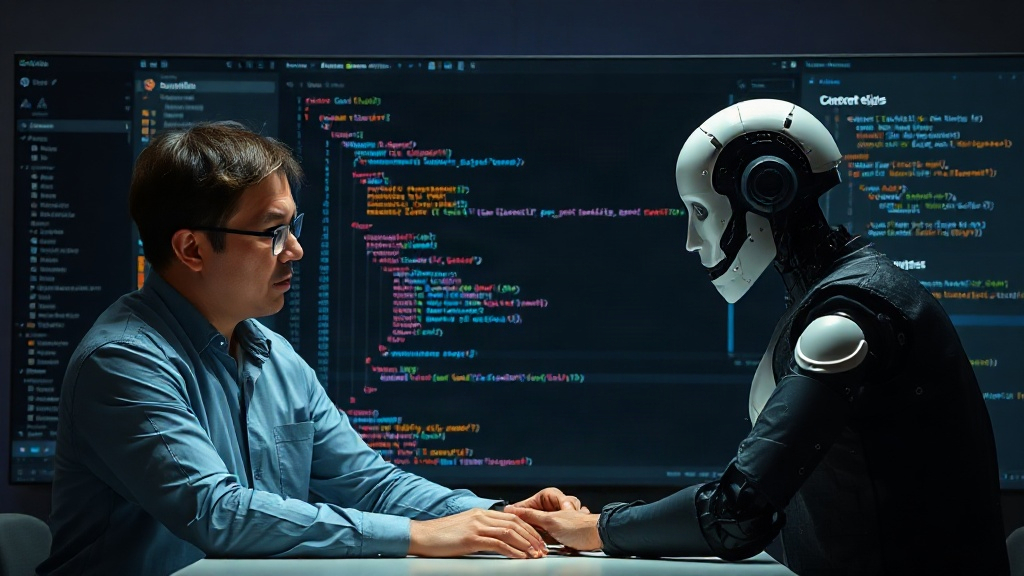
While AI coding assistants excel at generating boilerplate code, suggesting solutions, and even refactoring, their impact extends beyond mere code output. For Ali, the AI became an integral part of the discovery and problem-solving process. Instead of spending hours researching obscure library functions or debugging complex errors, he could leverage AI to get immediate, albeit sometimes imperfect, answers. This offloaded cognitive load, allowing him to focus on higher-level architectural decisions and business logic. The AI acted as a pair programmer, a research assistant, and a debugger, all rolled into one. This collaborative dynamic fundamentally changed his approach to tackling complex tasks.
Quantifiable Wins: What AI Delivered
The results of Ali's experiment revealed tangible improvements. He observed a significant reduction in the time required for implementing new features. Tasks that previously involved extensive manual research or intricate coding patterns were now streamlined. For instance, integrating a new third-party service, which might have taken days of manual API integration and error handling, could now be significantly accelerated with AI-generated stubs and examples. Bug resolution also saw a marked improvement. AI agents could often pinpoint the source of an error faster than manual debugging, especially in complex, legacy code sections. This wasn't about writing more code, but about writing the *right* code more efficiently and fixing issues with greater speed.
The Downsides and Nuances
However, the integration of AI wasn't without its challenges. Ali noted that the quality of AI-generated code can be inconsistent. Blindly accepting suggestions without careful review can introduce subtle bugs or security vulnerabilities. The AI doesn't understand the entire system's context or long-term maintainability goals as a human developer does. Therefore, a crucial part of the workflow became rigorous code review and validation. It's not a fully autonomous system, but rather a powerful tool that requires skilled human oversight. The cognitive load might shift from writing code to reviewing and understanding AI-generated code, which requires a different skillset.
Beyond Lines of Code: A Shift in Focus
The most profound impact wasn't necessarily a direct increase in lines of code written per hour. Instead, Ali experienced a shift in his focus. With AI handling much of the repetitive or time-consuming coding tasks, he could dedicate more mental energy to architectural design, performance optimization, and strategic product development. This means the velocity gained wasn't just in *doing* tasks faster, but in being able to *think* more effectively about the product's future. It's like having a highly capable junior developer who can handle grunt work, freeing up the senior architect to design the skyscraper.
The Future of AI-Assisted Development
Ali's experience with MachDuDas offers a realistic perspective on AI's role in software development. It's not a magic bullet for instant 10x productivity, but a powerful assistant that, when used effectively and with critical oversight, can significantly enhance development velocity. The key lies in measuring the right metrics—those reflecting the entire development lifecycle—and understanding that AI's true value is in augmenting human capabilities, not replacing them. As AI tools evolve, developers who master the art of collaborating with these agents will likely see the most significant gains.