Orchestrating Autonomous Voice Agents at Scale
Building a production-grade command center for managing multiple concurrent AI voice agents presents significant architectural challenges. The core requirement for Quiet Hours Valet was to orchestrate 8 AI voice agents, manage 8 distinct automation scenarios, and handle real-time customer management across a complex real estate and services business. This system needed to be robust enough for a vertically integrated operation, leveraging Supabase, VAPI, and self-hosted infrastructure. The resulting architecture features a 5-page Next.js frontend for user interaction, an 8-table PostgreSQL schema designed for scheduling and dynamic routing, and Supabase Edge Functions acting as the crucial link for VAPI webhook callbacks. This setup enables a single operator to oversee and manage numerous autonomous agents simultaneously, transforming a proof-of-concept into a scalable operational tool.
The technical reference presented here addresses the common hurdles faced when scaling voice AI beyond initial testing. Key among these are ensuring webhooks reliably trigger database mutations, managing state effectively without the overhead of traditional serverless functions like AWS Lambda, and designing a database schema capable of handling the high concurrency demands of multiple agents operating in parallel. The system prioritizes efficient data flow and state synchronization, critical for maintaining operational integrity and providing a seamless experience for both the AI agents and the human operator.
Database Schema and State Management
At the heart of the command center lies an 8-table PostgreSQL schema. This schema is meticulously designed to support the complex requirements of scheduling, routing, and real-time status tracking for the AI agents and their associated tasks. Tables likely include entities for customers, agents, schedules, call logs, automation triggers, and operational states. This relational structure allows for sophisticated querying and data manipulation, essential for coordinating multiple concurrent operations. For instance, a scheduling table would manage when agents are active and for which customers, while a routing table would direct incoming requests or outbound calls to the most appropriate agent based on availability and task type. The use of PostgreSQL ensures data integrity and supports complex relationships between these entities, providing a solid foundation for the entire system.
State management is handled without the typical overhead of serverless functions. Supabase Edge Functions play a pivotal role here, acting as the intermediary that receives callbacks from VAPI. When a VAPI agent completes an action, makes a call, or encounters an event, it sends a webhook. These Edge Functions intercept these webhooks and translate them into direct database mutations within PostgreSQL. This approach bypasses the cold-start latency and execution limits often associated with traditional serverless compute, allowing for near real-time state updates. The data stored in PostgreSQL reflects the current status of each agent, the progress of their tasks, and any relevant customer interactions, providing a single source of truth for the command center operator.
Supabase Edge Functions for Webhook Handling
Supabase Edge Functions are central to the system's ability to process VAPI webhook callbacks efficiently. VAPI, a platform for building AI-powered voice applications, generates events that need to be acted upon immediately. Instead of relying on a separate, dedicated server or a more traditional serverless compute layer, the developers opted for Supabase Edge Functions. These functions are deployed close to the database, minimizing network latency and enabling rapid execution. When VAPI sends a webhook notification—perhaps indicating a call has ended, a customer provided specific information, or an agent requires assistance—the Edge Function is triggered.
The Edge Function's primary responsibility is to parse the incoming webhook payload from VAPI and then execute the appropriate logic within the Supabase ecosystem. This typically involves updating the state of the relevant agent or customer in the PostgreSQL database. For example, if a VAPI agent successfully books an appointment, the webhook would trigger an Edge Function to update the appointment status in the database and potentially flag the customer for follow-up or completion. This seamless integration between VAPI's event system and Supabase's database capabilities is what allows the system to maintain a real-time operational view. The choice of Supabase also streamlines development by providing a unified platform for backend services, including authentication, database, and serverless functions, reducing the complexity of managing multiple disparate services.
Orchestration Logic and Operator Interface
The orchestration logic is the brain of the command center, coordinating the actions of the autonomous agents and providing the operator with the necessary tools for oversight. This logic resides within the application's backend, likely interacting heavily with the Supabase Edge Functions and the PostgreSQL database. It dictates how new tasks are assigned to agents, how concurrent calls are managed, and how exceptions or escalations are handled. For instance, if an AI agent encounters a complex customer query it cannot resolve, the orchestration logic might route the call to a human operator or trigger a specific automation scenario.
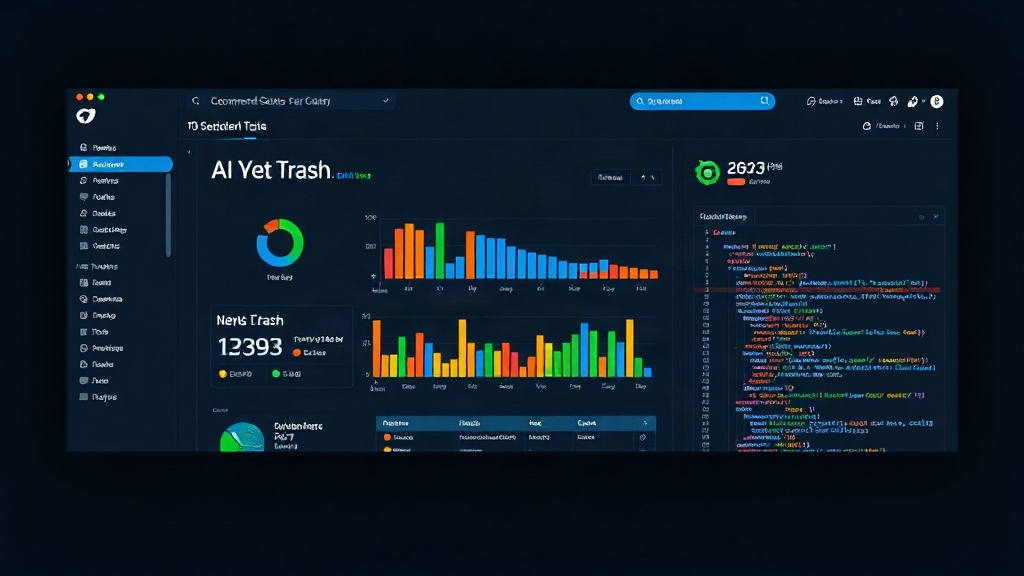
The 5-page Next.js frontend serves as the operator's interface to this complex system. It visualizes the status of all 8 concurrent agents, displays customer information, shows ongoing automation scenarios, and provides controls for manual intervention. This interface is designed for clarity and efficiency, allowing a single operator to monitor and manage a significant workload. Real-time updates are crucial here, ensuring the operator always has the most current information regarding agent activity and customer interactions. The tight integration between the frontend, backend logic, Supabase Edge Functions, and PostgreSQL allows for a responsive and effective operational environment, even with a high volume of concurrent AI agent activity. This build demonstrates a pragmatic approach to scaling voice AI operations, emphasizing reliability, real-time data, and efficient human-AI collaboration.