Bridging the Knowledge Gap: Beyond Static Training Data
Foundation models, while powerful, are inherently limited by their training data. Their knowledge is a snapshot in time, frozen at the last training cutoff. This means they cannot inherently access real-time information like current dates, live stock prices, or weather forecasts. They operate in a vacuum, unaware of the dynamic world outside their training corpus. This limitation prevents them from performing many practical, real-world tasks that users expect from intelligent assistants.
Tool calling emerges as the critical solution to this knowledge gap. It's the mechanism that allows an AI model to interact with external systems, access live data, and even execute actions. Think of it less like a database that stores information and more like a highly capable personal assistant who knows exactly who to call or what service to query to get you the most up-to-date answer.
The Mechanics of Tool Calling: Function Definitions and Execution
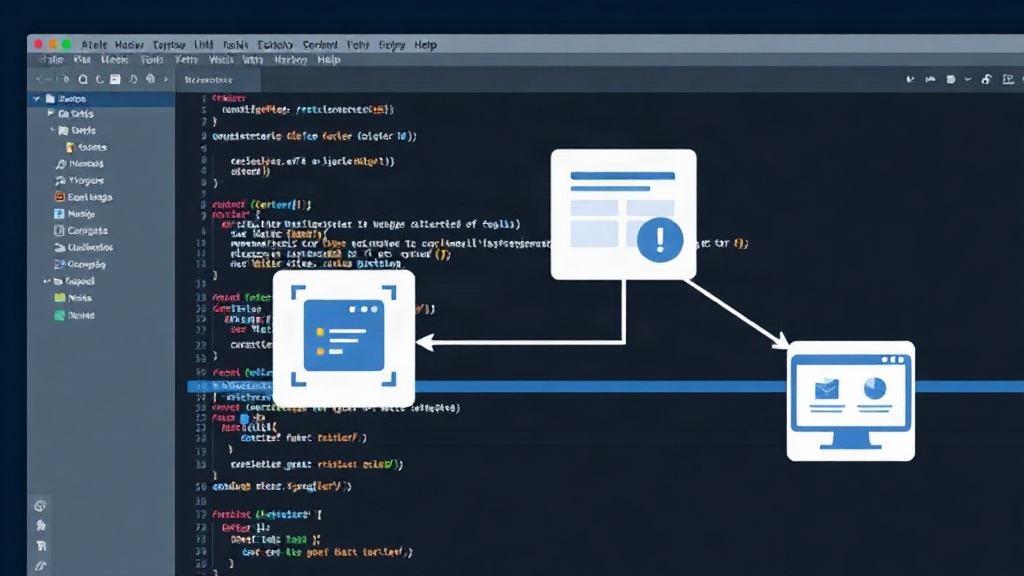
At its core, tool calling involves defining a set of available 'tools' that the AI model can utilize. These tools are essentially functions or APIs that the model can invoke. The process begins with the developer providing the AI model with descriptions of these tools, including their names, parameters, and what they do. This is akin to giving the AI a menu of available services and explaining how to order from each.
When a user poses a query that requires information beyond the model's static knowledge, the AI analyzes the request. If it determines that one of the provided tools can fulfill the request, it will generate a structured output. This output typically specifies the tool to be called and the arguments to be passed to it, formatted in a way that an external system can understand and execute. For instance, if a user asks for the current weather in London, the AI might identify a `get_weather` tool and generate a call like `get_weather(location='London')`.
The application hosting the AI model then intercepts this structured output. It parses the request, identifies the specified tool, and executes the corresponding function or API call. The result from this external call—the live weather data for London, in this example—is then returned to the AI model. The model processes this new information and formulates a natural language response to the user.
Two Paths to External Knowledge: Function Calling vs. Retrieval Augmented Generation (RAG)
While tool calling is the overarching concept, there are distinct methodologies for how an AI can incorporate external facts. The article highlights two primary approaches:
1. Function Calling (Tool Calling)
This is the direct method described above. The AI model is explicitly given access to functions (tools) and decides when and how to call them. It's proactive: the model identifies a need and makes a structured request to fulfill it. This is powerful for real-time data retrieval and executing dynamic actions. For example, an AI could use function calling to book a meeting, set a reminder, or fetch the latest news headlines.
2. Retrieval Augmented Generation (RAG)
In contrast to function calling, RAG is a passive retrieval method. Instead of the AI calling out, relevant information is first retrieved from an external knowledge base (like a set of documents or a vector database) and then fed into the AI's context window. The AI then uses this provided information to answer the user's query. This is excellent for grounding AI responses in specific, factual documents but doesn't allow for real-time interaction or action execution. The previous post in this series focused on RAG, teaching models to read documents.
The Surprising Power of Specific Tool Definitions
What's genuinely surprising is the level of detail required in tool definitions. It's not enough to say, "This tool gets the weather." The model needs to know the exact parameters, their types (string, integer, boolean), whether they are required or optional, and a clear description of what each parameter represents. For instance, a `get_weather` tool might require a `location` (string, required) and an `unit` (string, optional, default='celsius'). The quality and clarity of these definitions directly impact the AI's ability to correctly invoke the tool. This suggests that prompt engineering for tool calling is as much about defining the tools accurately as it is about crafting the user's prompt.
What's Next for AI and Tool Integration?
The ability for AI models to call external tools opens up a vast landscape of possibilities. Beyond simply answering questions, AI assistants can become active participants in workflows, automating complex tasks that require real-time data and interaction with other services. As models become more sophisticated at understanding context and intent, their ability to select and utilize the correct tools will improve dramatically. The challenge remains in securely and reliably managing these external interactions, ensuring that the AI only accesses authorized information and performs intended actions.
If you're building an AI application that needs to go beyond static knowledge, understanding and implementing tool calling is no longer optional—it's essential. It's the bridge that connects the intelligence of large language models to the dynamic, actionable information of the real world.