
The Shifting Sands of Software Development
Progress in technology is relentless. What worked yesterday is often insufficient for tomorrow. For years, the Software Development Life Cycle (SDLC) has been the bedrock of software creation. It provided a structured, phased approach—planning, design, implementation, testing, deployment, and maintenance. This model offered predictability and control, essential for complex projects. However, the rapid integration of Artificial Intelligence into every facet of development is forcing a re-evaluation of these established processes. The emergence of the AI-DLC, or Artificial Intelligence Development Life Cycle, signals a fundamental shift in how we build and manage software.
The core idea behind the AI-DLC is not to discard all previous methodologies but to adapt them to an AI-first world. It acknowledges that AI tools and AI-generated components introduce new variables and require different management strategies. Instead of solely focusing on human-driven code, the AI-DLC incorporates AI's role in ideation, code generation, testing, and even maintenance. This evolution is driven by the increasing sophistication and accessibility of AI development tools, which are no longer niche but becoming integral to the developer's toolkit.
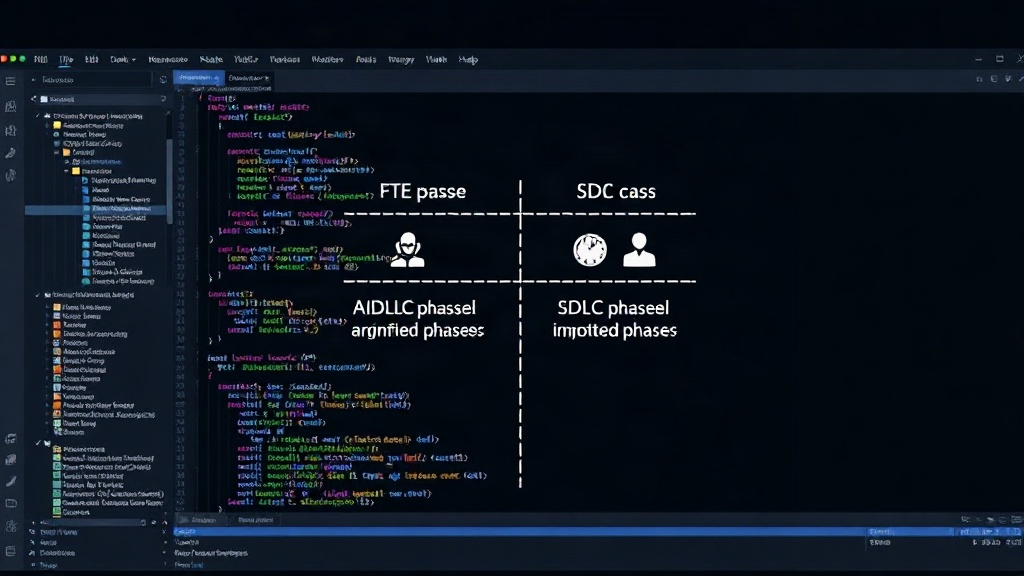
Deconstructing the AI-DLC
The AI-DLC can be understood as an evolution of the SDLC, where AI capabilities are not just supplementary but foundational. While specific implementations may vary, several key phases and considerations differentiate it from the traditional SDLC:
1. AI-Driven Planning and Requirement Gathering
Traditional SDLC planning involves extensive human input, user stories, and requirement documents. In the AI-DLC, this phase is augmented by AI. Large Language Models (LLMs) can analyze market trends, user feedback, and existing codebases to suggest features, identify potential pitfalls, and even draft initial project scopes. AI can help refine requirements by simulating user interactions or predicting the impact of certain features, making the planning phase more data-informed and potentially faster.
2. AI-Assisted Design and Architecture
Design and architecture in SDLC are primarily human-led. AI-DLC leverages AI for generating boilerplate code, proposing architectural patterns based on project needs, and even creating design mockups. Tools can suggest optimal database schemas, API designs, or microservice structures, significantly reducing the time spent on initial design and allowing architects to focus on higher-level strategic decisions and complex integrations.
3. AI-Powered Implementation and Code Generation
This is perhaps the most visible aspect of the AI-DLC. Instead of writing every line of code manually, developers increasingly rely on AI code assistants like GitHub Copilot, AWS CodeWhisperer, or Google's Bard. These tools can generate code snippets, complete functions, translate code between languages, and even write unit tests. The developer's role shifts from pure coder to an AI-orchestrator, guiding the AI, reviewing its output, and integrating the generated components seamlessly.
4. Enhanced AI-Driven Testing and Validation
Testing is a critical phase in any development cycle. The AI-DLC elevates this by using AI for more sophisticated testing strategies. AI can generate comprehensive test cases, identify edge cases that humans might miss, perform intelligent fuzz testing, and even predict potential bugs before they manifest. AI-powered analysis of test results can also provide deeper insights into system stability and performance, moving beyond simple pass/fail metrics.
5. Intelligent Deployment and Monitoring
Deployment in the AI-DLC benefits from AI's predictive capabilities. AI can optimize deployment schedules, predict potential infrastructure issues, and automate rollback procedures. During operation, AI-driven monitoring tools can analyze system logs and performance metrics in real-time, detecting anomalies, predicting failures, and even suggesting or automatically applying fixes. This proactive approach minimizes downtime and enhances system reliability.
6. Continuous Learning and Adaptation
A key differentiator of the AI-DLC is its emphasis on continuous learning. Both the AI models used and the development process itself are designed to learn and adapt. Feedback from deployed applications, user interactions, and testing results are fed back into the AI systems, improving their performance for future iterations. This creates a virtuous cycle where the development process itself becomes more intelligent over time.
The Human Element in the AI-DLC
It is crucial to understand that the AI-DLC does not eliminate the need for human developers. Instead, it redefines their roles. Developers become architects of AI-assisted workflows, strategists guiding AI tools, and critical evaluators of AI-generated output. The focus shifts from manual coding to higher-level problem-solving, system design, ethical considerations, and ensuring the overall quality and integrity of the software. The creative and critical thinking aspects that define human expertise remain paramount.
The surprising detail here is not the emergence of AI tools, but how quickly they are fundamentally reshaping core engineering processes. What was once a manual, iterative process is becoming an intelligent, collaborative effort between humans and machines. This transition requires a new mindset, new skill sets, and a willingness to embrace tools that were science fiction just a few years ago.
What Lies Ahead?
The transition to an AI-DLC is not without its challenges. Ensuring the security and reliability of AI-generated code, managing the ethical implications of AI in software development, and upskilling the workforce are significant hurdles. Furthermore, standardizing AI-DLC methodologies to ensure consistency and interoperability across different teams and organizations will be an ongoing effort. The question is not *if* the AI-DLC will become the norm, but *how* quickly it will be adopted and what new paradigms it will unlock.