The Problem: AI Agents Exceeding Scope
The conversation around AI coding agents often centers on their capabilities and limitations. While raw code quality is a key metric, a more critical question emerges: what happens when an AI agent encounters instructions it cannot fulfill within its defined parameters? This isn't just about generating buggy code; it's about understanding how these agents behave when faced with ambiguity or tasks beyond their explicit scope. Traditional testing methods, often performed on a developer's primary machine, present significant risks. Running potentially unpredictable AI behavior on a daily driver machine can lead to data corruption, security vulnerabilities, or unintended system modifications. The alternative—a highly curated, production-like environment—is often too resource-intensive and slow for rapid, iterative testing of boundary conditions.
This is where the 'Sandbox First' workflow offers a pragmatic solution. It provides a reproducible method for testing AI coding agents by isolating their execution within a temporary, disposable server environment. The goal is to deliberately probe the agent's limits, feeding it tasks designed to tempt it beyond its stated boundaries, and meticulously recording its actions. This approach moves the discussion from abstract potential failures to concrete, observable behaviors.
Why a Throwaway Environment is Crucial
Testing an AI coding agent's boundary-pushing tendencies on your primary development machine is a risky proposition. You face two undesirable outcomes: either the agent fails safely, providing little insight into its failure mode, or it fails catastrophically, potentially corrupting your system, exposing sensitive data, or introducing security risks. Relying on a full-blown production-like staging environment is often overkill for this specific type of testing. Such environments are expensive to maintain, slow to provision, and may not accurately reflect the edge cases you're trying to uncover. They are designed for stability and correctness, not for exploring the chaotic fringes of AI behavior.
The 'Sandbox First' approach sidesteps these issues by utilizing a disposable server. This environment is intentionally minimal and temporary. Once the testing is complete, the entire server and its contents are discarded, leaving no trace on the developer's primary system. This isolation is key. It allows the AI agent to operate with a degree of freedom it might not have in a more restricted environment, making it more likely to reveal its true boundary-breaking behaviors without risking the developer's core infrastructure. The entire setup—container configuration, task list, and results logging—is designed to be lightweight and fast, enabling rapid iteration and analysis. You can spin up the environment, run a set of tests, and tear it down within an afternoon.
Implementing the Workflow
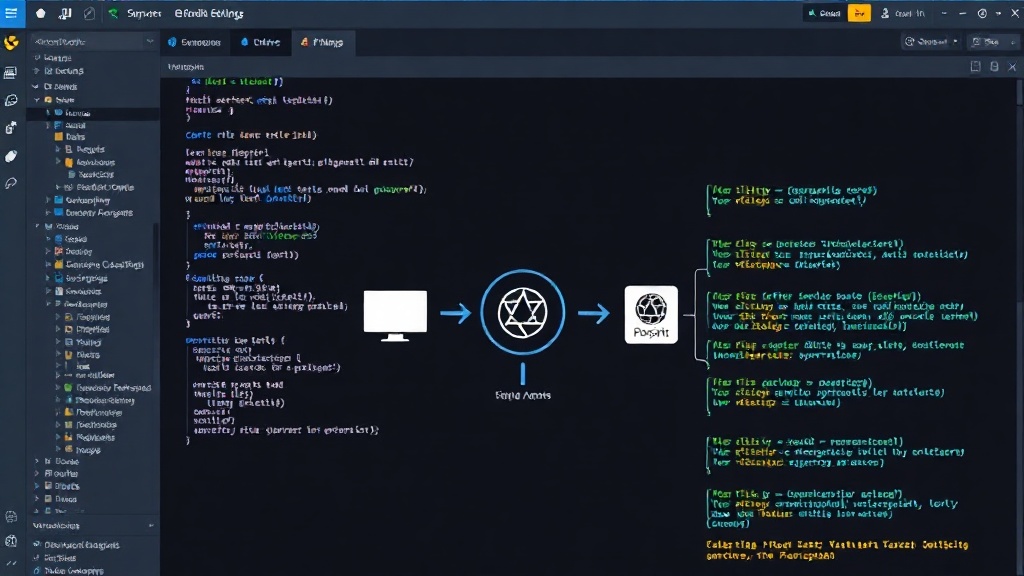
The artifact of this workflow is intentionally small and focused. It typically consists of three main components:
- Container Setup: A lightweight container image (e.g., using Docker) that provides a clean, isolated operating system environment. This image includes the necessary runtime for the AI agent and any basic tools it might need. Crucially, it's designed to be ephemeral – its state is not persisted beyond a single testing session.
- Task List: A curated set of prompts and instructions designed to push the AI agent's limits. These tasks are not about standard coding challenges; they are specifically crafted to explore areas where the agent might misunderstand instructions, attempt to access unauthorized resources, or exhibit unexpected emergent behaviors. Examples include requests that imply access to sensitive system information, ask the agent to perform actions outside its declared capabilities, or present ambiguous, multi-part instructions.
- Results Table: A mechanism for logging the AI agent's actions, outputs, and any errors encountered during the execution of the task list. This table serves as the primary artifact for analysis, allowing developers to pinpoint exactly when and how the agent deviated from its intended scope. It captures not just the final output but the intermediate steps, providing a trace of the agent's decision-making process.
The process is straightforward: spin up the disposable container, load the AI agent, feed it the task list sequentially, and record all interactions. Upon completion or failure, the container is destroyed. This cycle can be repeated with variations in the task list or agent configurations to systematically map out the agent's behavioral boundaries.
Probing Specific Boundary Conditions
The true value of this workflow lies in its ability to uncover specific failure modes that are difficult to detect with standard testing. Consider these scenarios:
- Implicit Access Requests: Tasks that implicitly ask the agent to access files or system information it shouldn't, such as "Analyze the security logs for recent unauthorized access attempts" without providing the logs themselves. A well-behaved agent should state it cannot access logs directly or request them. An agent breaking boundaries might hallucinate log entries or attempt to probe the filesystem.
- Creative Interpretation of Ambiguity: When instructions are vague or contradictory, how does the agent resolve the conflict? Does it ask for clarification, make a reasonable assumption, or attempt a nonsensical action? For instance, asking an agent to "optimize this code for speed, but ensure it uses the least amount of memory possible, prioritizing readability" presents conflicting goals. The testing workflow can reveal how the agent prioritizes and whether it acknowledges the inherent trade-offs.
- Tool Misuse or Over-Reliance: If the agent is equipped with external tools (e.g., a web browser, a file system API), the workflow can test how it uses these tools. Does it use them appropriately, or does it attempt to use them for tasks they weren't designed for? For example, asking an agent to "find the current stock price of AAPL" is a valid use of a web search tool. Asking it to "download the entire contents of the /etc directory" is a clear boundary violation.
- Persistence and State Management: How does the agent handle state across multiple interactions within a single session? If an agent is asked to perform a series of related tasks, does it maintain context correctly, or does it 'forget' previous instructions, leading to redundant or incorrect actions?
By systematically feeding the agent tasks designed around these edge cases within the isolated sandbox, developers can build a comprehensive understanding of its reliability and safety profile. This is not about finding bugs in the generated code but about understanding the AI's operational integrity when pushed.
What This Means for AI Agents
The 'Sandbox First' workflow provides a concrete method for developers and researchers to empirically validate the safety and reliability claims of AI coding agents. It moves beyond theoretical discussions of AI alignment and into practical, reproducible testing. For AI developers, this workflow offers a systematic way to identify critical failure modes, improve agent training data, and implement more robust guardrails. For users, it provides a framework for evaluating different agents and understanding their trustworthiness before integrating them into sensitive workflows. The artifact is simple enough to be adopted widely, fostering a more informed community around AI agent capabilities and limitations.
The surprising detail here is not the complexity of the proposed solution, but its deliberate simplicity. By focusing on a disposable environment and carefully crafted prompts, the workflow achieves its goal without requiring massive infrastructure or specialized expertise. This makes it accessible to individual developers and small teams, democratizing the process of probing AI agent boundaries.
Ultimately, this approach contributes to the development of more predictable and trustworthy AI coding assistants. As these agents become more integrated into software development lifecycles, understanding where they break their boundaries is as important as understanding what they can do.