The Cost of Ephemeral AI Memory
Daily AI coding agent users face a frustrating ritual. Each new session begins with the agent having no memory of previous work. It must re-ingest entire codebases, re-establish context, and be re-briefed on architectural decisions and prior iterations. This isn't just an annoyance; it's a tangible cost.
The first hit is to your token budget. Sending massive codebases into the context window repeatedly to locate a single function, or re-transmitting the entire conversation history with every turn, consumes valuable tokens. For teams relying heavily on these agents, this can escalate into significant, recurring expenses.
Beyond token costs, the loss of conversational memory erodes productivity. Critical decisions, architectural rationales, and discarded approaches that lived in past chat logs vanish. The agent might then propose solutions already rejected or reintroduce code patterns that were deliberately removed. This forces developers to constantly re-explain context, re-justify past choices, and essentially retrain their AI assistant on a daily basis.
This problem is compounded in collaborative environments. If multiple developers or multiple AI agents are working on the same repository, they share no learned context. Each agent operates in a vacuum, unaware of the others' work, decisions, or discoveries. This leads to duplicated effort, conflicting changes, and a general lack of cohesive progress.
The core issue is a lack of persistent, project-wide memory. Current AI coding agents treat each interaction as a fresh start, discarding all prior knowledge. They operate like a brilliant but amnesiac junior developer who needs constant hand-holding.
Introducing Codelux: Persistent Memory for AI Agents
Codelux is designed to address this fundamental limitation. It acts as a persistent memory layer for your AI coding agents, ensuring that context, decisions, and project history are retained across sessions and accessible to all collaborators.
Instead of requiring the AI to re-read files and re-process context every time, Codelux indexes your codebase and stores relevant information. When you start a new session, Codelux provides the AI with a distilled, relevant context derived from your project's history, not just the current file structure. This means the agent understands the project's architecture, past decisions, and ongoing development without needing to be explicitly reminded.
Think of it less like a stateless chatbot and more like a highly organized project manager who remembers every discussion, every whiteboard session, and every delivered feature. This manager then briefs the AI agent with the most pertinent information before each task.
How Codelux Works
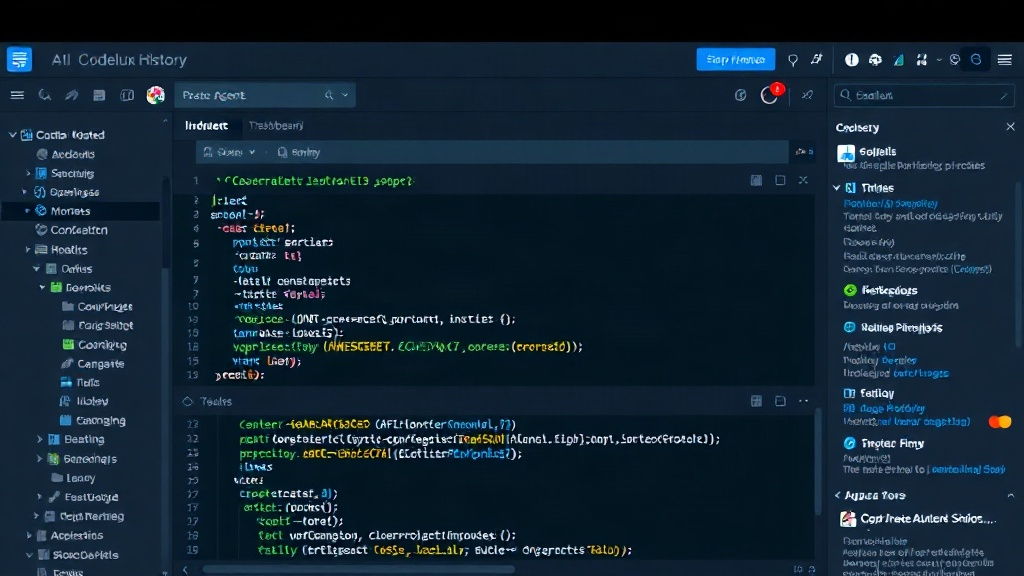
Codelux operates by analyzing and indexing your codebase. It goes beyond simple file indexing to understand relationships between code elements, architectural patterns, and even the evolution of the codebase over time. This indexed knowledge forms the basis of its persistent memory.
When an AI coding agent needs context, Codelux serves as an intelligent intermediary. It retrieves only the most relevant information from its index, rather than dumping entire files into the agent's context window. This significantly reduces token usage and speeds up the agent's response time. Furthermore, Codelux can recall past conversations and decisions, preventing the agent from repeating mistakes or undoing previous work.
For teams, Codelux creates a shared knowledge base. All developers and AI agents working on the project access the same indexed context. This ensures consistency, prevents conflicting efforts, and accelerates onboarding for new team members or new AI agents.
Benefits for Developers and Teams
The primary benefit is a dramatic reduction in wasted time and resources. Developers spend less time re-explaining context and more time coding. Token costs are minimized due to more efficient context management.
Codelux helps maintain institutional knowledge within a project. Even if team members or AI agents change, the project's history and rationale are preserved, reducing the impact of developer turnover.
The tool aims to make AI coding agents more effective partners by providing them with the memory and context they need to operate efficiently and intelligently. This leads to faster development cycles, fewer errors, and a more cohesive development process.
The Codelux Offering
Codelux is available with a free tier for individual developers, allowing them to experience the benefits of persistent memory. Paid plans are offered for teams requiring more extensive features and support. The goal is to make this essential functionality accessible to a wide range of users, from solo developers to large engineering organizations.