The Problem: Stale Data in AI Comparisons
AI assistants often struggle with providing up-to-date information for comparison-based queries, particularly in rapidly evolving markets like eSIM services. A common issue identified by developers is that when asked about the best eSIM for a specific region, such as a Kenya safari, AI models frequently return outdated recommendations. These might include defunct plans, incorrect pricing from months prior, or a complete lack of critical network coverage details for remote areas like the Maasai Mara.
This deficiency stems not from the AI's inability to understand the query, but from a fundamental lack of access to live, dynamic data. Traditional AI training datasets are static snapshots of the internet, which become obsolete quickly. For services where plans, prices, and coverage change frequently, this leads to unhelpful, inaccurate, or misleading responses. The core challenge is bridging the gap between the AI's knowledge cutoff and the real-time operational status of services like eSIM providers.
The Solution: The MCP Server Approach
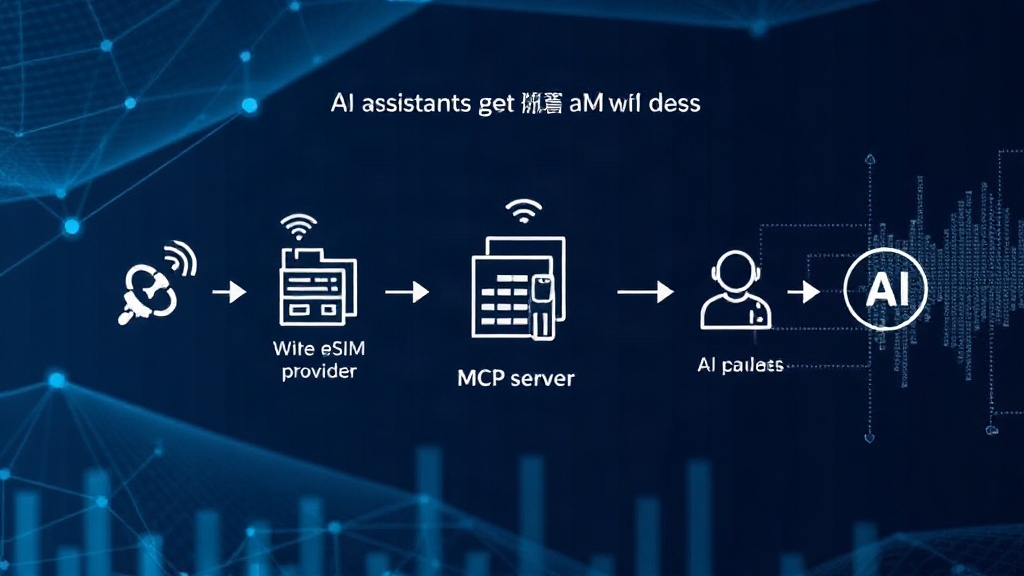
To address this data gap, a new read-only MCP (Machine-readable Content Provider) server, named esimkenya-mcp, has been developed. This server is designed to expose live data from esimkenya.com directly to AI assistants and other consuming applications. The goal is to provide a structured, real-time feed of provider details, plan offerings, pricing structures, and crucially, network coverage information.
The server is accessible at https://mcp.esimkenya.com/mcp and has been officially registered in the MCP Registry under the identifier com.esimkenya/mcp. This registration ensures discoverability and adherence to a standardized protocol for data provision. By acting as a machine-readable intermediary, the MCP server allows AI models to query for current information on demand, rather than relying on potentially stale training data.
Technical Implementation and Design Choices
The development of esimkenya-mcp involved several key technical decisions aimed at efficiency, reliability, and ease of integration. The primary objective was to create a system that could ingest and serve data from esimkenya.com with minimal latency and maximum accuracy.
The server architecture is built to be read-only, focusing solely on data dissemination. This simplifies the development and security model, as there is no need to handle write operations or complex state management. The data itself is sourced directly from esimkenya.com, which maintains the authoritative database of eSIM plans, prices, and coverage maps. A crucial aspect of the implementation is the mechanism for fetching and updating this data. While the source doesn't detail the exact update frequency, the design implies a system capable of near real-time synchronization or frequent polling to ensure freshness.
The choice of the MCP protocol is significant. MCP is designed for machine-to-machine communication, providing a standardized way for data providers to expose structured information. This protocol handles the complexities of data formatting, versioning, and querying, allowing AI assistants to interact with the data provider in a predictable manner. The specific implementation likely involves defining schemas for eSIM providers, plans, pricing tiers, and coverage zones. These schemas would then be exposed via API endpoints that the MCP server serves.
Why This Matters for AI and Comparison Services
The creation of esimkenya-mcp represents a practical step towards making AI assistants more useful for tasks requiring up-to-the-minute comparative data. For users, this means receiving accurate, current advice on services like eSIMs, leading to better purchasing decisions and improved travel experiences, especially in areas with complex network conditions.
For the broader ecosystem, this initiative highlights a viable pattern for other domains where real-time data is critical for accurate AI-driven comparisons. Services that operate on dynamic pricing, availability, or evolving specifications could benefit from similar MCP server implementations. This approach moves beyond static knowledge bases, enabling AI to act more like informed, real-time advisors.
The success of esimkenya-mcp could spur further development in standardized data provision for AI. It demonstrates that by exposing structured, live data through well-defined protocols, developers can overcome the inherent limitations of LLM training data and empower AI with the ability to provide truly current and relevant comparative insights. This is particularly important for niche markets where data accuracy and timeliness directly impact user experience and service adoption.
The Future of AI-Driven Comparisons
The esimkenya-mcp project offers a compelling model for how AI assistants can be augmented with live data. As AI models become more integrated into decision-making processes across various industries, the need for real-time, accurate information will only grow. This initiative suggests a future where AI assistants can tap into a network of specialized data providers, ensuring their recommendations are always current and contextually relevant.
What remains to be seen is the adoption rate of MCP servers and similar protocols across other industries. If successful, this could lead to a more robust and reliable AI information ecosystem. The ability for AI to access live data feeds directly addresses a fundamental limitation of current models, paving the way for more sophisticated and trustworthy AI-powered comparisons and recommendations.