
The Illusion of Efficiency: Rethinking AI Resource Allocation
For many users, interacting with large language models (LLMs) follows a familiar pattern: select a powerful model, set a reasoning level, and then let it handle the entire task. This approach, while straightforward, might be leading to significant inefficiencies for those pushing the boundaries of AI application. A growing observation among heavy AI users, particularly those experimenting with multi-agent systems for complex real-world tasks, points to a surprising culprit: the overhead of routing and orchestrating smaller AI calls can easily outweigh the cost of a single, robust model execution.
Consider the traditional method. A user initiates a single, long session with a model like GPT-4 or Claude. This session is responsible for everything: initial planning, detailed research, complex reasoning, drafting, revisions, and even basic validation. The user makes one primary decision upfront – which model and what reasoning depth – and the AI then proceeds with that configuration for the entire workflow. While this offers simplicity, it increasingly feels like a blunt instrument in a world demanding precision and optimization.
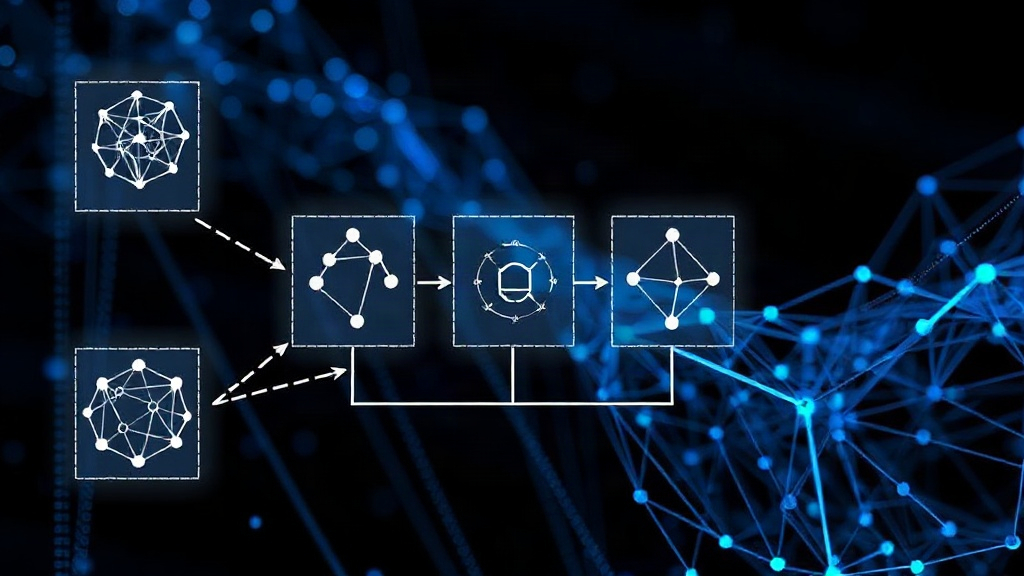
The alternative, seen in more sophisticated multi-agent architectures, involves decomposing tasks into smaller, more manageable steps. This is where the counterintuitive economics of AI compute begin to emerge. Instead of a single, monolithic query to a high-cost model, a system can intelligently route different sub-tasks to specialized, often cheaper, AI models or even deterministic processes. Deterministic steps, which require no AI inference at all, are handled by code. Ambiguous or complex reasoning tasks are escalated to more powerful, but more expensive, models. Simpler tasks are offloaded to faster, more cost-effective options. Validation might be handled by a separate, potentially even simpler, model or a rule-based system.
The Economics of Decomposition
This decomposition strategy offers a critical advantage: cost management. If a preliminary step fails or requires refinement, the system doesn't necessarily escalate to the most expensive model immediately. It can try a cheaper alternative, loop back to an earlier deterministic step, or re-route the task. This means that the system is not *always* paying the maximum cost from the outset. Instead, it intelligently scales its compute usage based on the actual difficulty and nature of each sub-problem.
The surprising outcome of this approach is often a significant reduction in overall paid capacity. Several smaller, optimized model runs, each tailored to a specific part of the task, can collectively consume less compute and therefore less money than one continuous, high-intensity run on a single, powerful model. This is particularly true when the overall task involves a mix of simple and complex operations, or when a significant portion can be handled by non-AI logic.
Think of it less like hiring a single, highly-paid consultant to do every single task for your business, from answering the phone to strategic planning. Instead, it’s more like building a team: a receptionist handles calls, a junior assistant manages basic errands, a project manager oversees core operations, and a senior executive handles high-level strategy. Each role is optimized for its specific function, and the overall cost is managed more effectively than if the CEO had to do everything.
The Unanswered Question: Scalability and Latency
While the cost savings are compelling, this architectural shift raises new questions. What is the tipping point where the complexity of managing these multiple agents and their routing logic becomes a bottleneck in itself? How does the added latency of inter-agent communication and decision-making impact the overall speed of task completion? For applications requiring near real-time responses, the overhead of orchestrating numerous small calls could negate the benefits. Furthermore, how do developers effectively monitor and debug systems that are essentially distributing their intelligence across multiple, disparate services? The tools and methodologies for managing such distributed AI workflows are still nascent, leaving a significant gap in our current capabilities.
Broader Implications for AI Adoption
This observation has profound implications for how individuals and organizations approach AI adoption and development. It suggests that simply selecting the largest, most capable model might not always be the most effective or economical strategy. Instead, a more nuanced understanding of task decomposition and resource allocation is becoming critical. Developers building complex AI applications, whether for internal use or as products, need to consider not just the power of the models they employ, but also the intelligence of the systems that direct them. This shift implies a move towards more sophisticated AI orchestration frameworks, intelligent routing algorithms, and cost-aware model selection strategies. The focus is beginning to pivot from *what* model to use, to *how* to use models efficiently in concert.
The future of AI utilization may lie not in ever-larger, more monolithic models, but in a distributed ecosystem of specialized agents, dynamically orchestrated to tackle problems with unprecedented efficiency. However, navigating this new landscape requires careful consideration of the trade-offs between cost, latency, and complexity.