The High-Stakes World of Financial Testing
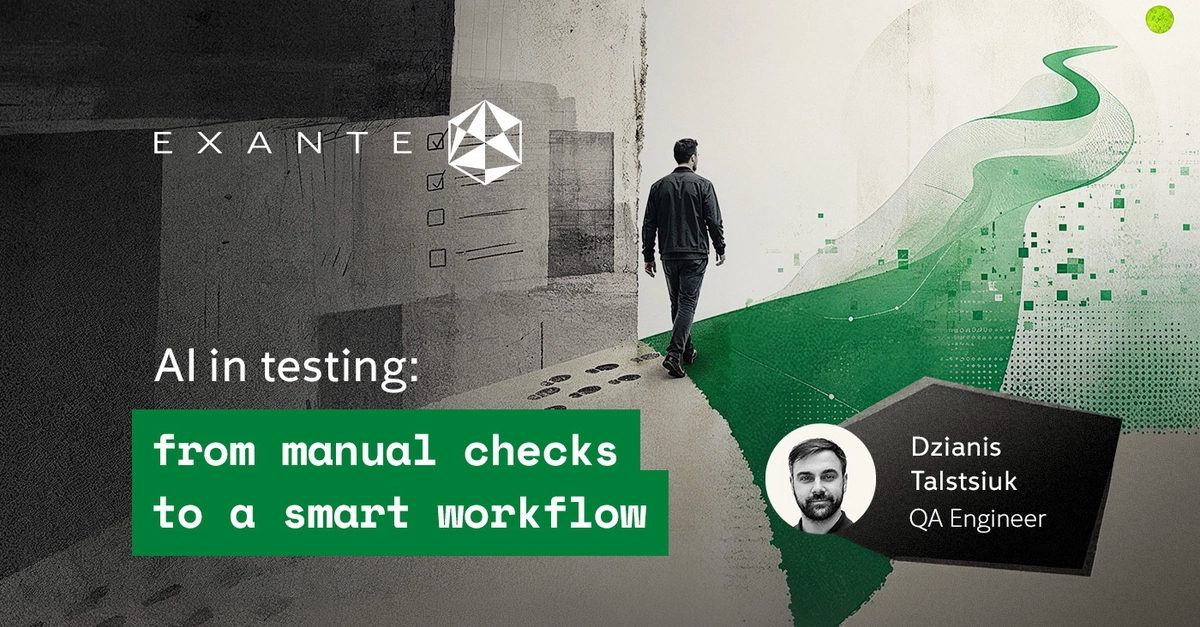
In financial services, where every transaction carries significant weight, the demand for impeccable quality in software is non-negotiable. Dzianis Talstsiuk, a QA Engineer at EXANTE, understands this pressure intimately. His focus is on ensuring the desktop trading terminal, web terminal, and mobile applications meet an exceptionally high bar. A single misrendered price in the order book or an order that fails to resolve can have immediate, tangible consequences: client losses and serious regulatory repercussions. This environment necessitates rigorous processes, including early specification analysis, strict acceptance criteria, and comprehensive regression coverage for every critical functionality.
Traditional testing, while thorough, is often a bottleneck. Requirements analysis alone demands meticulous attention to detail and considerable time. Even with dedicated QA teams, the sheer volume of test cases, edge cases, and the need for continuous regression testing can strain resources and slow down the release cycle. This is precisely the challenge Talstsiuk sought to address, not by replacing human testers, but by augmenting their capabilities with artificial intelligence.
Introducing the AI Testing Partner
Talstsiuk’s objective was to build AI not as a replacement for human testers, but as a collaborative partner. The goal was to create an assistant that could accelerate testing, broaden test coverage, and ultimately enable faster feature releases without compromising quality. This approach acknowledges the irreplaceable human element in testing – intuition, exploratory testing, and complex problem-solving – while leveraging AI for its strengths: speed, pattern recognition, and tireless execution of repetitive tasks.
The integration began with identifying areas where AI could provide the most immediate value. This often involves tasks that are time-consuming for humans but well-suited to machine learning algorithms. For a financial trading platform, these tasks could include analyzing vast logs for anomalies, validating data consistency across multiple components, or even generating synthetic test data that mimics real-world market conditions. The core idea is to offload the more monotonous, data-intensive aspects of testing to the AI, freeing up QA engineers to focus on higher-level strategy, complex bug hunting, and user experience validation.
Streamlining Requirements and Test Case Generation
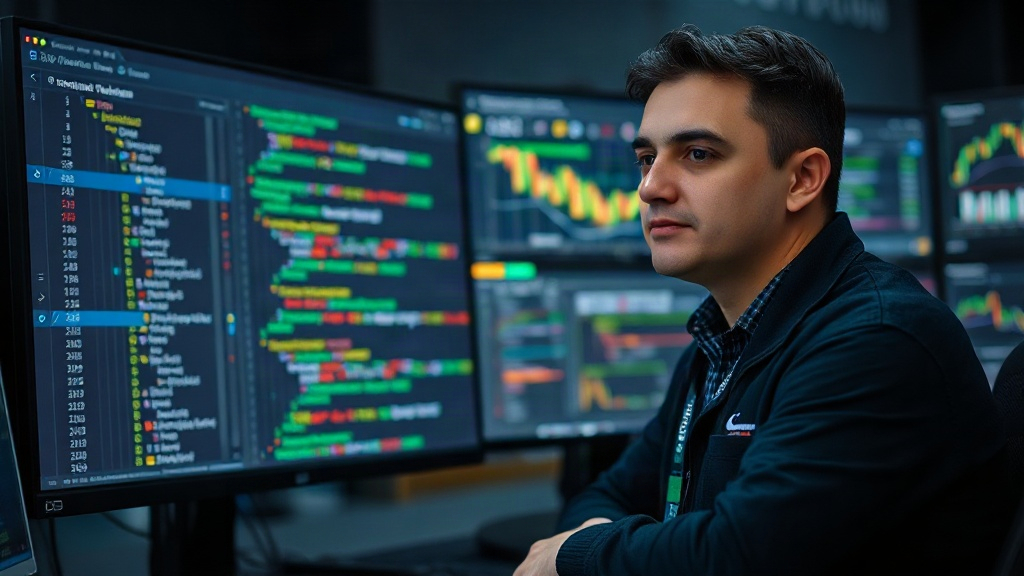
One of the most significant time sinks in the QA process is the initial analysis of specifications and the subsequent generation of test cases. Talstsiuk’s AI integration aims to tackle this head-on. By feeding AI models with product specifications, user stories, and acceptance criteria, the system can begin to identify potential ambiguities, inconsistencies, or missing details. This early detection is crucial; it prevents issues from propagating into the development and testing phases, saving considerable effort and cost.
Furthermore, the AI can assist in automatically generating test cases based on these analyzed requirements. Instead of manually writing hundreds or thousands of test scripts, testers can leverage AI to draft a comprehensive suite of tests. This doesn't eliminate the need for human review – testers must still validate the generated tests for accuracy, relevance, and completeness – but it dramatically reduces the initial workload. Think of it less like a fully automated test writer and more like an incredibly diligent junior engineer who can draft a solid first version of almost any test you can describe.
Enhancing Test Coverage and Efficiency
Beyond test generation, the AI assistant plays a vital role in expanding test coverage and improving overall efficiency. By analyzing historical test data, bug reports, and production logs, AI can identify areas of the application that are most prone to defects or have historically caused problems. This allows QA teams to focus their efforts on high-risk areas, ensuring that critical functionalities receive the most robust testing.
The AI can also optimize test execution. In large projects with extensive regression suites, running all tests can take hours, if not days. AI can help prioritize tests based on the changes introduced in a new build, the risk profile of different modules, or historical failure rates. This means that for minor updates, only the most relevant tests are run, providing rapid feedback to developers. For more significant changes, the AI can suggest an optimal order of execution to identify critical issues as quickly as possible. This intelligent prioritization is akin to a seasoned detective knowing exactly which leads to follow first, rather than a rookie checking every single clue in alphabetical order.
The Human-AI Collaboration in Action
The success of this AI integration lies in the symbiotic relationship it fosters between human testers and the AI assistant. The AI handles the heavy lifting: processing large datasets, identifying patterns, generating initial drafts, and executing repetitive checks at machine speed. This frees human testers to engage in activities that require critical thinking, creativity, and domain expertise. They can focus on exploratory testing, usability assessments, investigating complex or intermittent bugs flagged by the AI, and providing strategic input on test planning and process improvement.
For instance, if the AI flags an anomaly in transaction processing logs, a human tester can then dive deep into the specific scenario, using their understanding of financial markets and user behavior to pinpoint the root cause. The AI provides the signal; the human provides the insight and resolution. This collaboration ensures that testing remains comprehensive, efficient, and adaptable to the ever-evolving demands of the financial technology landscape.
Future Outlook and Broader Implications
Talstsiuk’s work at EXANTE demonstrates a practical and effective application of AI in a domain where quality is paramount. As AI capabilities continue to advance, its role in software testing is poised to expand further. We can anticipate AI systems becoming more sophisticated in understanding complex requirements, predicting potential defects before they are even coded, and even performing automated root cause analysis. The ultimate outcome is a testing process that is not only faster and more thorough but also more intelligent and proactive.
The question that remains is how widely this collaborative model will be adopted across different industries. While financial services have unique pressures, the core benefits of AI-assisted testing—speed, coverage, and efficiency—are universally applicable. The challenge will be adapting these AI tools to the specific nuances and regulatory requirements of various sectors, ensuring that the human element remains central to quality assurance while AI serves as an indispensable partner.