The Problem with Static Agent Knowledge
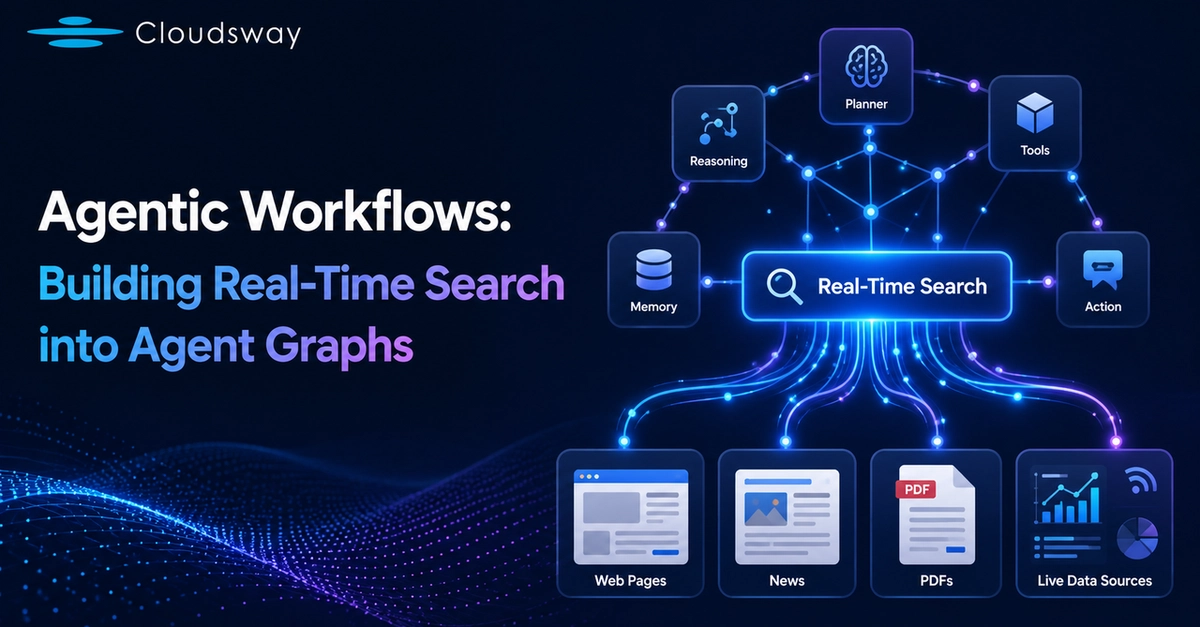
Agent frameworks promise to streamline complex tasks, enabling systems to plan, execute, and adapt. They maintain state and make decisions, forming intricate execution graphs. However, a fundamental limitation exists: the knowledge base an agent operates on can become a bottleneck, leading to flawed outputs. Even a perfectly executed plan can result in a confidently wrong answer if the underlying information is stale, incomplete, duplicated, or unverified. This issue is particularly acute for agents dealing with dynamic information domains such as recent news, evolving product landscapes, market trends, or the latest academic research. The agent graph, as designed, often treats its knowledge as a fixed entity, failing to account for the real-world velocity of information.
Consider an agent tasked with providing financial market analysis. If its knowledge cutoff is six months old, its insights into current stock performance, regulatory changes, or emerging economic factors will be fundamentally inaccurate. The agent might correctly identify correlations based on historical data, but these correlations may no longer hold true in the present market. This isn't a failure of the agent's reasoning engine; it's a failure of its informational input. The agent is a powerful processor, but it's processing yesterday's data. The expectation is that these agents can function autonomously and provide timely, relevant information, but without a mechanism to inject current data, they operate with a significant handicap.
Introducing a Shared Evidence Layer for Real-Time Search
The solution lies in treating real-time search not as an external query executed once, but as a dynamic, shared evidence layer integrated directly within the agent graph. This approach transforms how agents access and utilize information. Instead of relying solely on a pre-existing, potentially outdated knowledge base, agents can query a real-time search system as part of their planning and execution process. This system acts as a common ground, providing the most current available information to all components of the agent graph. Think of it less like a static encyclopedia and more like an always-on research assistant who can instantly pull up the latest reports, news articles, or data points relevant to the task at hand.
This evidence layer functions by intercepting or augmenting the agent's information-gathering steps. When an agent needs specific, up-to-date information—perhaps to verify a fact, understand a recent event, or gather competitive intelligence—it queries the search layer. This layer, in turn, interacts with real-time search indices (like those provided by services such as Cloudsway SmartSearch, or other indexing solutions). The search results are then fed back into the agent graph as verified evidence. This evidence can be used to refine the agent's plan, update its internal state, or directly inform its final output. The key is that this search capability is not an afterthought but a first-class citizen within the agent's operational architecture.
Architectural Components of a Real-Time Search Layer
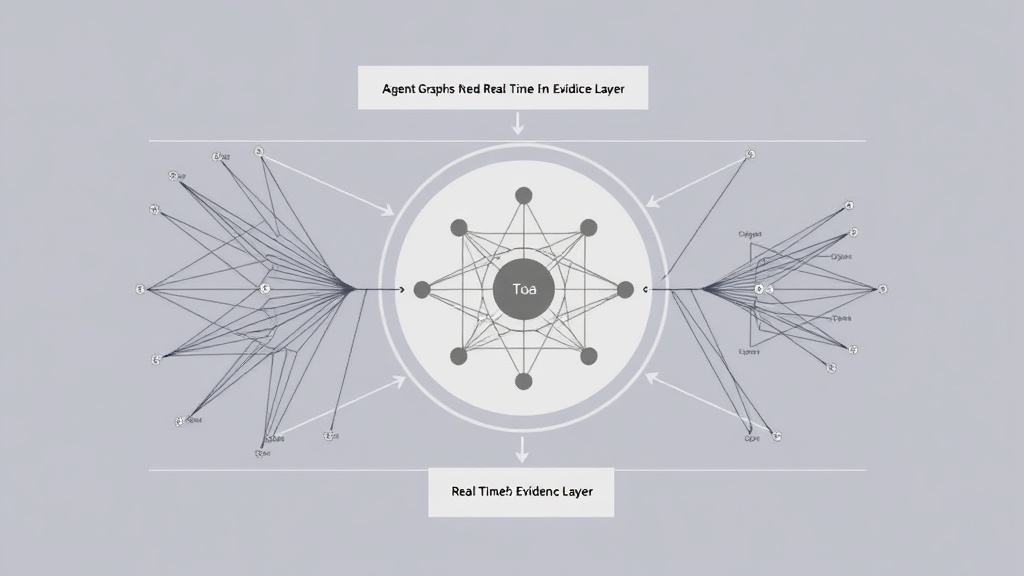
Implementing such a layer involves several key architectural components. First, you need an Information Retrieval System. This is the engine that queries real-time data sources. It could be a specialized search index, an API gateway to multiple live data feeds, or a combination thereof. The system must be capable of low-latency responses to keep the agent's execution fluid. Secondly, an Evidence Integration Module is crucial. This component takes the raw search results and formats them into a structured, digestible format for the agent graph. This might involve extracting key entities, summarizing content, or filtering irrelevant information. The goal is to present actionable intelligence, not just raw text.
Third, a Contextualization Engine helps the agent understand the relevance and recency of the retrieved evidence. It can assess how well the search results align with the agent's current query or task. This engine might employ techniques like semantic similarity scoring or temporal analysis to prioritize the most pertinent and up-to-date information. Finally, Feedback Loops are essential for continuous improvement. The agent graph can provide feedback on the quality and usefulness of the evidence it receives, allowing the search layer to refine its queries and retrieval strategies over time. This creates a dynamic system that learns from its interactions, much like how a human researcher refines their search terms based on initial results.
Practical Implementation: Cloudsway SmartSearch Example
While the architecture is provider-agnostic, a practical implementation can leverage tools like Cloudsway SmartSearch. In this scenario, SmartSearch acts as the core of the real-time search layer. An agent's workflow would be designed to invoke SmartSearch at critical junctures where fresh information is required. For instance, an agent tasked with competitive analysis might query SmartSearch for recent product announcements from competitors. The agent's prompt or internal logic would specify the search parameters—keywords, date ranges, source types. SmartSearch would then execute these queries against its indexed data, which is designed for real-time updates.
The results from SmartSearch are returned in a structured format, perhaps as JSON objects containing snippets, URLs, and metadata. This structured data is then parsed by the agent's integration module. The agent can then use this information to update its understanding of the competitive landscape, adjust its strategy, or formulate a response. The surprising detail here is not the speed of retrieval, but how seamlessly this external, dynamic data source can be woven into the deterministic flow of an agent graph, making it behave as if it has access to live, evolving information. This integration democratizes access to real-time data for AI agents, moving beyond static knowledge bases.
The Impact on Agent Performance and Reliability
Integrating a real-time search layer fundamentally enhances agent performance and reliability. Agents can provide more accurate, timely, and relevant responses, especially in volatile information environments. This reduces the likelihood of confidently wrong answers and increases user trust. For developers building these agents, it means less time spent on manual data curation and more time focusing on the core logic and capabilities of their AI systems. The system becomes more robust, less prone to errors stemming from outdated information, and more adaptable to changing real-world conditions.
This architectural pattern also opens up new possibilities for agent applications. Agents can now engage in tasks that require continuous monitoring and rapid response, such as real-time fraud detection, dynamic pricing optimization, or live news summarization. The agent graph, augmented by a real-time evidence layer, becomes a more powerful and versatile tool. What remains to be fully explored is the optimal strategy for balancing the computational cost of frequent real-time searches against the incremental value of the retrieved information. Fine-tuning these parameters will be key to maximizing efficiency without sacrificing accuracy.