
Cloudflare AI Gateway User Insights: Attribute Spend Before Chasing Anomalies
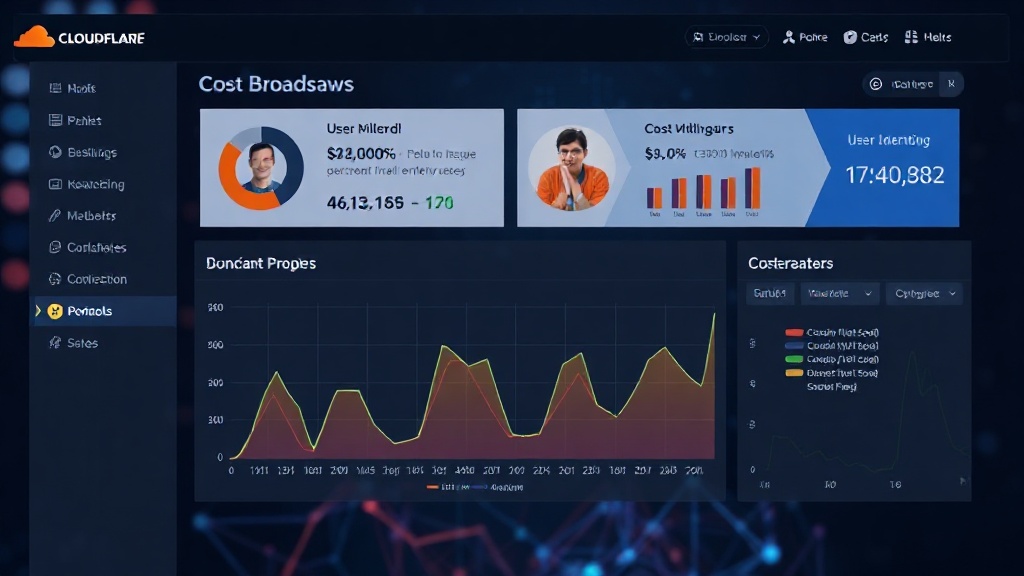
Cloudflare's AI Gateway now offers granular user insights, enabling developers and security teams to pinpoint which identities are driving AI costs and to identify sessions that deviate from a user's typical behavior. This new functionality aims to provide a clearer picture of AI spend, allowing for more targeted cost optimization and security monitoring. However, it's crucial to understand that this dashboard is not a standalone cost-control system. Its effectiveness hinges on proper implementation and integration with existing workflows.
Phased Rollout for Effective Implementation
To maximize the utility of Cloudflare AI Gateway User Insights, a structured rollout is essential. The recommended sequence ensures that foundational elements are in place before relying on the new analytical capabilities. This approach separates critical functions like attribution, detection, enforcement, and billing verification, preventing confusion and ensuring accuracy.
- Attach Stable Identity: The first step is to consistently attach a stable, non-sensitive identity to all gateway traffic. This identity will serve as the anchor for all subsequent tracking and attribution. It should be something persistent and unique to the user or session, but not contain personally identifiable information that would complicate privacy compliance.
- Measure Identity Coverage: Before trusting the per-user charts and insights, measure the coverage of your attached identities. Understanding what percentage of your traffic is successfully being attributed to a known identity is critical. Low coverage means the user-specific insights will be incomplete and potentially misleading.
- Use Anomaly Flags as an Investigation Queue: The anomaly detection flags are powerful tools, but they should be treated as an investigation queue, not definitive proof of abuse or unexpected spending. These flags indicate deviations from normal patterns, which could be due to legitimate new user behavior, A/B testing, or even system errors, as well as potential misuse.
- Enforce Separate Global and Per-User Spend Limits: Implement distinct spend limits at both the global level for the entire application and at the per-user level. This dual approach provides a layered defense against runaway costs, preventing a single user's high consumption from overwhelming the overall budget while also maintaining a ceiling on total expenditure.
- Test 429 and Fallback Behavior: With a small sandbox budget, rigorously test how the gateway handles rate limiting (HTTP 429 errors) and any configured fallback behaviors. This ensures that when limits are hit, the system behaves predictably and gracefully, without causing unexpected disruptions to your users or downstream services.
- Reconcile Cloudflare Estimates with Model Provider Bills: Finally, always reconcile Cloudflare's estimated spend with the actual bills from your underlying model providers (e.g., OpenAI, Anthropic, Cohere). While Cloudflare provides a valuable layer of abstraction and control, the final cost is determined by the API usage reported by the model providers themselves. Discrepancies may arise due to different billing methodologies or latency in reporting.
Why This Phased Approach Matters
This ordered implementation strategy addresses four distinct but interconnected jobs that are easily blurred in complex AI deployments: attribution, detection, enforcement, and billing truth. By tackling them sequentially, teams can build confidence in the data and the controls. Attaching stable identities first ensures that attribution is meaningful. Measuring coverage validates that attribution is comprehensive. Treating anomaly flags as investigative starting points prevents premature conclusions. Implementing layered limits provides robust financial guardrails. Testing error handling ensures system resilience. And finally, reconciling with model provider bills grounds the entire process in financial reality.
The new user insights are particularly valuable for teams managing shared API keys or complex multi-tenant applications where understanding individual usage patterns is paramount. Before these features, identifying a specific user or identity driving unexpected costs often involved extensive log analysis and manual correlation. Now, the AI Gateway surfaces this information directly, transforming a reactive debugging process into a proactive cost management strategy. This is akin to moving from sifting through individual receipts to having a detailed breakdown of who spent what at each store in a shopping mall.
Beyond Cost: Security Implications
While the primary focus of these new insights is cost control, they also offer significant security benefits. Anomalous session behavior can be an early indicator of compromised credentials or bot activity. By flagging sessions that deviate from a user's typical interaction patterns—such as unusual request volumes, different endpoint usage, or atypical response times—security teams can investigate potential threats more efficiently. This allows for a more nuanced approach to security monitoring, moving beyond simple rate limiting to behavior-based detection.
Consider a scenario where a user's account is compromised. An attacker might start making a high volume of requests to endpoints that the legitimate user rarely accesses, or they might trigger responses that are statistically unusual compared to the user's history. The AI Gateway's anomaly detection can flag this deviation, allowing security teams to investigate and potentially revoke access before significant damage or cost overruns occur. This capability is particularly important in applications where AI models are used for sensitive tasks or to access proprietary data.
The Path Forward for AI Cost Management
The introduction of user insights into Cloudflare's AI Gateway signifies a maturing of AI infrastructure tooling. As AI adoption accelerates, the complexity of managing costs and security grows proportionally. Tools that abstract away some of this complexity while providing actionable data are becoming indispensable. Developers and founders can now leverage these features to gain a more precise understanding of their AI spend, enabling them to have more informed discussions with finance departments, optimize resource allocation, and build more sustainable AI-powered products. It's a critical step towards making AI deployment more predictable and accountable.
The insights also facilitate better capacity planning and negotiation with model providers. By understanding which user segments or features drive the most AI consumption, businesses can forecast future needs more accurately and potentially negotiate better volume discounts. This data-driven approach to AI management is no longer a luxury but a necessity for any organization serious about scaling its AI initiatives responsibly.