
AI Models•Jul 12, 08:55 PM
Claude Code's 33k Token Overhead Dwarfs OpenCode's 7k
A deep dive reveals significant token inflation before prompts are processed by Claude Code, unlike the leaner OpenCode.
Share:

Five shifts. Five minutes. No noise.
No spam. Unsubscribe anytime. Powered by Beehiiv.
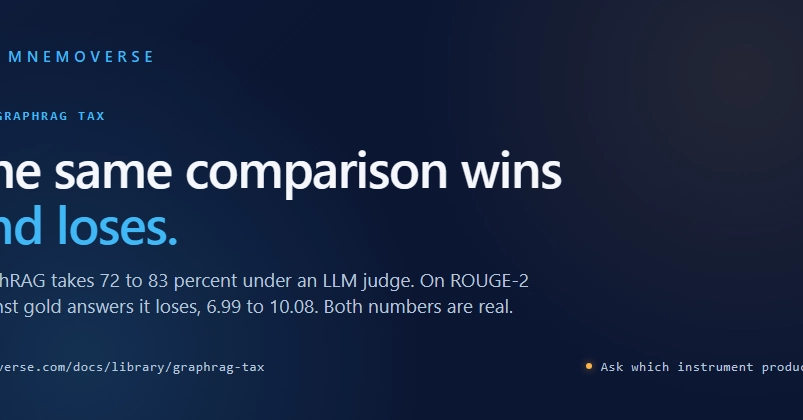
New research reveals GraphRAG's effectiveness depends entirely on whether it's judged by an LLM or against ground truth.
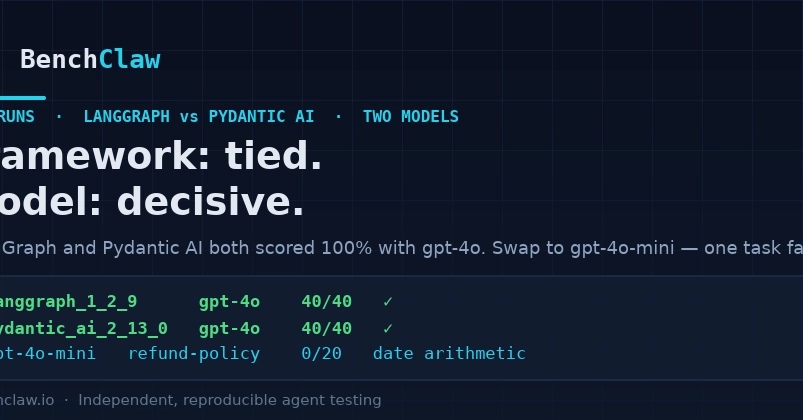
A controlled benchmark reveals LangGraph and Pydantic AI perform identically, but changing the underlying LLM exposes critical task failures.

The influential Linux distribution has formally adopted a policy allowing the responsible integration of generative AI tools.
A deep dive reveals significant token inflation before prompts are processed by Claude Code, unlike the leaner OpenCode.

The famed hacker George Hotz argues that while LLMs are impressive, the current discourse is drowning in unrealistic expectations.

AI company grants paid subscribers an additional week with its most powerful model before the likely rollout of a new version.

A new Python tool replays agent trajectories to verify checkpoints offline, ensuring task completion even if the checkpoint process itself fails.

AI tools like ChatGPT and Copilot excel at greenfield code, but their real value for experienced teams lies in deciphering legacy systems.

Smart devices often automate tasks poorly, creating friction and embarrassment due to a lack of true understanding of user context.

New analysis suggests AI tools boost individual researcher productivity but could homogenize scientific output and reduce novel breakthroughs.

A novel AI model, devoid of parameters, demonstrates potential to outperform resource-intensive systems in strategic gameplay.

A new framework proposes a six-layer structure for AI image prompts, moving beyond creative writing to structured specifications.

Large language models treat all messages in a thread as equally current, ignoring temporal context. Users must manually re-state time passage.