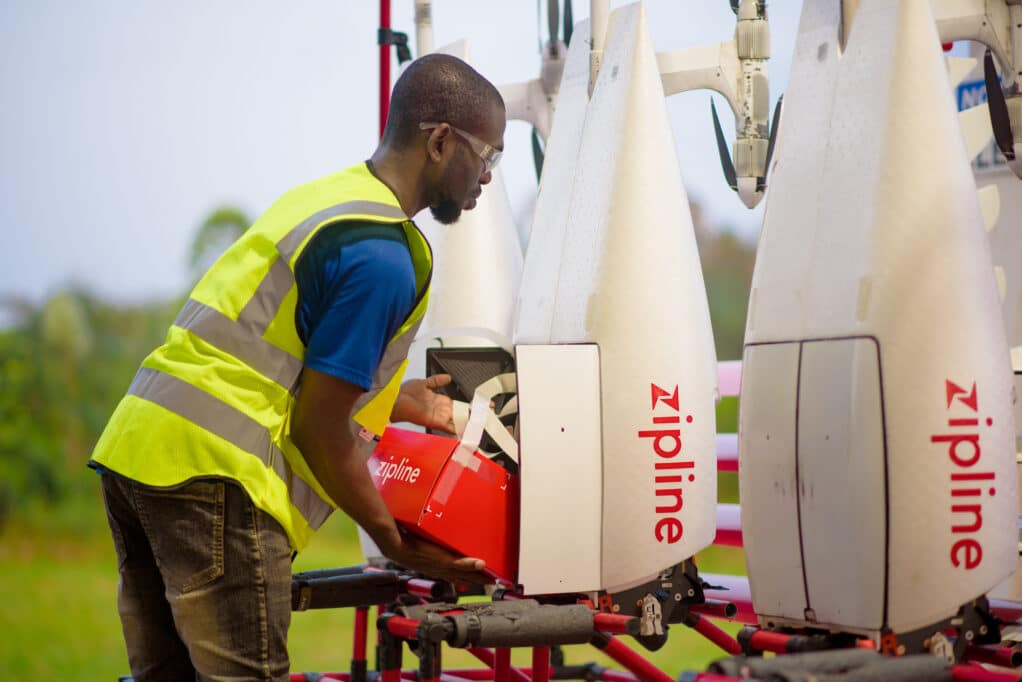
Zipline Eyes National Scale in Nigeria with US Grant
Zipline, the autonomous logistics company known for its drone-based delivery of medical supplies, is setting its sights on a nationwide rollout in Nigeria. Following a successful deployment that has already delivered over 6.1 million vaccines across three Nigerian states, the company is leveraging a significant grant from the U.S. government to scale its operations. This move signifies a strategic shift from state-specific partnerships to a more integrated approach, engaging healthcare stakeholders at local, state, and national levels to embed its delivery network across the country.
The company's current operations in Nigeria have focused on partnering with state governments to provide on-demand delivery of essential medical products, including vaccines, blood, and medicines. This has proven particularly effective in reaching remote and underserved populations where traditional logistics infrastructure is weak or non-existent. The 6.1 million vaccine doses delivered represent a substantial impact on public health, underscoring the viability and effectiveness of Zipline's model in a challenging geographical and logistical landscape.
The expansion plan is not merely about increasing the number of delivery stations but about fundamentally integrating Zipline's capabilities into the fabric of Nigeria's national health strategy. This involves working closely with the Federal Ministry of Health and other national health agencies to ensure its services align with national health priorities and can be sustained and scaled effectively. The U.S. government grant, while not publicly disclosed in its exact amount, signals strong international backing for Zipline's mission in Nigeria, recognizing its potential to significantly improve healthcare access and outcomes.

From State-Level Success to National Integration
Zipline's journey in Nigeria began with a focus on achieving tangible results at the state level. Its initial deployments demonstrated the critical role drones could play in overcoming logistical hurdles, particularly for temperature-sensitive vaccines. The ability to dispatch a drone within minutes to deliver critical supplies to health facilities, bypassing poor road networks and traffic congestion, has been a key differentiator. This has not only ensured that vital medicines reach patients promptly but has also reduced wastage due to spoilage or stock-outs.
The success in states like Kaduna, Kano, and Ogun has provided a strong foundation and a wealth of operational data. This data, coupled with the experience gained in navigating regulatory environments and building local partnerships, has informed Zipline's ambitious plan for national expansion. The company's strategy now involves building a more robust national infrastructure, which could include additional distribution hubs and a larger fleet of drones, all managed through its sophisticated logistics platform.
Engaging with national stakeholders is crucial for this next phase. Unlike state-level partnerships, a national rollout requires alignment with federal policies, integration with national supply chain management systems, and broader public health initiatives. Zipline's approach of working collaboratively with the Ministry of Health and other federal bodies aims to ensure that its drone delivery network becomes a permanent and indispensable component of Nigeria's healthcare infrastructure, rather than a standalone service. This integration is key to ensuring long-term sustainability and maximizing the impact of its operations across all 36 states and the Federal Capital Territory.
The Impact of Zipline's Model on Healthcare Access
The core value proposition of Zipline lies in its ability to provide equitable access to healthcare. In a country as vast and diverse as Nigeria, with a population exceeding 200 million people, ensuring that everyone, regardless of their location, can access essential medical supplies is a monumental challenge. Zipline's drone network acts as a powerful equalizer, bringing healthcare to the doorstep of remote communities that have historically been marginalized by inadequate infrastructure. This is akin to establishing a ubiquitous, on-demand ambulance service for medical supplies, capable of reaching any health facility within its operational radius in a matter of minutes.
The implications for public health are profound. For instance, timely vaccine delivery is critical to maintaining cold chain integrity, preventing outbreaks, and achieving high immunization coverage. Zipline's ability to make rapid, temperature-controlled deliveries significantly enhances the effectiveness of vaccination campaigns. Similarly, the swift delivery of blood products can be life-saving in emergency situations, and the reliable supply of essential medicines ensures that chronic conditions can be managed effectively, improving the overall quality of life for millions of Nigerians.
Beyond vaccines and emergency supplies, Zipline's platform can also support the delivery of diagnostic samples from remote clinics to central laboratories, facilitating faster diagnoses and treatment. This closed-loop system enhances the overall efficiency of the healthcare system. As Zipline aims for national coverage, it is not just expanding its service area; it is building a resilient, responsive, and equitable healthcare logistics network that can adapt to the evolving needs of Nigeria.
Challenges and Opportunities Ahead
While the ambition is clear and the initial results are promising, scaling Zipline's operations to a national level in Nigeria presents significant challenges. Regulatory frameworks for drone operations, while evolving, need to be robust and supportive of large-scale commercial deployment. Airspace management, safety protocols, and public acceptance of drone technology are critical factors that require continuous attention and engagement.
Furthermore, integrating Zipline's services with existing public health programs and supply chain management systems requires deep collaboration and a significant investment in training and capacity building at all levels of the healthcare system. The company must also navigate the complexities of diverse local contexts, ensuring its operations are tailored to the specific needs and challenges of different regions within Nigeria.
However, the opportunities are immense. A successful national rollout would position Zipline as a critical infrastructure provider for Nigeria's healthcare system, setting a precedent for other large, developing nations. The U.S. government grant provides a strong financial impetus, but sustained success will depend on Zipline's ability to demonstrate long-term operational efficiency, cost-effectiveness, and a clear return on investment for the Nigerian health sector. The company's success will be measured not just in the number of flights or packages delivered, but in the tangible improvements in health outcomes and the equitable access to care for all Nigerians.