The Bandwidth Bottleneck for Free Media Tools
Offering a free online tool that serves media files to users can quickly become an expensive proposition. The core challenge lies not in storing the media, but in distributing it. This is particularly true for tools like imgi.co, a free service where users can upload two images, compare them with a slider, and share a permanent link. While the user interface and comparison logic are relatively straightforward to build, the real cost emerges from bandwidth egress charges. Every time a user views a comparison, they download two full-resolution images. As a link gains traction and attracts thousands of views, the cumulative data transfer can lead to substantial bills.
Cloud storage providers like AWS S3 charge approximately $0.09 per gigabyte for data egress, while storage itself is considerably cheaper at around $0.023 per gigabyte per month. This fundamental cost structure means that holding onto files is inexpensive; it's the act of serving those files repeatedly to a growing audience that drives up expenses. For a tool intended to be free and easily shareable, this bandwidth cost is the primary obstacle to sustainability.
The Zero Egress Solution: Leveraging Existing Infrastructure
The breakthrough for imgi.co came with an ingenious approach to circumvent these high egress fees. Instead of hosting the images on a service with per-gigabyte egress charges, the tool leverages a different strategy: it stores the images as a data URI embedded directly within the HTML page itself. When a user creates a comparison and shares a link, they are not sharing a link to a server that will then serve the images. Instead, they are sharing a link to an HTML file that contains the images already encoded within it.
This technique effectively eliminates egress charges because the images are not being downloaded from a central server every time the link is accessed. The entire HTML page, including the embedded image data, is served once. Subsequent views of that same link don't incur additional bandwidth costs for the image data itself, as it's already part of the static HTML delivered to the user's browser. This is akin to sending a self-contained package rather than sending a key to a warehouse that then has to retrieve and send the contents each time it's opened.
How Data URIs Work for Image Embedding
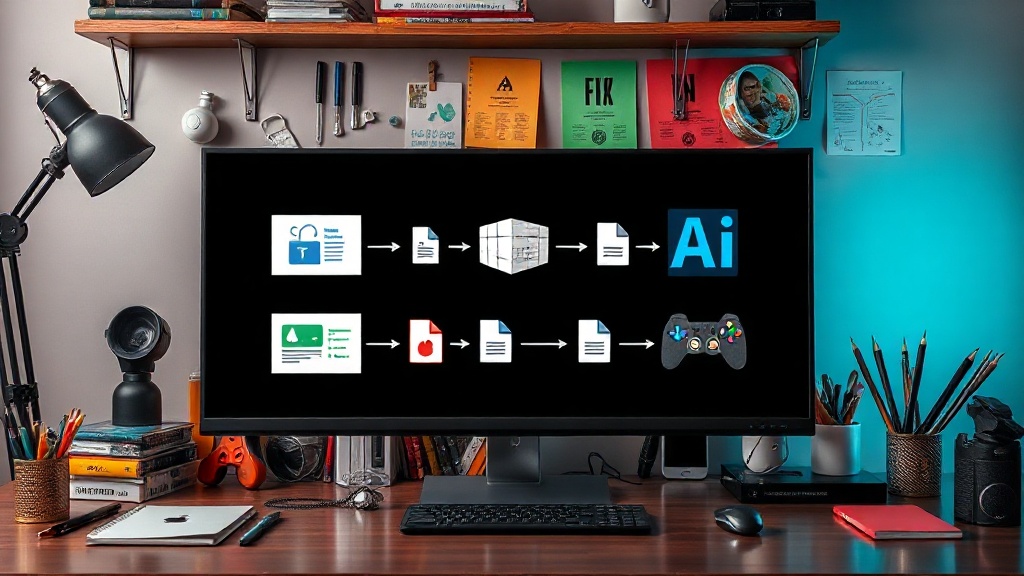
A data URI is a Uniform Resource Identifier (URI) scheme that allows digital data to be embedded directly into a document, such as an HTML file. The general syntax for a data URI is:
data:[<mediatype>][;base64],<data>
For images, the <mediatype> would be something like image/png or image/jpeg. The ;base64 part indicates that the data is encoded using Base64, which is a common method to represent binary data in an ASCII string format. The <data> part is the actual Base64 encoded string of the image file.
When a web browser encounters a data URI in an HTML document, it decodes the Base64 string and renders the data directly. In the context of imgi.co, when a user uploads two images, they are not uploaded to a storage bucket. Instead, they are converted into Base64 strings and then embedded into the HTML of the comparison page that is generated. This generated HTML file, containing the images within its source code, is then what gets a permanent link and is shared.
Implications and Limitations of the Zero Egress Model
This zero-egress strategy offers a compelling path for creators to offer free media-sharing tools. By shifting the burden of data transfer from the server to the client's browser through embedded data, the operational costs associated with bandwidth are drastically reduced. This makes it feasible to provide a free service that might otherwise be unsustainable due to hosting and bandwidth expenses.
However, there are inherent limitations and trade-offs. The most significant is the increase in the size of the HTML file itself. Each image, when Base64 encoded, becomes approximately 33% larger than its original binary form. If a user uploads two high-resolution images, the resulting HTML file can become quite large. For instance, two 5MB JPEGs could result in an HTML file that's over 13MB. While browsers handle these large files, it can lead to longer initial load times for the comparison page, especially on slower internet connections.
Furthermore, the approach is best suited for scenarios where the content is intended to be static and shared widely. If the tool involved dynamic content generation or frequent updates to the media files after the initial sharing, this embedding method would become less practical. The fixed nature of embedded data means that any changes would require regenerating and re-linking the entire HTML document. For a tool like imgi.co, which focuses on creating a shareable snapshot of a comparison, this immutability is an acceptable trade-off for cost savings.
Broader Applications and the Future of Free Tools
The ingenuity demonstrated by this zero-egress trick opens up possibilities for other types of free online tools, particularly those that involve static media sharing. Developers can consider similar approaches for tools that generate visual reports, comparative graphics, or even simple image galleries where the primary goal is to create a unique, shareable link. The key is to shift the data delivery mechanism from a pull model (server serves file) to a push model (server delivers a self-contained document).
What remains to be seen is how this strategy scales with extremely large media files or an exceptionally high volume of unique links being generated. While individual links become 'free' to serve after their initial generation, the cost of generating and hosting these potentially massive HTML files still exists, albeit at a different point in the infrastructure chain. Nevertheless, for small, free tools aiming for broad shareability without a significant operational budget, this method represents a pragmatic and effective solution to a common and costly problem in web development.