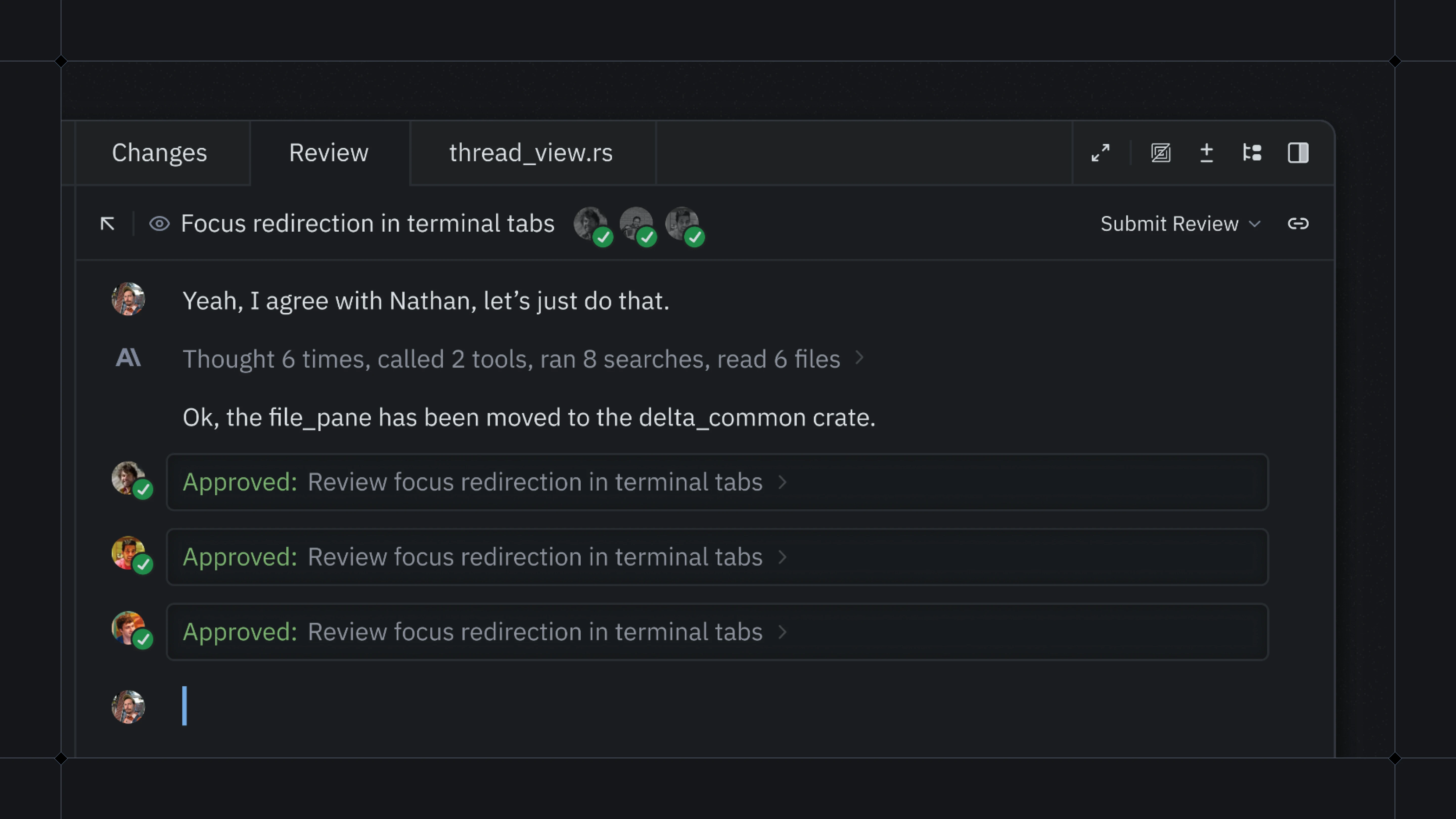
The Problem with Pull Requests
Pull requests (PRs) have been the standard for code review and merging for decades. They offer a structured way to propose changes, gather feedback, and manage code integration. However, they also introduce friction. The asynchronous nature means developers wait for reviews, context switching becomes a significant overhead, and the review process itself can be a bottleneck. Discussions often happen in separate tools, leading to fragmented communication and lost context. This can slow down development cycles, particularly in fast-paced environments or for smaller teams.
Imagine a team of architects reviewing blueprints. With traditional PRs, one architect draws a design, sends it off, and waits days for comments, then makes revisions. Delta proposes a scenario where all architects can view and annotate the blueprint in real-time, offering immediate suggestions and seeing each other's changes as they happen. This live, collaborative approach aims to drastically reduce the turnaround time and improve the quality of feedback.
Introducing Delta: Real-time Code Collaboration
Zed, the high-performance code editor, has launched Delta into public beta, aiming to fundamentally change how developers collaborate on code. Delta shifts the paradigm from asynchronous, document-based reviews to synchronous, live code collaboration. Instead of submitting a PR and waiting for comments, developers can share their current work in real-time with teammates. This allows for immediate feedback, pair programming-like sessions, and a more fluid review process. The core idea is to bring the efficiency of live collaboration, common in other creative fields, to software development.
Delta integrates directly into the Zed editor. When a developer wants feedback, they can initiate a Delta session. This shares their active file or project with collaborators who also use Zed. These collaborators can then see the code change live, offer suggestions directly in the editor, and even co-edit the code if permission is granted. This is not just screen sharing; it's a fully interactive, real-time editing experience tailored for code.
Key Features and Workflow Changes
Delta offers several features designed to streamline the code review and integration process:
- Live Code Sharing: Developers can share their current editing session with one or more collaborators. This allows for immediate visibility into ongoing work.
- Integrated Feedback: Comments and suggestions can be placed directly on specific lines of code within the editor. This keeps feedback contextual and easily actionable. Unlike email or separate chat threads, the comments live alongside the code.
- Real-time Co-editing: For more intensive collaboration, collaborators can be granted permission to edit the code directly. This transforms the process into a live pair programming or mob programming session.
- Session History: Delta sessions can be recorded and revisited, providing a log of discussions and changes made during the collaboration. This serves as an audit trail and a learning resource.
- Contextual Awareness: The system aims to maintain code context, allowing collaborators to understand the changes in relation to the broader project.
The workflow with Delta looks significantly different from a traditional PR. A developer working on a feature can invite a colleague to review their progress. The colleague joins the Delta session, sees the code as it's being written, and can immediately point out potential issues or suggest improvements. If the suggestion is minor, the original developer can make the change on the spot. For more complex discussions, they might co-edit the section together. Once the feedback is incorporated, the code is effectively ready to be merged, bypassing the typical PR submission and waiting period.
Implications for Development Teams
This shift has profound implications for how development teams operate. For small, agile teams, Delta could significantly accelerate development cycles by reducing the overhead associated with PRs. The immediacy of feedback can catch errors earlier and foster a more collaborative team culture. Developers can learn from each other in real-time, improving their skills and understanding of the codebase.
However, Delta is not a direct replacement for all aspects of a PR. PRs often serve as a formal record of changes, a mechanism for enforcing certain checks (like automated tests and linters before merging), and a way to involve a broader set of reviewers who may not be available for a live session. Delta's success will depend on how well it can integrate or complement these existing practices. The current implementation relies on users adopting the Zed editor, which might be a barrier for teams using diverse toolchains. Furthermore, managing permissions and ensuring that sensitive code is not inadvertently shared broadly will be critical considerations as the tool matures.
What remains to be seen is how Delta will scale for larger organizations with more complex review processes and compliance requirements. The current focus on live, synchronous interaction is powerful for immediate feedback but might not always align with the asynchronous needs of distributed or global teams, or with established CI/CD pipelines that rely on distinct review stages.
The Future of Code Collaboration
Delta represents a bold step towards a more interactive and efficient future for software development collaboration. By leveraging real-time technology, Zed is challenging a long-standing developer workflow. The success of Delta will likely depend on its ability to integrate seamlessly into existing developer ecosystems and to demonstrate clear advantages over the established, albeit imperfect, pull request model. If it can achieve this, it could fundamentally alter how teams build software, making code reviews less of a chore and more of an integrated, collaborative activity.