The Limitations of Chat-First AI Agents
The current landscape of AI agent products often begins with a chat interface. While useful for quick queries and simple interactions, this chat-centric approach fundamentally misunderstands the nature of work. Conversation is not synonymous with task completion. AI agents designed primarily for chat struggle to manage complex, multi-step processes, maintain context over extended durations, or reliably deliver structured outputs required for professional workflows. This limitation hinders their adoption for critical business operations where precision, continuity, and verifiable results are paramount.
Introducing xAgent: A Task-First Operating Environment
xAgent tackles this challenge by reorienting the AI agent paradigm. Instead of asking what an AI agent can chat about, it queries what an agent needs to effectively receive a task, work autonomously over time, leverage appropriate capabilities, safeguard data, and deliver a usable result. The platform posits that the answer extends far beyond a large language model and a simple prompt. It necessitates a dedicated operating environment, akin to an operating system for AI agents, that provides structure, resources, and lifecycle management.
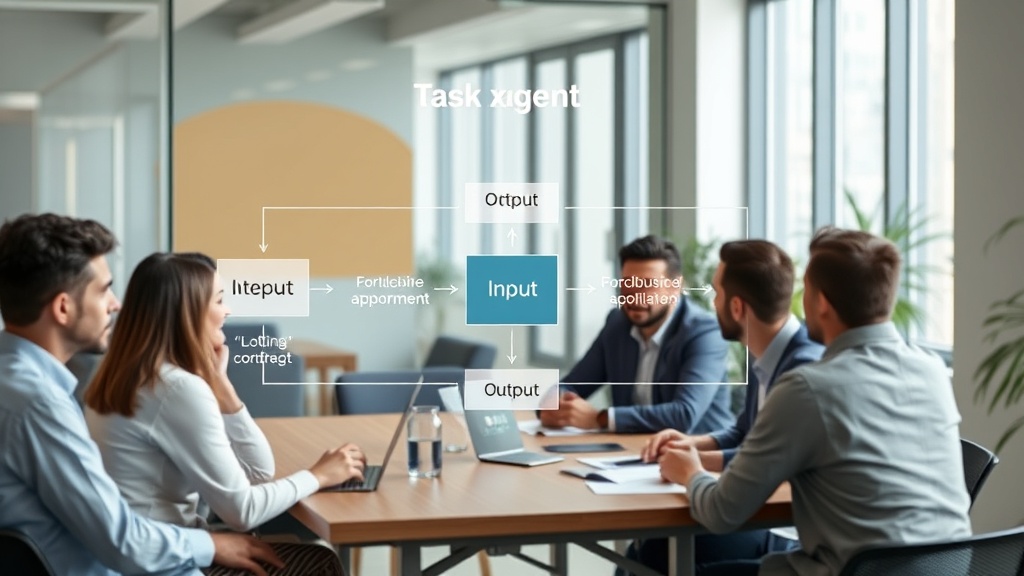
At its core, xAgent is task-first, not chat-first. While it can engage in conversational exchanges, its primary function is to empower individuals and teams to complete work. This includes organizing materials, producing specific files, conducting in-depth research, preparing detailed responses, coordinating follow-up actions, or automating recurring workflows. Each agent session is defined by a clear task, supplied materials, a dedicated workspace, access to relevant capabilities, and an explicitly defined expected result. This structured approach provides a more robust lifecycle for complex, long-term work compared to the open-ended nature of a chat session.
Server-Side Execution for Robustness and Scalability
A critical architectural decision in xAgent is its commitment to server-side agent execution. This contrasts with many existing solutions that rely on local execution, which can be resource-intensive and inconsistent across different user machines. Running agents on the server offers several distinct advantages:
- Consistency: Ensures that agents run in a standardized environment, eliminating variability caused by local hardware, operating system differences, or installed software versions.
- Scalability: Allows for the efficient scaling of agent operations, handling multiple concurrent tasks and complex computations without burdening end-user devices.
- Security: Centralized server-side execution enables more robust data protection and access control mechanisms. Sensitive data remains within the controlled server environment, reducing the risk of exposure on user endpoints.
- Resource Management: Enables fine-grained control over computational resources, ensuring that agents have the necessary power to complete tasks without performance degradation.
- Persistence: Facilitates the continuation of agent work over extended periods, even if the user disconnects or closes their browser. The agent continues its task in the background on the server.
An Operating Environment for AI Agents
xAgent provides a comprehensive suite of tools and abstractions necessary for building and running sophisticated AI agents. This includes:
- Task Management: A robust system for defining, queuing, and tracking tasks. Agents receive tasks with clear objectives and parameters.
- Workspace: Each agent session is provisioned with a secure, isolated workspace for storing temporary files, intermediate results, and data relevant to the task. This prevents interference between different agent runs or users.
- Capability Orchestration: Agents can be equipped with a library of tools and capabilities, such as web browsing, file manipulation, API integrations, and specialized AI models. The platform intelligently selects and orchestrates the use of these capabilities based on the task requirements.
- Data Handling: Mechanisms for securely inputting, processing, and outputting data. This includes handling sensitive information with appropriate privacy controls and ensuring that outputs are in usable formats.
- Lifecycle Management: Agents have a defined lifecycle from initiation to completion, with clear states for pending, running, paused, and completed tasks. This allows for better monitoring and control.
The Future of AI Agents in the Workplace
By moving beyond the limitations of chat interfaces and embracing a task-first, server-side execution model, xAgent is poised to unlock new levels of productivity for teams. This platform addresses the fundamental need for AI agents that can reliably perform work, integrate seamlessly into existing workflows, and operate with the robustness required for enterprise adoption. The implications are significant: AI agents can transition from novelties to indispensable tools for automating complex processes, augmenting human capabilities, and driving efficiency across organizations. The question now is not if AI agents will become workhorses, but which platforms will provide the most effective operating environments for them to do so.