
The Hidden Cost of x86 Emulation
Running software compiled for one processor architecture on another is a common necessity. But when that target is x86, the ubiquitous architecture powering most desktops and servers, the performance penalty can be severe. This isn't a minor inconvenience; for many applications, it's a crippling bottleneck. The fundamental issue lies in the sheer complexity of the x86 instruction set. Unlike simpler RISC architectures, x86 is a Complex Instruction Set Computing (CISC) architecture, featuring variable-length instructions, a vast number of registers, and intricate memory addressing modes. Emulating this on a fundamentally different architecture, like ARM, requires translating these complex instructions into a series of simpler ones the host CPU can understand. This translation process, known as dynamic binary translation (DBT), is computationally expensive. Each instruction must be decoded, translated, and then executed. The overhead is constant, impacting every single instruction executed by the emulated software. Think of it like trying to explain a Shakespearean sonnet to someone who only speaks modern English, word-for-word, every time they want to understand a line. The effort involved is immense, and the original nuance and speed are inevitably lost in translation. This is the core of the 'scourge' of x86 emulation: a persistent, unavoidable performance tax.
Why x86 Emulation is Everywhere
Despite its performance drawbacks, x86 emulation is pervasive. The primary driver is the vast installed base of x86 software. Decades of development have created an enormous ecosystem of applications, operating systems, and tools that are either exclusively x86 or perform best on x86 hardware. When new hardware architectures emerge, particularly those with power efficiency advantages like ARM, developers and users face a dilemma: rewrite everything for the new architecture, or find a way to run the old software. Emulation offers a bridge. It allows devices like ARM-based laptops (e.g., Apple's M-series Macs, Windows on ARM devices) to run legacy x86 applications without requiring a complete recompile. For server environments, it can enable the migration of x86 workloads to more power-efficient ARM servers, reducing operational costs. Mobile devices, while increasingly ARM-native, sometimes need to run specialized x86 tools or games. This ubiquity means that even as newer, native versions of software become available, the need for x86 emulation persists, often for critical legacy systems or niche applications.
The Technical Hurdles: Decoding and Translation
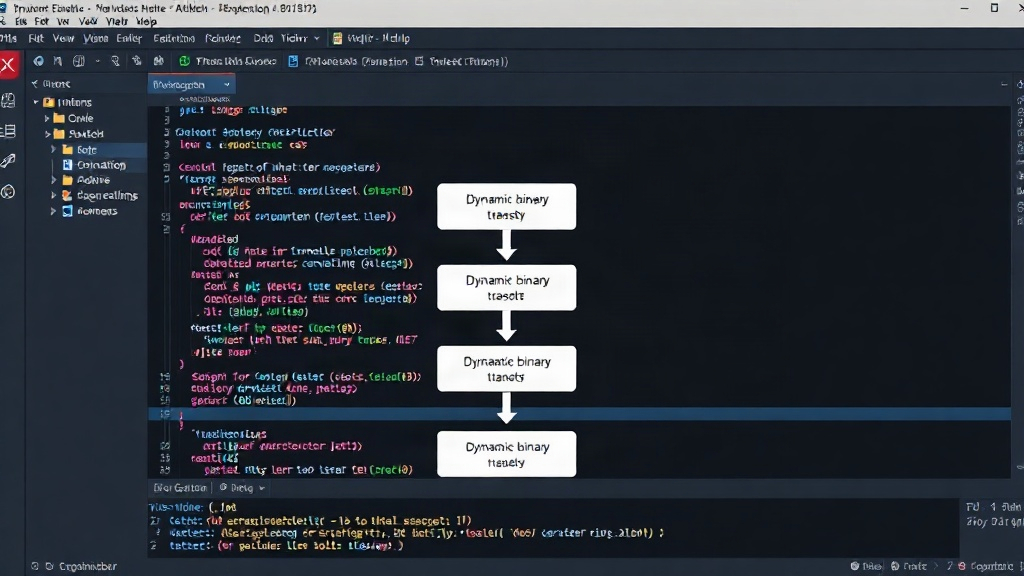
Dynamic binary translation is the engine that powers most x86 emulators. When an application compiled for x86 runs on an ARM host, its instructions are not executed directly. Instead, the emulator intercepts these instructions. It decodes them, which is a complex task given x86's variable instruction lengths. Once decoded, the instructions are translated into an intermediate representation or directly into the host CPU's native instructions. This translated block of code is then cached. Subsequent executions of the same instruction sequence can often be served directly from the cache, improving performance. However, the initial translation and the occasional cache misses still incur significant overhead. The complexity of x86 includes features like speculative execution, out-of-order execution, and a rich set of floating-point instructions, all of which add layers of difficulty to the translation process. Sophisticated techniques are employed to optimize this, such as just-in-time (JIT) compilation, speculative translation, and advanced caching strategies. Yet, even the most advanced emulators struggle to achieve native performance. For compute-intensive tasks, the gap can be as large as 30-50%, or even more, compared to running the same software natively on x86 hardware.
Performance Degradation: Where It Hurts Most
The impact of x86 emulation is not uniform. It affects different types of workloads with varying severity. Applications that are heavily CPU-bound, perform complex mathematical calculations, or involve extensive string manipulation often suffer the most. Games, scientific simulations, video encoding/decoding, and large-scale data processing tasks are prime examples. These applications make millions of instructions per second, and each one translated by the emulator represents a potential delay. For instance, a game might experience lower frame rates, stuttering, or longer loading times. A simulation might take days instead of hours. Even applications that seem less demanding can be impacted. Tasks involving frequent system calls or complex I/O operations can also be slowed down by the overhead of the emulator interacting with the host operating system and hardware. The emulator has to intercept these calls, translate them to the host's equivalent, and then pass them on, adding latency at every step. Memory management also becomes more complex. The emulator must manage the virtual memory of the guest x86 system while interacting with the host's memory management unit. This can lead to increased memory usage and potential performance hits due to cache coherency issues or page table translation overhead.
Beyond Performance: Other Considerations
While performance is the most visible 'scourge,' other issues arise from x86 emulation. Compatibility is a persistent concern. Not all x86 instructions or features are perfectly emulated. Certain low-level hardware interactions, specific CPU instructions (like certain AVX extensions), or timing-sensitive operations can lead to unexpected behavior or outright failures. Debugging emulated software can also be more challenging, as developers are dealing with an indirect execution environment. Power consumption, paradoxically, can also be a downside, especially on mobile devices. While the host architecture (like ARM) might be more power-efficient, the intense computational effort required for emulation can drain batteries faster than running native software. The complexity of the emulator itself also presents a security surface. Flaws in the dynamic binary translator could potentially be exploited to compromise the host system. Given the critical role of x86 emulation in many environments, the ongoing effort to optimize it, improve compatibility, and reduce its performance impact remains a significant challenge for the industry.
The Path Forward: Native and Alternatives
The ultimate solution to the scourge of x86 emulation is to move towards native execution. For developers, this means porting applications to run directly on ARM or other architectures. This can involve recompiling existing codebases, refactoring parts of the application, or even rewriting critical components. Tools and compilers are continuously improving to make this process smoother. For users, it means adopting software that has been specifically optimized for their hardware. However, the reality is that a complete transition is years away. Until then, advancements in emulation technology will continue. Researchers and engineers are constantly refining DBT techniques, optimizing translation caches, and improving instruction translation speed. Projects like Rosetta 2 on macOS, Windows on ARM's emulation layer, and QEMU are testaments to the ongoing innovation in this space. Yet, these are optimizations, not fundamental solutions. The performance cost, while reduced, remains. Developers and technical decision-makers must weigh the benefits of emulation against its inherent costs. For performance-critical applications, investing in native ports or maintaining x86 hardware remains the most sensible approach. For less demanding tasks or where native alternatives are unavailable, optimized emulation offers a viable, albeit compromised, path. The scourge persists because the alternative—rebuilding an entire software ecosystem—is a monumental undertaking. Understanding the trade-offs is key to navigating this complex landscape.