The x402 Facilitator Conundrum
DeskCrew, a novel helpdesk solution, offers AI agents the ability to use support tools without account creation or API keys. Instead, agents pay per action using USDC via x402, the HTTP-402 payment standard. This model allows for micro-transactions as low as five cents, eliminating signup friction. The standard process involves a client calling a paid endpoint, receiving a 402 Payment Required response detailing the quote (price, receiving address, network, timeout), signing a USDC authorization, and then retrying the request. Typically, a hosted facilitator handles payment verification and settlement.
However, the DeskCrew team opted to self-host their entire x402 stack, encompassing the facilitator, relayer, and settlement confirmation. This decision stemmed from a desire for greater control, the need to support multiple blockchains, and a fundamental drive to fully comprehend the underlying technology they relied upon. This article details the specific challenges and near-misses encountered during this self-hosting journey, focusing on the intricacies of EIP-3009 that could trip up any service provider.
The core of the x402 payment flow revolves around the 402 Payment Required status code. When a client attempts to access a protected resource or service without prior payment, the server responds with this code. Crucially, the response body must contain a structured quote. This quote includes the exact price in atomic USDC, the server's public receiving address, the blockchain network identifier, and a timeout for the payment window. This structured data is essential for the client to initiate the correct payment transaction.
Once the client receives the quote, it proceeds to sign a USDC authorization. This authorization is not the payment itself but a cryptographic commitment to pay. After signing, the client retries the original request, now including the signed authorization. The facilitator then verifies this authorization against the on-chain transaction and, upon successful validation, grants access to the service. This mechanism ensures that payment is confirmed before service is rendered, with the quote acting as a binding agreement for that specific transaction.
EIP-3009: The Key to Non-Custodial Payments
At the heart of many x402 implementations lies EIP-3009, a standard that defines how to securely transfer ERC20 tokens (like USDC) to a smart contract that can then use them on behalf of the sender. This is critical for x402 because it enables non-custodial payments. Instead of the client sending USDC directly to the facilitator's wallet (which would require the facilitator to manage many incoming transactions and potentially hold funds), the client authorizes a smart contract to spend USDC from their wallet. The facilitator's smart contract can then debit the authorized amount.
The DeskCrew team's initial implementation of EIP-3009, however, overlooked a subtle yet critical aspect: the interaction between authorization and actual payment settlement. They assumed that a signed authorization was sufficient for the facilitator to consider the payment complete. This assumption proved dangerously flawed. While the authorization signifies intent and locks funds in a way that a relayer can later claim, it does not automatically trigger the debit from the client's account in all scenarios. The facilitator needs to actively claim the authorized funds.
The Near-Miss: Replay Attacks and Authorization Expiry
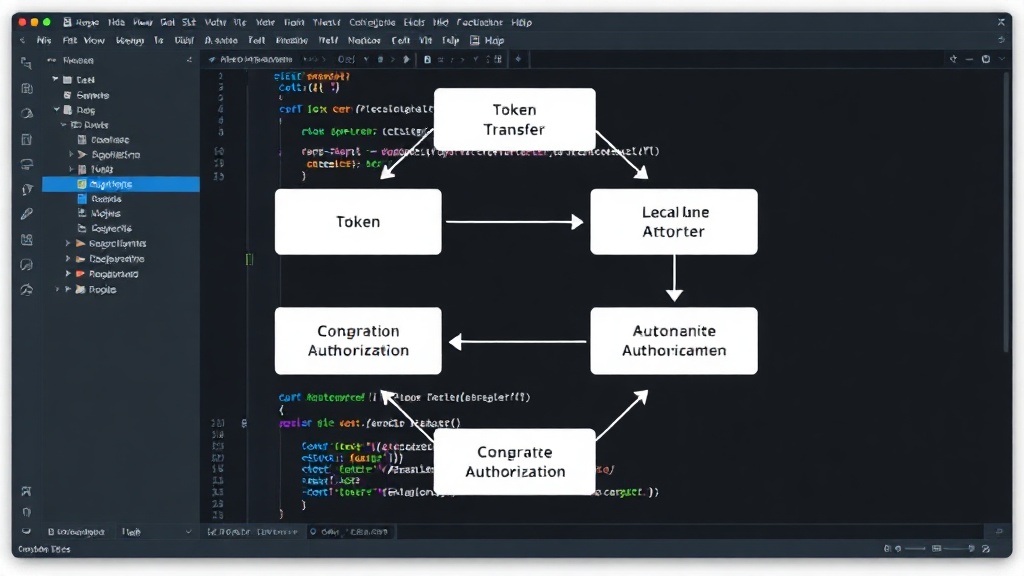
The primary pitfall DeskCrew encountered involved the lifecycle of these authorizations. EIP-3009 authorizations are not permanent. They have a defined expiry time, and they are typically single-use. The DeskCrew facilitator was designed to verify a payment by checking if a valid, non-expired authorization existed for the transaction. The problem arose when the facilitator would accept an authorization, grant access, but fail to immediately claim the funds. This left the door open for a specific type of attack: a replay attack, or more accurately, a stale authorization exploit.
Imagine a client initiates a payment, receives an authorization, and then, due to network latency or a temporary facilitator issue, retries the request *before* the facilitator has claimed the funds. If the facilitator's logic only checks for the *existence* of a valid authorization and not its *claimed status*, it could mistakenly grant access again. This is akin to a cashier accepting a voucher for a free coffee, giving you the coffee, and then failing to mark the voucher as used. You could, in theory, try to use the same voucher again.
The critical realization for the DeskCrew team was that the facilitator must not only verify the authorization's validity (correct signature, correct amount, correct recipient, not expired) but also confirm that the funds have been *claimed* by the facilitator's smart contract. If the funds are unclaimed, the facilitator must then initiate the claiming process itself. This step ensures that the authorization is consumed and the payment is truly settled. Without this, an attacker could potentially reuse an authorization, effectively getting service without paying the full price, or even draining funds if the authorization allowed for a larger amount than the immediate transaction required.
Mitigation: Robust State Management
To prevent this, DeskCrew refactored their facilitator's logic. The new process is more robust:
- When a client retries with an authorization, the facilitator first checks its validity (signature, network, amount, expiry).
- If valid, it then checks the on-chain state of the authorization. Has it already been claimed by *this* facilitator?
- If it has been claimed, the request is rejected as a duplicate or already settled.
- If it is valid but *not yet claimed*, the facilitator's smart contract immediately initiates the claim transaction to debit the client's USDC.
- Only after the claim transaction is confirmed on-chain (or at least sent and pending with sufficient gas) is access granted.
This ensures that each authorization is effectively a single-use token for payment. The facilitator actively consumes the authorization by claiming the funds, preventing reuse. This state management is crucial for any service implementing x402, especially when self-hosting, as it requires direct interaction with the blockchain to confirm fund settlement.
The Cost of Ignorance
The near-miss could have had significant financial implications. Had an attacker exploited this vulnerability, DeskCrew would have provided services without receiving payment. While the amounts for individual transactions are small (five cents), a coordinated attack could have scaled rapidly, leading to substantial revenue loss. Furthermore, it would have severely damaged the trust and reliability of their payment system, which is the bedrock of their offering. The cost of fixing this bug after it was exploited would have been far greater than the proactive investment in understanding EIP-3009's nuances.
Self-hosting an x402 facilitator offers control and deep insight, but it demands a comprehensive understanding of the underlying standards. EIP-3009 is not merely about signing a token transfer; it's about managing the lifecycle of that authorization and ensuring the actual settlement of funds. For developers considering self-hosting, treating authorizations as ephemeral and actively claiming them is paramount. Failure to do so leaves your service vulnerable to financial loss and reputational damage.
What nobody has addressed yet is the operational overhead and complexity of managing gas fees for these automatic claims. While the facilitator initiates the claim, it needs sufficient gas to do so. How do self-hosted facilitators manage this gas efficiently across multiple chains and fluctuating network conditions without becoming a de facto custodian of funds for gas purposes?