WOS: Long-Term Memory for AI Agents

Wontopos has developed WOS, a system designed to provide long-term memory for AI agents. The core function of WOS is to store an end-user's memories and then intelligently recall only the relevant pieces for each query. This recalled information is then fed into a Large Language Model (LLM) prompt. WOS caters to two primary use cases. For developers building AI-powered products, the WOS SDK offers fine-grained control. Developers can programmatically decide precisely when to store new memories and what subset of existing memories to retrieve for any given query. For users who prefer off-the-shelf tools, Wontopos offers the MCP (Memory Command Processor). This allows users to leverage WOS's memory capabilities without writing any integration code. Tools like Claude Code, Claude Desktop, Cursor, VS Code, Windsurf, and Gemini CLI already integrate with MCP. Crucially, both the SDK and MCP share the same underlying account, ensuring that memories stored via one interface are accessible and recallable through the other.
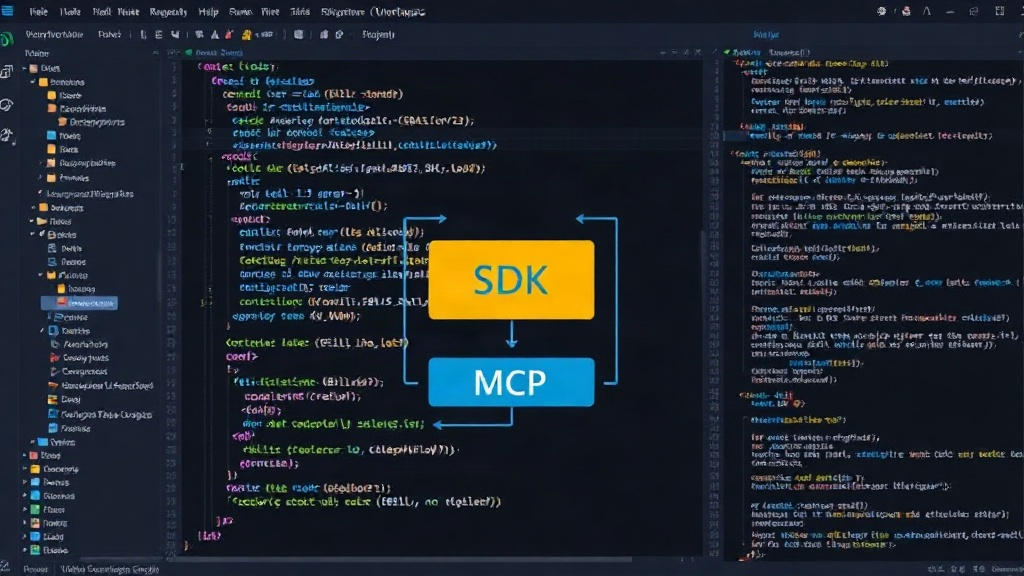
Wontopos WOS system architecture diagram showing SDK and MCP integration

Bounded Recall and Cost Efficiency

A key technical challenge in providing long-term memory for AI is managing the cost and complexity of retrieving relevant information as the data volume grows. WOS addresses this by ensuring that each query returns a small, bounded set of memories. This design means that the input cost for LLM prompts does not increase proportionally with the total amount of data stored. In practical terms, a memory store that has been accumulating data for a year will not incur higher retrieval costs than a newly created one. This predictable cost structure is a significant advantage for applications that require extensive historical context without incurring runaway expenses. The system's architecture is built to handle this by efficiently indexing and searching through vast quantities of stored information. When a query is made, WOS doesn't simply dump all available data. Instead, it employs sophisticated retrieval mechanisms, likely involving vector embeddings and similarity searches, to identify the most pertinent memories. These selected memories are then presented in a concise format, optimized for LLM processing. This selective recall is central to WOS's value proposition, enabling AI agents to maintain context over long periods without the prohibitive cost of processing gigabytes of irrelevant data for every interaction.

Developer Control and User Experience

The dual approach of offering both an SDK and a pre-built tool integration (MCP) allows Wontopos to serve a broad audience. Developers gain the flexibility to embed sophisticated memory capabilities directly into their applications, tailoring the storage and retrieval logic to their specific needs. This could range from a coding assistant remembering project-specific conventions to a customer support bot recalling past interaction histories. The SDK provides the building blocks for these custom solutions. Conversely, the MCP abstracts away the technical complexities. Users of supported applications can benefit from persistent memory across sessions and tools without any technical overhead. If a user stores a piece of information using Claude Desktop, that memory is available when they use Gemini CLI, for example, because both are connected to the same Wontopos account. This seamless experience is crucial for user adoption, making AI agents feel more like persistent, knowledgeable assistants rather than stateless tools that forget everything after each session. The underlying data storage mechanism is designed for durability and efficient access. While the specifics of the indexing and retrieval algorithms are proprietary, the outcome is consistent: fast, cost-effective retrieval of contextually relevant information. This is paramount for AI agents that need to act with a deep understanding of past events or user preferences. For instance, an AI agent designed for personal finance management could recall a user's stated budget goals from months ago to inform a current spending recommendation. Without WOS, such long-term contextual recall would be prohibitively expensive or technically infeasible for most developers. The company's focus on long-term memory addresses a critical gap in the current AI landscape. Many LLMs, while powerful in processing information, have limited context windows. WOS effectively extends this window by acting as an external, intelligent memory store. This allows AI agents to build continuous, evolving relationships with users and data, moving beyond single-turn interactions to more sustained and context-aware dialogues. The ability to manage and recall memories efficiently is what differentiates WOS, making it a foundational component for more sophisticated and personalized AI applications.