Beyond Dictation: Building a Voice-First Workflow with Wispr Flow
The promise of voice computing has long been about hands-free convenience. For professionals, particularly developers and client-facing roles, this often translates to more than just dictating emails. Wispr Flow, a platform designed to bridge the gap between spoken intent and actionable tasks, is gaining traction by enabling users to build robust, voice-controlled workflows. This isn't just about transcribing speech; it's about orchestrating complex operations through natural language commands. The recent focus on a hands-on guide and an accompanying open-source Skills kit signals a move towards empowering users to create their own voice-first client work systems, moving beyond simple dictation to a more integrated, task-oriented approach.
The core philosophy centers on a simple yet powerful rule: one spoken sentence should equate to one complete task. This means commands must be specific, encompassing the 'what,' 'for whom,' and 'what comes out.' This precision is crucial for translating natural language into reliable execution. The system aims to abstract away the complexities of underlying tools and APIs, allowing users to focus on the task itself. By treating a spoken sentence as a discrete, executable instruction, Wispr Flow aims to streamline client work, code management, and other operational tasks.

From Spoken Word to Executed Task: Real-World Examples
The practical application of Wispr Flow is best understood through concrete examples. Consider the task of managing code repositories. A command like, "Open a PR with this description: we added a test for the event arriving twice, run the tests and attach the result," demonstrates how a single, well-formed sentence can initiate a multi-step process. Wispr Flow, or a custom agent built upon it, can interpret this, create a new branch, write the test, execute it, and then return a link to the newly created Pull Request. This transforms a series of manual steps into a fluid, spoken interaction.
Another scenario involves client management. Imagine needing to update a client's status or generate a report. A spoken instruction could be, "Update client X's status to 'Onboarding Complete' and send them the welcome packet." This single command could trigger updates in a CRM, initiate an email sequence, and log the action, all without touching a keyboard. The system's ability to parse context, identify entities (like client names and statuses), and execute corresponding actions is key to its utility. These examples highlight the potential for significant productivity gains in roles that involve frequent interaction with various software tools.
Building Your Own Voice-First Rails: The Wispr Flow Ecosystem
Wispr Flow is more than just an end-user application; it's a framework for building custom voice-controlled systems. The platform provides the underlying intelligence to interpret natural language and connect it to various services and applications. The recent emphasis on an open-source Skills kit is a critical component of this ecosystem. Skills are essentially modular, reusable pieces of functionality that can be invoked by voice commands. By making these Skills open-source, Wispr Flow encourages community contribution and allows users to extend the platform's capabilities far beyond what a single company could develop.
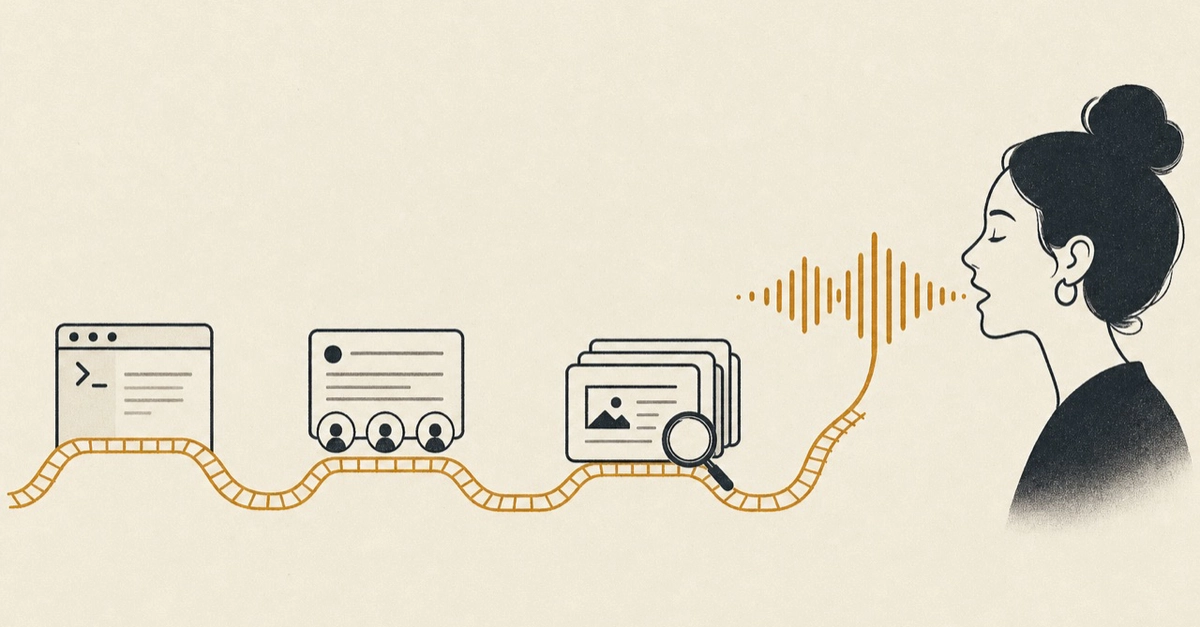
Installing these Skills is designed to be straightforward. The guide mentions that as few as two lines of code can be sufficient to integrate a new Skill. This low barrier to entry is crucial for adoption. Developers can leverage existing Skills or contribute their own, creating a virtuous cycle of innovation. The 'rail' itself, as described in the guide, refers to the interconnected system of Wispr Flow, a voice processing engine (like MCP, which is included), and these custom Skills. Building this rail involves setting up the connections between these components, a process the guide aims to demystify with practical, step-by-step instructions. A one-week task list is provided, suggesting a structured approach to onboarding and customization.
The Future of Client Work: Voice as the Primary Interface
The implications of a mature voice-first workflow extend to how client work is managed and executed. For agencies and service providers, this could mean faster turnaround times, reduced administrative overhead, and improved client communication. The ability to rapidly initiate tasks, retrieve information, and update systems via voice can free up valuable time for more strategic or creative endeavors. Furthermore, for individuals with physical limitations or those who simply prefer a hands-on-free approach, Wispr Flow offers a compelling alternative to traditional keyboard-and-mouse interfaces.
The surprising detail here is not just the existence of Wispr Flow, but its explicit focus on enabling users to build *their own* rails. Many voice assistants offer pre-defined commands. Wispr Flow, however, positions itself as a platform for bespoke voice solutions. The open-source Skills kit democratizes this capability, allowing anyone to contribute or adapt functionalities. This shift from a closed ecosystem to an open, community-driven model is what truly sets this approach apart. It’s an invitation for developers and businesses to reimagine their operational interfaces, making voice the primary, not just a secondary, mode of interaction.