WireGuard: More Than Just Encryption
WireGuard, the modern VPN protocol, often gets discussed in terms of its cryptographic speed. While true, this focus can obscure a more fundamental aspect of its operation: it encapsulates entire IP packets, not just application-level data. This distinction is crucial for understanding how VPNs function and how WireGuard achieves its efficiency.
Unlike protocols like TLS, which encrypt a stream of data (like HTTP requests over TCP), WireGuard operates at the network layer. It takes an IP packet destined for a private network and wraps it inside another IP packet. This outer packet, containing the encrypted inner packet, is then sent across the public internet to the VPN server. The server decrypts the outer packet, revealing the original inner IP packet, and forwards it to its intended destination. This process is mirrored in reverse for traffic flowing from the private network back to the client.
Think of it less like a secure phone call where only the conversation is encrypted, and more like sending a locked briefcase containing a letter through the postal service. The postal service doesn't care what’s inside the briefcase, only where it’s going. WireGuard acts like that secure briefcase, ensuring the contents (the original IP packet) are protected during transit and delivered to the correct endpoint.
The Ciphertext/Cleartext Ping Analogy
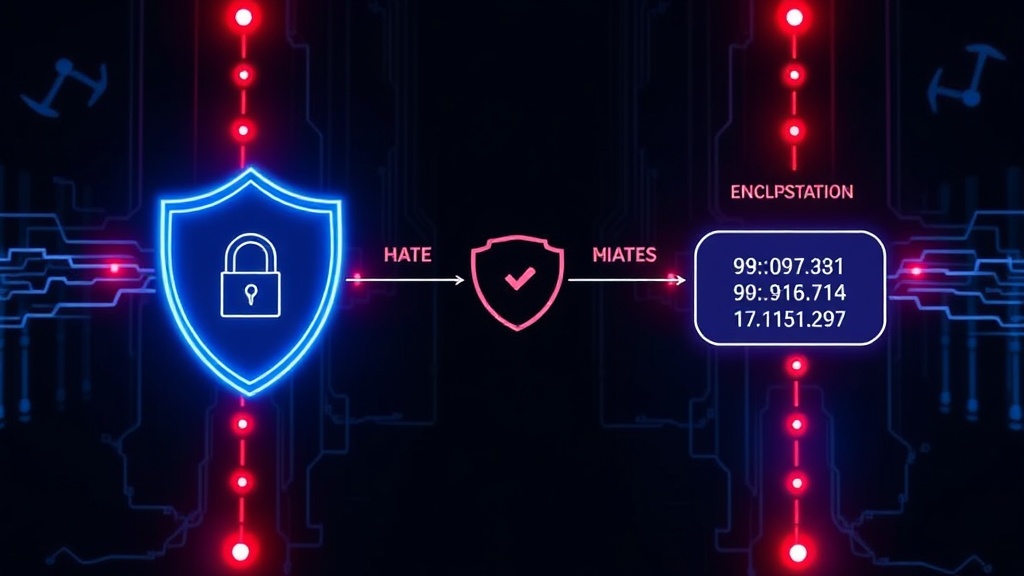
The core insight highlighted by the Protocol Lab series is that a WireGuard ping, when viewed from different perspectives, appears as either ciphertext or cleartext. For the WireGuard endpoints themselves, the ping is a standard ICMP echo request/reply, meaning cleartext at the IP layer. However, to any observer on the untrusted network between the endpoints, that same ping is indistinguishable from random noise – it’s ciphertext.
This duality arises because WireGuard encrypts the *payload* of the outer IP packet. The inner IP packet, including its headers and the ICMP payload, is what gets encrypted. The outer IP packet, which contains the source and destination IP addresses for the VPN tunnel endpoints, remains in cleartext. This outer header is necessary for the public internet routers to direct the encapsulated packet to the correct VPN server. Once it arrives, the WireGuard server decrypts the payload, revealing the original inner IP packet, which can then be routed to its final destination within the private network.
This IP-level encapsulation is a key reason for WireGuard’s simplicity and speed. By avoiding the complexity of protocol-specific framing and focusing on raw IP packet transport, it minimizes overhead. The encryption is applied directly to the entire packet, making the process efficient.
Implications for Network Architects
Understanding this IP-level encapsulation is vital for anyone designing or managing VPN infrastructure. It means that WireGuard secures all IP traffic passing through the tunnel, regardless of the underlying protocols (TCP, UDP, ICMP, etc.). This provides a robust security posture, protecting against eavesdropping and tampering on the public internet.
For developers and network engineers, it implies that the performance characteristics of WireGuard are closely tied to the efficiency of its cryptographic operations and its minimal packet overhead. Unlike older VPN technologies that might add multiple layers of encapsulation or complex state management, WireGuard's design prioritizes a streamlined packet processing pipeline.
The Protocol Lab series, by enabling hands-on building and breaking of network protocols, provides a practical way to grasp these concepts. By constructing a WireGuard tunnel, participants can observe firsthand how IP packets are transformed, encrypted, and routed. This practical experience solidifies the understanding that WireGuard is not merely encrypting data streams but is fundamentally re-packaging and securing network-level packets.
The surprising detail here is not the efficiency of WireGuard’s cryptography, which is well-known, but the fundamental nature of its encapsulation. It treats the IP packet itself as the unit of data to be secured, making it a powerful tool for creating secure, high-performance virtual private networks. This approach simplifies the protocol stack and reduces the attack surface compared to more complex VPN solutions.
What’s Next for Protocol Labs?
The Protocol Lab series continues to demystify complex networking concepts through practical application. Future labs will likely explore other aspects of network security and protocol design, offering developers and network professionals the tools to understand and manipulate the very fabric of internet communication. The ability to see protocols from both sides – as they are on the wire and as they are processed by endpoints – is invaluable for anyone building or securing modern networked systems.