
A New Threat Emerges: The LegacyHive Zero-Day
A potent new zero-day vulnerability, codenamed LegacyHive, has surfaced, capable of granting attackers elevated privileges on even the most up-to-date Windows systems. Discovered and released by a security researcher operating under the alias "Nightmare Eclipse," this exploit bypasses existing security measures to achieve system administrator rights. The implications for organizations and individuals running Windows are significant, as a successful exploitation could lead to complete system compromise.
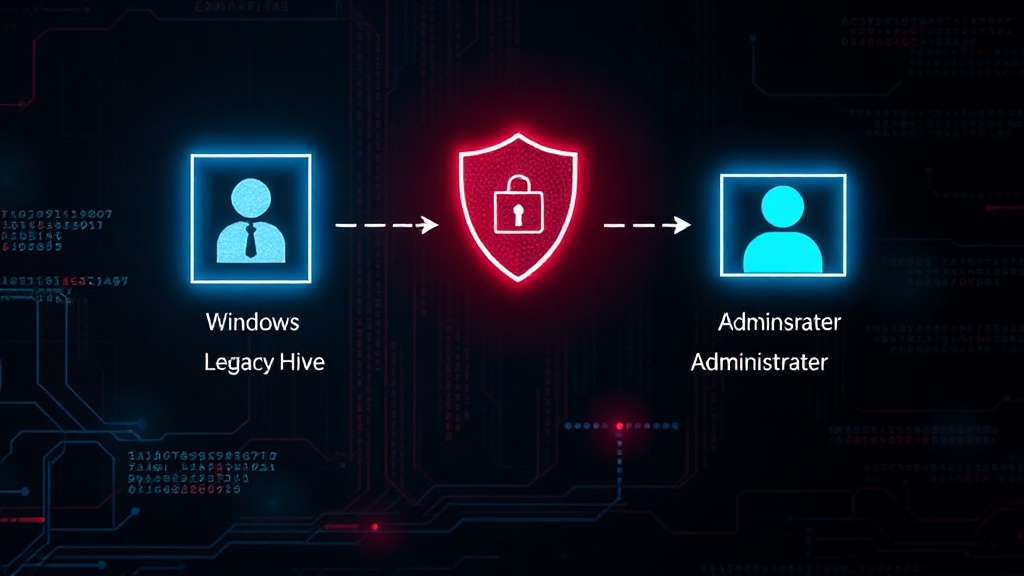
The LegacyHive exploit targets a critical flaw within the Windows operating system that allows for privilege escalation. This means an attacker, who may have already gained initial access to a system through less privileged means, can use LegacyHive to elevate their standing to that of a system administrator. With administrator privileges, an attacker can install programs, view, change, or delete data, and create new accounts with full user rights. This level of access is the ultimate goal for most cybercriminals, enabling them to deploy ransomware, steal sensitive data, or maintain persistent access to a network.
What makes LegacyHive particularly concerning is its classification as a zero-day. This term signifies that the vulnerability is unknown to Microsoft and, therefore, no official patch or fix exists at the time of its public disclosure. Security vendors and operating system developers scramble to develop and deploy a solution once a zero-day is revealed. Until then, systems remain vulnerable, and the exploit can be used maliciously by threat actors.
Understanding the Technical Underpinnings
While the full technical details of the LegacyHive exploit are still emerging, initial reports suggest it leverages a previously unknown flaw related to how Windows handles certain legacy components or registry keys. The name "LegacyHive" itself hints at a potential connection to the Windows Registry Hives, which are database files that store configuration information for operating systems and applications. Attackers may be exploiting a method to manipulate these hives or access critical system information that allows them to impersonate or impersonate an administrator.
The exploit's ability to function on "up-to-date" Windows systems is a key differentiator. This implies that standard patching cycles and common security configurations are insufficient to protect against this specific threat. Attackers could potentially target a wide range of Windows versions, from consumer-grade operating systems to enterprise servers, provided the vulnerable component is present and exploitable. The precise mechanism for achieving this elevation without prior administrative rights is the core of the zero-day's danger.
Security researchers are now working to reverse-engineer the exploit and understand the exact nature of the vulnerability. This process typically involves analyzing the provided exploit code, examining system behavior during exploitation, and correlating findings with known Windows architecture and APIs. The goal is to pinpoint the specific function or system call that is being abused and to identify the conditions under which it can be triggered.
Implications for System Administrators and Security Teams
The emergence of LegacyHive presents a significant challenge for IT and security professionals. With no immediate patch available, organizations must rely on immediate, albeit often temporary, mitigation strategies. These can include enhanced monitoring for suspicious activity, stricter access controls, and potentially disabling specific services or features that are believed to be related to the exploit, if such connections can be definitively made.
The immediate aftermath of a zero-day disclosure is a race against time. Threat actors will attempt to weaponize the exploit and deploy it in the wild, while defenders work to understand and block it. This period, often referred to as the "vulnerability window," can last days, weeks, or even months, depending on the complexity of the vulnerability and the speed of the vendor's response. During this window, systems remain exposed.
For security teams, the priority is to:
- Monitor for Indicators of Compromise (IoCs): Look for any network traffic or system behavior that matches known exploit patterns or suspicious administrative actions.
- Harden Systems: Implement stricter access controls, limit administrative privileges to only essential personnel, and disable unnecessary services.
- Stay Informed: Closely follow security advisories from Microsoft and reputable security researchers for updates on the vulnerability and the availability of patches.
- Consider Advanced Threat Detection: Employ Endpoint Detection and Response (EDR) solutions that can identify anomalous behavior indicative of privilege escalation, even if the specific exploit is unknown.
What nobody has fully addressed yet is the potential for this vulnerability to be a gateway for more sophisticated, multi-stage attacks. A successful LegacyHive exploit might not be the end goal for attackers, but rather the first step in a larger operation to infiltrate corporate networks or deploy widespread malware.
The Vendor Response and Future Outlook
Microsoft has been notified of the LegacyHive zero-day and is expected to investigate the vulnerability thoroughly. The company's response will involve developing a security update, often delivered through its regular Patch Tuesday cycle or as an out-of-band update if the threat is deemed sufficiently critical. Until then, users and organizations are advised to exercise extreme caution and to implement any recommended workarounds provided by security vendors.
The release of such a potent zero-day by a security researcher, rather than a known nation-state actor or cybercriminal group, highlights the evolving landscape of cybersecurity. Researchers often disclose vulnerabilities to encourage patching and improve overall security, but the risk of misuse by malicious actors remains high once the information is public. The community will be watching closely for Microsoft's official response and for any further details that emerge regarding the LegacyHive exploit's precise nature and impact.