
The Allegation: AI Distillation Under Scrutiny
The U.S. government has accused Chinese AI company Moonshot of illicitly copying the behavior of Anthropic's commercial AI model, Fable. This accusation, brought forth by White House officials and echoed by Treasury Secretary Scott Bessent, centers on a technique known as model distillation. The Treasury has warned that sanctions could be imposed if the claims are substantiated, raising significant international concerns over AI development and intellectual property.
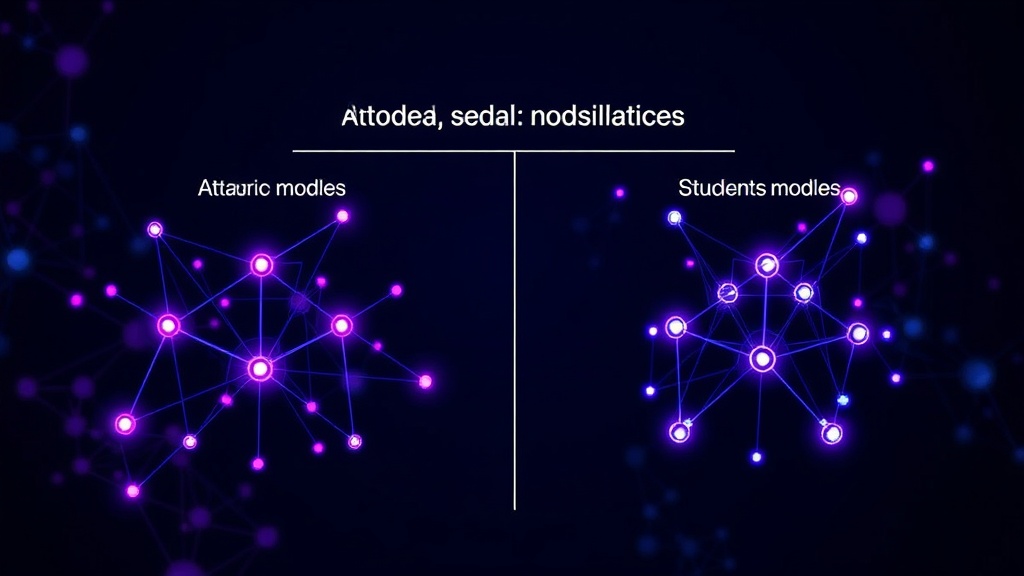
Model distillation is a technique where a new, often smaller and more efficient, AI model is trained by learning from the outputs of a larger, more capable "teacher" model. Instead of processing vast amounts of raw data from scratch, the student model mimics the responses and decision-making patterns of the teacher. When conducted legitimately, it's a standard method for optimizing AI performance and reducing computational costs. However, using a commercial model as an unpaid teacher without permission constitutes a form of intellectual property theft, akin to cloning the model's behavior at a fraction of the development cost and effort.
The core of the White House's claim is precisely this: that Moonshot leveraged Anthropic's proprietary model to train its own without authorization, effectively stealing its learned capabilities. This practice, if proven, would not only violate terms of service for commercial AI models but also represent a significant breach of ethical and legal standards in AI development.
What is Model Distillation?
At its heart, model distillation is about knowledge transfer in artificial intelligence. Imagine a seasoned expert (the teacher model) who has spent years learning a complex skill. Instead of a new student having to go through the same arduous learning process from basic textbooks, the expert directly shows the student how to perform the task, providing examples and correcting mistakes. The student model, in this analogy, learns by observing and replicating the expert's actions and reasoning.
In technical terms, the teacher model, which is typically large, computationally expensive, and highly accurate, generates a dataset of input-output pairs. This dataset is then used to train a smaller, more efficient "student" model. The student model's objective is to minimize the difference between its own outputs and those of the teacher model, thereby learning to emulate the teacher's behavior. This process can significantly reduce the size and inference cost of the resulting model, making advanced AI capabilities more accessible for deployment in resource-constrained environments.
Legitimate uses of distillation include creating specialized models for mobile devices, reducing latency in real-time applications, or developing more cost-effective versions of large language models for specific tasks. For instance, a large model trained on general internet text could be distilled into a smaller model specialized for customer service interactions, learning the nuances of polite and helpful responses from its larger counterpart.
Moonshot's Kimi K3 and Anthropic's Fable
The specific models at the center of this dispute are Moonshot's Kimi K3 and Anthropic's Fable. The White House alleges that Moonshot used Fable, a commercial model developed by the U.S.-based AI company Anthropic, as the teacher model for Kimi K3. Anthropic, known for its focus on AI safety and its Claude family of models, has invested heavily in developing its proprietary AI architectures and training methodologies. Fable, while perhaps less publicly known than Claude, represents a significant commercial asset for the company.
Moonshot, a Chinese AI firm, is seeking to establish a strong presence in the global AI market. Developing sophisticated AI models often requires substantial investment in data, computing power, and research talent. The accusation suggests that Moonshot may have sought to shortcut this process by leveraging the already-developed capabilities of Anthropic's Fable model. If Kimi K3's performance closely mirrors Fable's across a range of tasks, it would lend credence to the distillation claim.
The implications of this alleged act extend beyond a single company dispute. It touches upon the broader geopolitical landscape of AI development, where nations and companies are racing for dominance. The U.S. government's swift response, including the threat of sanctions, signals a determination to protect its technological intellectual property and maintain a competitive edge in the AI sector.
The Broader Implications for AI Development and Geopolitics
This accusation brings into sharp focus the ethical and legal gray areas surrounding AI development, particularly in the context of international competition. The rapid advancement of AI models relies on continuous innovation, but also on the protection of intellectual property. Techniques like distillation, while valuable for efficiency, can be weaponized for illicit gain if not governed by clear ethical and legal frameworks.
The U.S. government's stance is clear: unauthorized use of commercial AI models for training constitutes a serious offense. The threat of sanctions against Moonshot, and by extension potentially other Chinese AI firms, underscores the strategic importance the U.S. places on maintaining leadership in AI technology. This move could signal a more aggressive approach to policing AI development and intellectual property across international borders.
For developers and companies worldwide, this incident serves as a critical reminder of the need for transparency and adherence to terms of service. It also highlights the growing complexity of the AI supply chain and the potential for disputes over data and model ownership. The debate over AI distillation and intellectual property will likely intensify, pushing for clearer regulations and international agreements to govern the development and deployment of AI technologies.
The surprise here is not necessarily that AI models can be copied, but the specific mechanism alleged – distillation – and the direct, high-level government intervention. Typically, such disputes might be handled through civil litigation or industry-specific arbitration. The White House's involvement, coupled with the threat of sanctions, elevates this from a commercial disagreement to a matter of national security and international trade policy.
What remains to be seen is the specific evidence the U.S. government possesses to substantiate its claims. The technical details of how Kimi K3 was developed will be crucial. If Moonshot can demonstrate independent development or legitimate use of publicly available data and techniques, the allegations may not hold. However, if the performance parity between Kimi K3 and Fable is significant and demonstrably linked to unauthorized training data derived from Fable's outputs, the consequences for Moonshot and potentially for U.S.-China tech relations could be severe.