
Optimizing SVG Rendering in WebKit
Igalia has published an update detailing significant progress on its layer-based SVG engine within WebKit. The primary focus of this work is the reduction of layer overhead, a critical factor in ensuring smooth and efficient rendering of complex Scalable Vector Graphics (SVG) content in web browsers. As web applications increasingly leverage intricate vector graphics for user interfaces, data visualizations, and interactive elements, the performance of SVG rendering becomes paramount.
Traditionally, SVG rendering has posed challenges due to its declarative nature and the potential for highly complex graphical structures. Web browsers employ various techniques to manage and render these graphics, often involving the creation of layers to isolate elements and facilitate efficient updates. However, an excessive number of layers can lead to increased memory consumption and processing overhead, negatively impacting rendering speed and overall user experience.
Igalia's initiative aims to address this by implementing a more intelligent layer management strategy. The core idea is to avoid creating unnecessary layers or to consolidate existing ones where possible without compromising the integrity or update performance of the SVG content. This approach requires a deep understanding of how SVG elements interact and how changes to one element might affect others, influencing the need for separate rendering layers.
Conditional Layer Creation Strategy
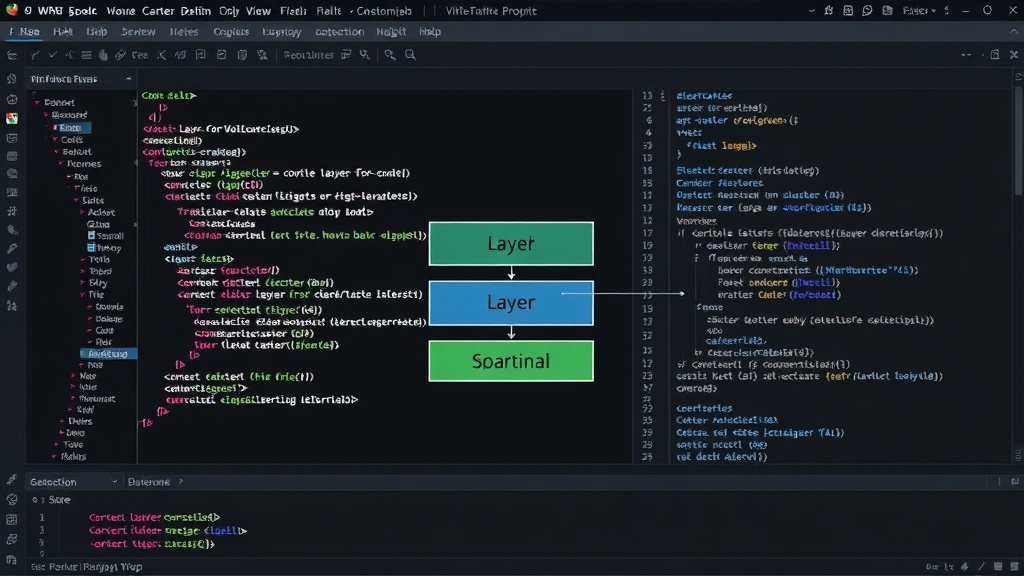
The key innovation discussed in Igalia's update revolves around a conditional layer creation strategy. Instead of defaulting to creating a new layer for every potentially independent graphical element or group, the engine now analyzes the properties and relationships of SVG elements before committing to layer allocation. This analysis takes into account factors such as transformations, clipping paths, masks, and filter effects, which often necessitate distinct rendering surfaces.
For instance, elements that are static, do not possess complex styling that requires isolation, or are fully contained within another element's transform context might not need their own dedicated layer. By identifying these scenarios, the engine can reuse existing layers or render elements directly onto their parent layer, significantly reducing the total number of layers managed by the compositor. This is akin to an efficient file system that avoids creating a new directory for every single file when a parent directory can accommodate them all.
The update highlights specific scenarios where this conditional approach proves most beneficial. Elements that are part of a larger group but do not have unique clipping or transform properties are prime candidates for being rendered within their parent's layer. This avoids the overhead associated with allocating, managing, and compositing a separate layer for each such element. The engine intelligently determines if an element's rendering context warrants its own layer or if it can be safely batched with others.
Performance Implications and Future Work
The implications of this optimized layer management are substantial. Reduced layer overhead translates directly to lower memory footprints for web pages heavy with SVG content. This is particularly beneficial for resource-constrained devices and for users who have many complex web applications open simultaneously. Furthermore, fewer layers mean less work for the browser's compositing engine, leading to faster rendering times, smoother animations, and improved responsiveness, especially during user interactions that trigger graphical updates.
While the progress is significant, Igalia emphasizes that this is an ongoing effort. Future work will likely involve further refinement of the heuristics used to determine layer necessity, potentially incorporating more advanced analysis of element dependencies and rendering contexts. The goal is to achieve a near-optimal balance between layer isolation for efficient updates and minimal layer count for reduced overhead. The team is also focused on ensuring broad compatibility across different SVG features and browser environments.
The development benefits from close collaboration within the WebKit project, allowing for tight integration and testing. As this work matures, it promises to make WebKit, and by extension browsers that use it like Safari, more capable of handling the ever-growing complexity of modern web graphics without performance penalties. This is not just an optimization; it's a foundational improvement for how vector graphics are handled on the web.