The Problem: No Browser-Based BRSTM Tool Existed
For game modders and enthusiasts working with Nintendo's Wii and GameCube systems, converting audio files to the BRSTM format (a variant of the widely used HPS audio format) has historically been a desktop-bound affair. Existing tools like BrawlBox for Windows, the Java-dependent Looping Audio Converter, or custom command-line utilities required users to install software or compile code. This left users on macOS, Linux, or those seeking quick, on-the-fly conversions without local installations in a difficult position. The core challenge wasn't the BRSTM format itself, but the reliance on specific native C libraries for both encoding and decoding. Encoding BRSTM often leverages libraries like DspTool, designed for desktop environments. Decoding the proprietary game audio formats that feed into BRSTM, such as ADX, HCA, and FSB, typically requires the extensive C codebase of vgmstream, a project representing decades of reverse-engineered audio format support.
The Solution: WebAssembly as a Universal Bridge
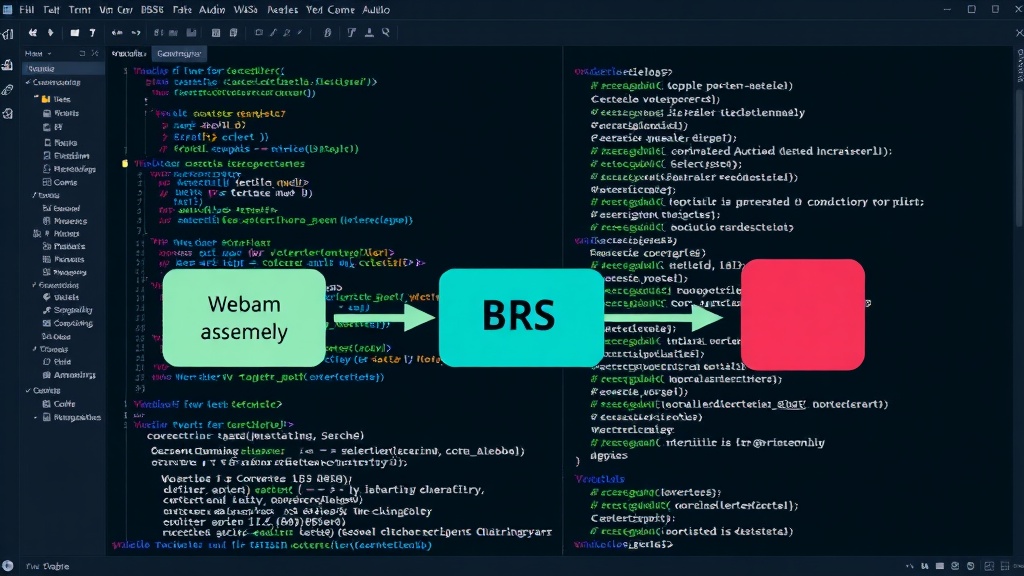
The breakthrough came with the adoption of WebAssembly (Wasm). By compiling the necessary C libraries to WebAssembly, these native functionalities could be run directly within a web browser. This approach bypasses the need for user-side installations and platform-specific binaries, offering a universally accessible solution. The architecture of the converter involves several key components working in concert. The primary goal was to enable users to upload audio files, have them processed by the Wasm modules, and then download the converted BRSTM file, all within a single web page.
Technical Architecture: Leveraging WebAssembly Modules
The converter's architecture is built around three distinct WebAssembly modules, each handling a specific part of the conversion pipeline. This modular approach allows for cleaner code management and potential future expansion. The first module is responsible for the initial decoding of various input audio formats (like WAV, MP3, OGG) into a raw PCM format that the BRSTM encoder can understand. This module needs to be robust enough to handle different audio codecs, though for simplicity, common formats are prioritized. The second module is the core BRSTM encoder itself. This is where the DspTool library, or a similar encoding logic, is compiled into WebAssembly. It takes the raw PCM data and applies the BRSTM-specific encoding, including loop points and header information, crucial for game engine integration. The third module orchestrates the process, managing the loading of the Wasm modules, handling file uploads and downloads via JavaScript, and facilitating data transfer between the modules. This JavaScript layer acts as the glue, providing the user interface and controlling the execution flow.
The Encoding Challenge: Bridging C to WebAssembly
Compiling C libraries like DspTool for WebAssembly presents unique challenges. DspTool is a relatively small, focused library, making it a good candidate for porting. The process typically involves using tools like Emscripten, which translates C/C++ code into WebAssembly and JavaScript glue code. Emscripten handles memory management, function calling conventions, and interaction with the browser environment. For DspTool, this meant ensuring that its internal data structures and I/O operations could be mapped to WebAssembly's linear memory and JavaScript APIs. File handling, for instance, often involves reading file data into Wasm memory via JavaScript and then writing the processed output back out. The key was to create a Wasm module that could be instantiated in the browser and called via JavaScript functions, exposing the necessary encoding functions.
The Decoding Challenge: Integrating vgmstream
The decoding side is significantly more complex due to the sheer size and scope of vgmstream. This C library is a powerhouse for game audio, supporting hundreds of formats. Porting such a massive codebase to WebAssembly is a substantial undertaking. While the article doesn't detail the full integration of vgmstream, the implication is that a subset of its decoding capabilities, specifically for formats commonly preceding BRSTM (like ADX, HCA, FSB), would need to be compiled and optimized for the browser. This requires careful consideration of memory usage and performance, as browser environments have limitations not present in native desktop applications. The goal here is not necessarily to decode every format vgmstream supports, but to cover the most relevant ones for BRSTM conversion workflows.
User Experience and Workflow
The end result is a web application where users can simply drag and drop their audio files, select any necessary encoding parameters (if exposed), and initiate the conversion. A progress indicator would typically show the status of the upload, processing, and download. This dramatically lowers the barrier to entry for game modding and audio manipulation. Developers and users no longer need to navigate complex build processes or install potentially untrusted desktop applications. The browser becomes the universal platform, abstracting away the underlying operating system and library dependencies. This democratizes access to tools that were previously confined to specific user groups or technical skill sets. The surprising detail here is not the technical feat of compiling these libraries, but the realization that such complex, niche audio processing can now be done client-side, in real-time, with no server-side processing required for the core conversion.
Future Possibilities and Implications
This approach opens the door for a wider range of browser-based audio tools for game development and modding. Imagine in-browser audio editors that can directly import and export game-specific formats, or tools that assist with audio asset management for game projects. The success of this BRSTM converter demonstrates the power of WebAssembly in bringing sophisticated native applications into the browser. It suggests that many more complex libraries and tools, previously restricted to desktop environments, could be made accessible through a web interface. This could foster more collaborative development environments and lower the technical hurdles for aspiring game developers and modders.