The Allure of Speed: Simplicity vs. Complexity
Building a browser extension to control video playback speed and track learning analytics across popular platforms like Udemy, Coursera, LinkedIn Learning, and Skillshare seemed straightforward to Clayton Chow. He envisioned a weekend project. The user interface, a floating control panel, and the core functionality of altering video playback rates—achieved with a simple JavaScript snippet like document.querySelector('video').playbackRate = 2.5—were indeed trivial. Chow estimates this part took mere hours, a testament to the accessibility of front-end web technologies.
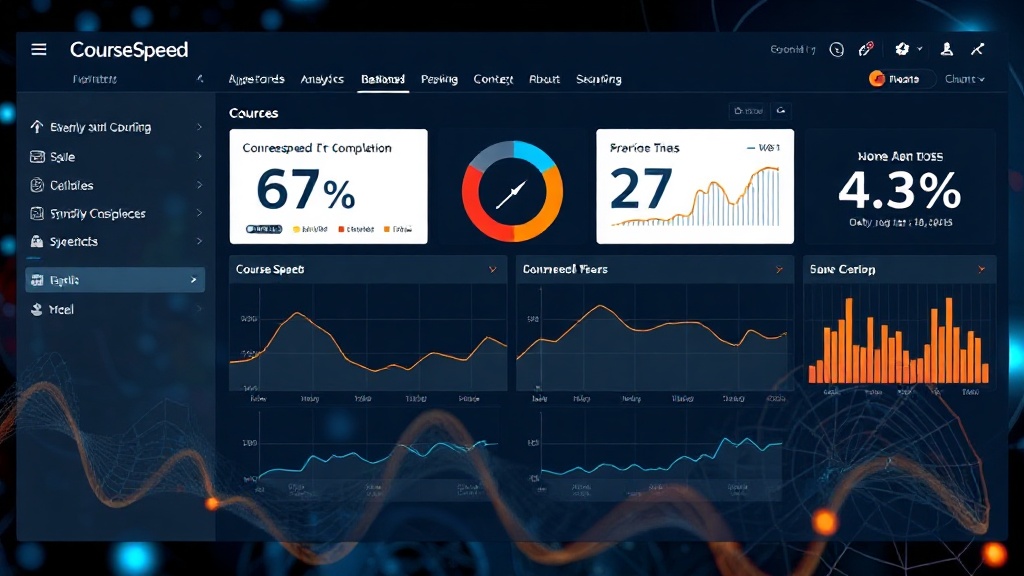
However, the project, named CourseSpeed, quickly revealed a deeper, more insidious complexity: accurately measuring effective watch time. What appeared to be a simple task of monitoring video playback quickly devolved into a significant engineering hurdle when Chow attempted to build robust learning analytics. The initial assumption that measuring time spent watching videos would be a direct correlation to user engagement proved to be fundamentally flawed, especially when dealing with the dynamic nature of modern web applications.
The Analytics Nightmare: SPAs and Effective Watch Time
The core of the problem lay in differentiating between wall-clock time (the actual time elapsed on a user's clock) and effective watch time (the duration the user genuinely spent engaging with the video content). This distinction became critical when CourseSpeed needed to report on user learning progress. The challenge was amplified by the diverse architectures of the target platforms, many of which are Single Page Applications (SPAs).
SPAs load content dynamically without full page reloads. This means that traditional methods of tracking time spent on a page, which often rely on page load events or navigation history, are insufficient. For video analytics, this translates to difficulties in accurately timestamping when a video starts, stops, pauses, or when a user navigates away from the video player or the entire application. A user might leave a tab open but be actively engaged elsewhere, or they might rapidly switch between videos and learning materials, all while the browser reports the tab as active.
Chow's first attempt at an analytics tracker was a naive implementation. It likely relied on basic JavaScript timers or event listeners that didn't account for the asynchronous loading and dynamic content updates characteristic of SPAs. This led to absurd results: a 14-hour certification course being logged as completed in 47 minutes, simply because the 16x speed toggle was being tested. This discrepancy highlighted a critical flaw: the analytics engine was measuring the duration the video element was present and playing at a high speed, rather than the actual time a user was consciously watching and absorbing the material.
The Technical Hurdles: Event Listeners and SPA Navigation
To accurately capture effective watch time, Chow had to delve into more sophisticated tracking mechanisms. This involved:
- Robust Event Monitoring: Instead of relying on simple `play` and `pause` events, Chow needed to capture a broader spectrum of user interactions. This includes detecting when a video element is visible in the viewport, when the user actively interacts with the player controls (beyond just speed), and when the user navigates away from the video player or the browser tab.
- SPA Lifecycle Awareness: Understanding how each target platform's SPA framework (e.g., React, Angular, Vue.js) manages state and navigation became crucial. This meant listening for route changes, content loading indicators, and other signals that signify a shift in the user's focus within the application.
- Buffering and Network Issues: Simply tracking playback duration also fails to account for buffering or network interruptions. Effective watch time should ideally only count periods where the video is playing smoothly and the user is present.
- Cross-Platform Normalization: Each platform (Udemy, Coursera, etc.) has its own unique DOM structure, event handling, and navigation patterns. Developing a universal solution that works reliably across all of them required significant reverse engineering and adaptability.
The process of fine-tuning these analytics involved extensive debugging and iteration. Chow likely had to implement custom event listeners, use `MutationObserver` to detect DOM changes, and potentially employ `requestAnimationFrame` for more precise timing. He also had to develop logic to infer user presence, perhaps by monitoring mouse movements or keyboard activity within the relevant video player context, and to handle cases where the video might be playing in a background tab.
The Unforeseen Cost: Time and Effort
What began as a weekend project ballooned into a significant engineering undertaking due to the analytics component. Chow explicitly states that the UI was the easy part; the analytics nearly broke him. This experience underscores a common pitfall in software development: underestimating the complexity of data collection and interpretation, especially in dynamic and varied environments like the modern web.
The initial goal of CourseSpeed was to enhance the learning experience by allowing users to consume content faster. However, the pursuit of meaningful analytics—to prove learning efficacy or track progress accurately—introduced a disproportionate amount of development effort. This is a stark reminder that for many developers, the 'hidden' infrastructure and data processing layers often prove far more challenging than the user-facing features they are designed to support.
Broader Implications for Learning Tools
Chow's experience with CourseSpeed offers a valuable lesson for anyone building educational technology or tools that rely on tracking user engagement. The simplicity of injecting a playback speed modifier belies the deep technical challenges in measuring genuine learning or interaction. As more platforms become SPAs and user behavior becomes more complex, the need for sophisticated, context-aware analytics will only grow. Developers must anticipate that accurately measuring time, engagement, and progress in such environments requires more than just basic event listeners; it demands a deep understanding of web technologies, application architectures, and user behavior modeling.
This situation is analogous to building a high-performance car. Designing the sleek body and comfortable interior is one thing; engineering the engine, transmission, and suspension to work flawlessly under all conditions is another, far more demanding task. The latter requires specialized knowledge, meticulous tuning, and extensive testing—much like Chow's journey with CourseSpeed's analytics.