
Introducing Vida: Your AI Digital Twin for Work
Vida is a new AI-powered tool designed to automate repetitive digital tasks by learning your workflow and acting proactively, essentially creating an AI clone of your work habits. The core promise of Vida is to handle the mundane, often time-consuming tasks that bog down productivity, freeing up users to focus on more strategic or creative endeavors. Imagine an assistant that not only understands your instructions but anticipates your needs, completing tasks before you even think to ask.
The platform operates by observing user interactions across various applications. Through this observation, Vida builds a detailed model of your digital behavior. This model then allows Vida to execute tasks autonomously. This approach moves beyond simple task automation, where users explicitly define every step. Instead, Vida learns the nuances of your work, including context and intent, to provide a more sophisticated level of assistance.
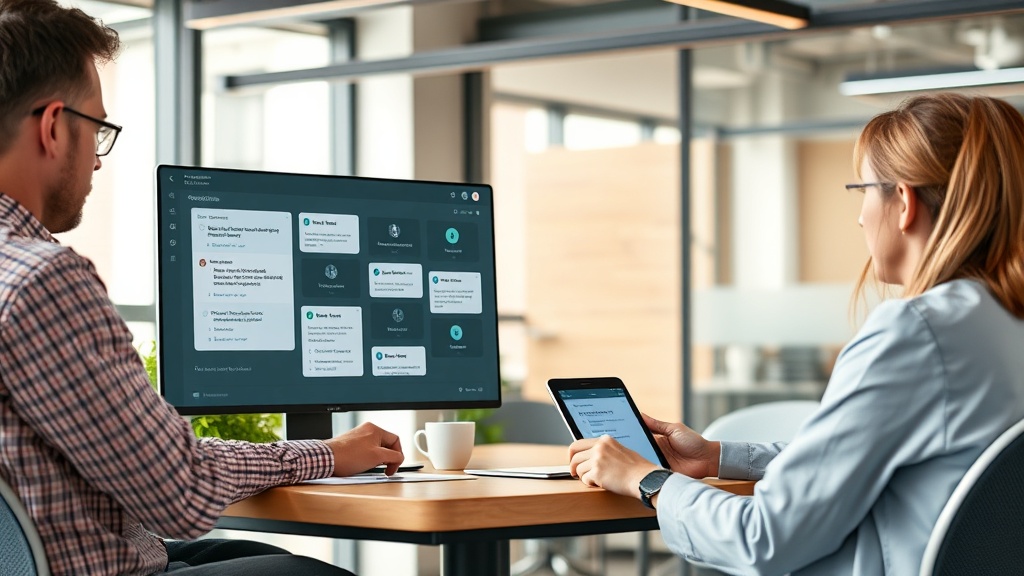
How Vida Learns Your Workflow
Vida's learning mechanism is central to its functionality. It employs a combination of techniques to capture and interpret user actions. This isn't about recording screen activity like a simple macro recorder. Vida aims to understand the 'why' behind your clicks and keystrokes. By analyzing sequences of actions, the types of data being manipulated, and the applications involved, Vida infers the underlying goal of a particular workflow.
For instance, if you regularly copy data from a CRM, paste it into a spreadsheet, perform some calculations, and then draft an email summarizing the findings, Vida learns this entire sequence. It identifies the specific fields you extract from the CRM, the formulas you apply in the spreadsheet, and the typical structure of your summary emails. The AI then generalizes this pattern, making it capable of performing the same task on new data without explicit re-prompting for each step. This generalization is key to its proactive capabilities.
The system is designed to be adaptable. As your workflows evolve, Vida continues to observe and update its internal models. This ensures that the AI remains relevant and effective, even as your job responsibilities or software tools change. The goal is to create a digital twin that mirrors your current operational efficiency and can step in to assist at any moment.
Proactive Automation: The Next Frontier
The real differentiator for Vida lies in its proactive nature. Most automation tools require a trigger – a button click, a scheduled time, or a specific input. Vida, however, aims to identify opportunities for automation independently. Based on its learned patterns and contextual understanding, it can initiate tasks when it detects a situation that mirrors a previously automated workflow.
Consider a scenario where you receive an invoice email. If Vida has learned your process for handling invoices – such as extracting key details like vendor name, amount, and due date, logging it into an accounting system, and scheduling a payment reminder – it can detect the incoming invoice email and begin processing it. It might prompt you for a final confirmation before committing to the action, or it might execute the task entirely if its confidence level is high and the workflow is deemed low-risk. This proactive intervention significantly reduces the time spent on manual data entry and administrative overhead.
This proactive capability transforms the user experience from one of active command to one of passive oversight. Users are no longer burdened with initiating every small action. Instead, they can focus on higher-level decision-making, trusting Vida to manage the operational details. The platform is positioned as a force multiplier, amplifying individual productivity by taking on the digital grunt work.
Potential Applications and User Impact
The applications for Vida are broad, spanning various professional roles. For sales professionals, it could automate lead enrichment, CRM data entry, and personalized outreach email drafting. For customer support agents, it might handle ticket categorization, data logging, and response template population. Data analysts could leverage Vida to automate data cleaning, report generation, and initial data visualization tasks. Even for developers, it could potentially automate routine code documentation, environment setup, or bug report processing.
The impact on users is expected to be substantial. By offloading repetitive tasks, Vida promises to reduce burnout and increase job satisfaction. It allows individuals to dedicate more time to complex problem-solving, skill development, and strategic thinking. This shift could lead to greater innovation and efficiency across organizations. The concept of 'cloning yourself' through AI speaks to the ambition of augmenting human capability to an unprecedented degree.
However, the success of such a tool hinges on its accuracy, security, and ease of use. Users need to trust that Vida will not make critical errors or compromise sensitive data. The learning process must be intuitive, and the ability to correct or guide the AI when it misunderstands a task will be crucial for widespread adoption.
The Road Ahead
Vida represents a significant step towards more intelligent and autonomous digital assistants. The challenge lies in perfecting the AI's ability to understand context and intent across a diverse range of applications and user behaviors. As AI continues to evolve, tools like Vida could fundamentally change how we interact with our digital environments, making work more efficient and less burdensome. The vision is clear: let AI handle the repetitive, allowing humans to focus on the uniquely human aspects of work.