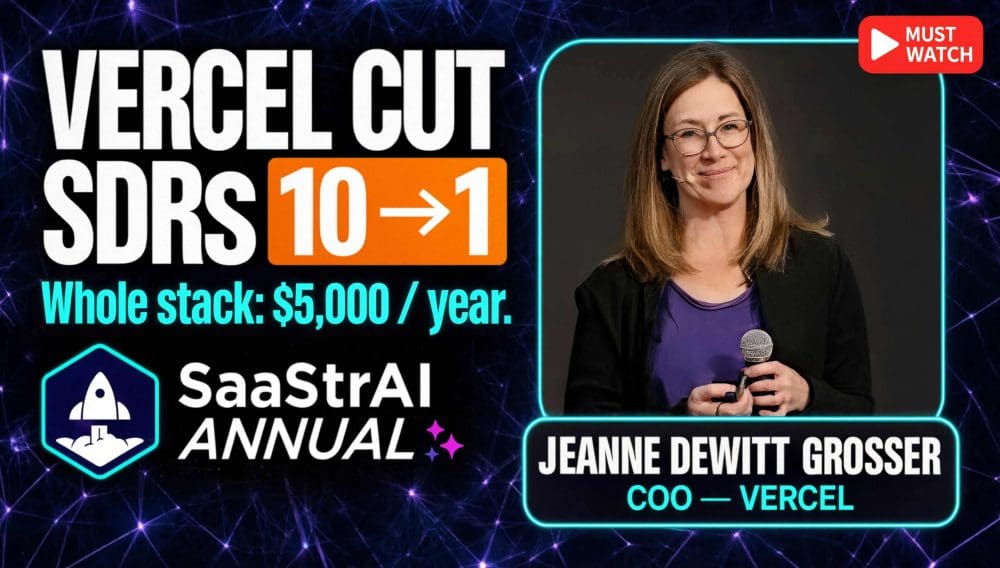
The AI-Driven Go-to-Market Shift
Vercel's approach to go-to-market (GTM) has undergone a dramatic transformation, a testament to the accelerating impact of AI on sales operations. Jeanne DeWitt Grosser, Vercel's Chief Operating Officer, spearheaded this evolution. With a decade of experience leading GTM at tech giants like Google and Stripe, Grosser joined Vercel in June 2025. Within her first six weeks, she established a dedicated GTM engineering team, a nascent concept at the time, tasked with integrating AI agents across all facets of the go-to-market strategy. This initiative, predating the widespread adoption of the term "GTM engineering," has now yielded significant operational efficiencies and cost reductions.From Ten to One: The SDR Team Overhaul
Previously, Vercel operated with a 10-person Sales Development Representative (SDR) team. This team was responsible for initial outreach, lead qualification, and setting up meetings for the sales team. However, the landscape of sales engagement is rapidly changing, driven by advancements in AI and automation. Recognizing this shift, Grosser and her team re-evaluated the necessity and structure of their SDR function. The outcome was a radical consolidation: reducing the 10-person SDR team to a single individual, supported by a sophisticated AI infrastructure. This move is not merely about headcount reduction; it's a fundamental re-architecture of how Vercel engages with potential customers. The AI agents are designed to handle many of the repetitive and time-consuming tasks previously performed by human SDRs. These tasks include initial lead scoring, personalized outreach at scale, and even preliminary qualification based on predefined criteria. This allows the sole human operator to focus on higher-value activities, such as managing complex accounts, building strategic relationships, and closing deals that require a human touch and nuanced understanding.Unprecedented Cost Efficiency: $5,000 Annually
The financial implications of this GTM re-engineering are staggering. Vercel's entire operational cost for this AI-augmented SDR function now stands at approximately $5,000 per year. This figure starkly contrasts with the substantial salaries, benefits, and overhead associated with a 10-person team. The cost savings are not just in direct compensation but also in recruitment, training, management, and the physical office space that a larger team would require. This radical efficiency frees up capital that can be reinvested in product development, marketing, or other strategic growth areas.