The Production Imperative: Why Separation Matters

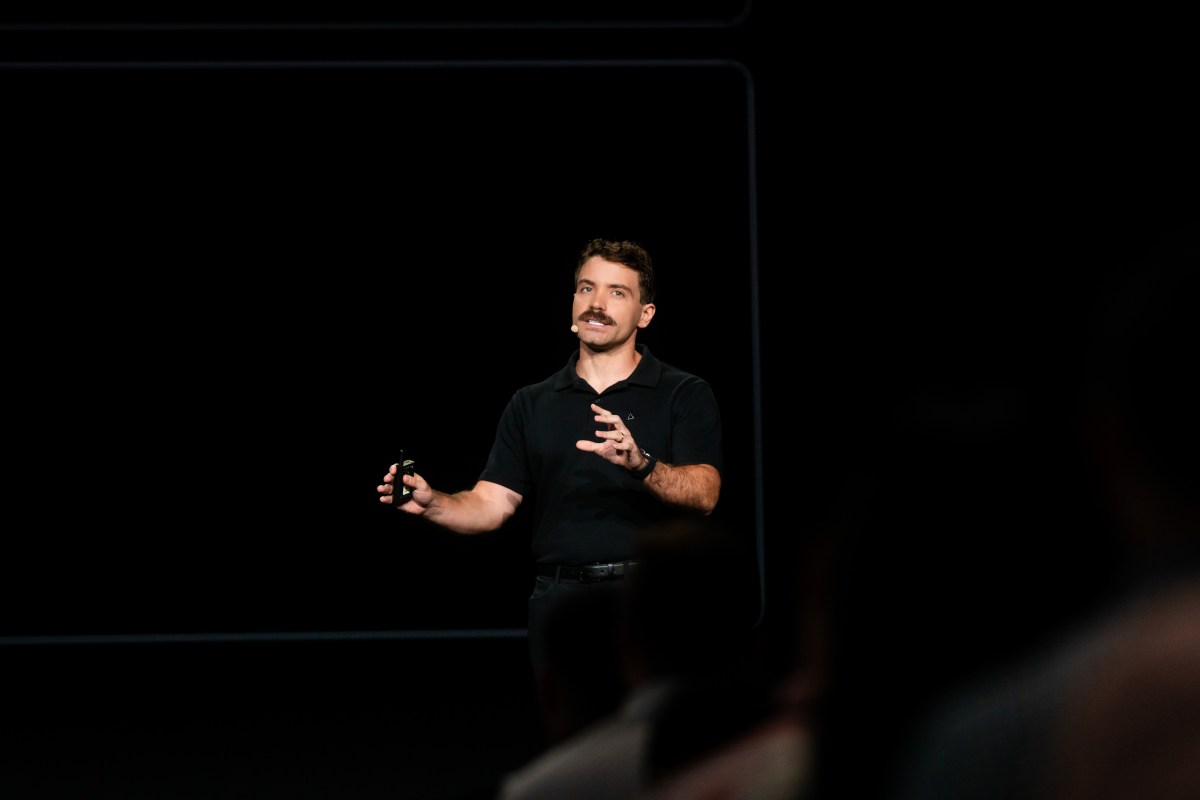
Vercel CEO Guillermo Rauch is making a strong case for a fundamental architectural shift in how AI applications are built and deployed. The core of his argument centers on the practical realities of optimizing for production environments, where cost and performance are paramount. Rauch, speaking with TechCrunch, articulated a vision where AI models and the agents that orchestrate them are treated as distinct entities, a departure from the current trend of tightly coupled systems. "The reality is, when you're optimizing for production, you start looking at a price/performance," Rauch stated. This simple observation cuts to the heart of a growing challenge for developers building AI-powered applications. As these applications move from experimental phases to live, user-facing products, the economics of inference, latency, and resource utilization become critical. Current frameworks often bundle the AI model – the core intelligence – with the agent – the logic that decides when and how to use the model, its tools, and its memory. This bundling, Rauch contends, creates inefficiencies. Agents frequently need to be updated with new tools, conversational logic, or safety guardrails. Similarly, models themselves are subject to rapid iteration, with new versions offering improved accuracy, speed, or cost-effectiveness. When these two components are intertwined, updating one often necessitates redeploying or reconfiguring the other, leading to increased complexity, longer deployment cycles, and higher operational costs. It’s akin to having your car’s engine permanently welded to its navigation system; any upgrade to your GPS requires a major overhaul of the powertrain.

Deconstructing the Agent-Model Relationship

Rauch’s proposed separation aims to create a more modular and flexible AI architecture. In this model, the AI model (e.g., a large language model like GPT-4, Claude 3, or Llama 3) would exist as a distinct, callable service. The agent, on the other hand, would be responsible for the application-specific logic: interpreting user input, selecting appropriate tools (like a calculator, a database query function, or an external API), deciding when to invoke the AI model, and processing its output. The agent would then communicate with the AI model service via a well-defined API. This separation offers several key advantages. Firstly, it allows for independent scaling. If the AI model is experiencing high demand, it can be scaled independently of the agent infrastructure. Conversely, if the agent logic becomes a bottleneck (perhaps due to complex tool orchestration), it can be scaled without affecting the model inference servers. This granular control is vital for managing fluctuating workloads and optimizing resource allocation. Secondly, it simplifies development and iteration. Developers can experiment with new models or fine-tuned versions without altering the agent's core functionality. Conversely, they can deploy new agent behaviors or integrate new tools without needing to re-evaluate or re-deploy the underlying AI model. This agility is crucial in the fast-moving AI landscape.

Diagram illustrating a decoupled AI agent and model architecture with clear API boundaries
Thirdly, and perhaps most importantly for production, it unlocks significant cost efficiencies. Developers can choose the most cost-effective model for a given task and swap it out as better or cheaper options become available. The agent can be optimized for low-latency execution of its logic, while the model inference can be managed based on its specific cost profile. For instance, a simple retrieval task might use a cheaper, smaller model, while a complex reasoning task could leverage a more powerful, albeit more expensive, model, all orchestrated by the same agent.

The 'Price/Performance' Trade-off

Rauch’s emphasis on "price/performance" is not merely an economic consideration; it's a strategic one. For Vercel, a platform focused on deploying web applications and increasingly, AI-powered features, enabling developers to build and scale cost-effectively is fundamental to their value proposition. If building AI features becomes prohibitively expensive, adoption will stall. By advocating for a decoupled architecture, Vercel is positioning itself to support developers who are grappling with these production realities. Consider the development of a customer support chatbot. The agent component needs to understand user queries, access customer history from a database, and potentially escalate to a human agent. The AI model component is responsible for generating natural language responses, summarizing conversations, and perhaps classifying sentiment. If these are tightly coupled, updating the customer database schema or adding a new tool for checking order status would require a potentially complex redeployment of the entire AI stack. With a decoupled approach, the agent can be updated to query the new database schema or use the new tool, and the AI model can remain unchanged, or be updated independently if its response generation needs improvement. This architectural pattern is not entirely novel. In traditional software development, microservices architectures have long championed the separation of concerns and independent deployability. Rauch is essentially advocating for applying these proven principles to the burgeoning field of AI agents and models. The challenge lies in the tooling and frameworks that currently dominate the AI development space, which often favor convenience and rapid prototyping over production-ready modularity.

Implications for Developers and the Ecosystem

The broader implications of this separation are significant. It suggests a future where developers can more easily mix and match best-of-breed components. Instead of being locked into a specific vendor's end-to-end solution, developers could use an open-source agent framework, a commercial LLM API, and a custom-built tool, all seamlessly integrated. This fosters competition and innovation across the entire AI stack. For founders, this means greater flexibility in choosing their technology stack and a clearer path to managing operational costs as their applications scale. It lowers the barrier to entry for building sophisticated AI features and reduces the risk of vendor lock-in. The ability to optimize price/performance directly impacts the runway and profitability of AI-first startups. What remains to be seen is how quickly the existing AI development frameworks and platforms will adapt to this decoupled paradigm. Many are built around the convenience of integrated agent-model experiences. A widespread shift towards separation will require significant updates to popular libraries and tools, and a change in developer mindset. However, the economic pressures of production deployment are a powerful motivator. Rauch’s argument highlights a critical tension between the rapid innovation in AI models and the pragmatic demands of shipping reliable, cost-effective applications. The fight to split off models from agents is, in essence, a fight for the future of production-ready AI.