Ventorah: CFD in Your Browser
Ventorah is a new browser-based application that brings computational fluid dynamics (CFD) for aerodynamic analysis directly into the user's web browser. This tool aims to democratize access to sophisticated wind tunnel simulation, making it available to engineers, designers, and hobbyists without the need for expensive, specialized software or powerful local hardware. The core functionality revolves around running virtual wind tunnel tests, allowing users to understand and optimize the aerodynamic performance of their designs.
Traditionally, aerodynamic analysis using CFD has been a complex and resource-intensive process. It typically requires significant investment in high-performance computing (HPC) clusters, specialized software licenses that can cost tens of thousands of dollars per seat, and a steep learning curve for engineers trained in fluid mechanics and simulation software. Ventorah seeks to lower these barriers significantly by leveraging web technologies and cloud-based processing. Users can upload their 3D models, configure simulation parameters, and receive results directly within their browser interface. This approach makes advanced simulation accessible for rapid prototyping, early-stage design validation, and educational purposes.
Key Features and Functionality
Ventorah's primary value proposition lies in its accessibility and ease of use. The platform allows users to upload their 3D CAD models, which can then be subjected to simulated airflow. The system handles the complex meshing, solver execution, and post-processing steps, presenting the results in an understandable format. While the exact technical specifications of the underlying CFD solvers and meshing algorithms are not detailed, the promise is to deliver accurate aerodynamic insights directly from the browser.
The ability to perform virtual wind tunnel analysis in real-time or near real-time is a significant advantage for iterative design processes. Instead of waiting hours or days for simulation results from a remote cluster, designers can potentially get feedback within minutes or a few hours, depending on the complexity of the model and the desired simulation fidelity. This accelerated feedback loop allows for quicker identification of aerodynamic inefficiencies, such as drag-inducing shapes or areas prone to turbulence, and enables faster iteration on design improvements.
For product developers, this means being able to test different design iterations of a product, from automotive components and drone bodies to architectural elements and sporting goods, without the prohibitive cost and time associated with traditional methods. The browser-based nature of Ventorah also implies cross-platform compatibility, meaning users can access the tool from any device with a modern web browser and an internet connection, eliminating the need for specific operating system requirements or installation hassles.
Democratizing Aerodynamic Simulation
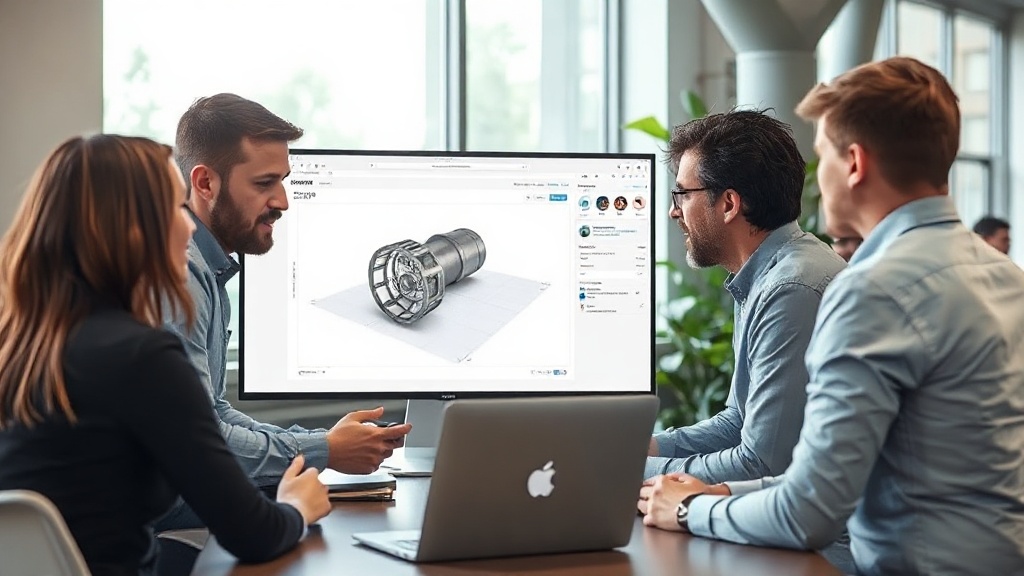
The implications of Ventorah extend beyond individual engineers. For startups and small businesses, it offers a way to incorporate sophisticated aerodynamic analysis into their workflow without the massive capital expenditure typically required. This could level the playing field, allowing smaller entities to compete with larger corporations that have dedicated simulation departments and HPC resources. For educational institutions and students, Ventorah provides an invaluable tool for learning about aerodynamics and CFD principles in a practical, hands-on manner, without the need for costly software licenses that are often out of reach for academic departments.
The underlying technology likely involves a combination of WebAssembly for running computationally intensive tasks client-side or near-client-side, and robust cloud infrastructure for the heavy lifting of simulation processing. This hybrid approach allows for a responsive user experience while still harnessing the power of scalable cloud computing for the demanding CFD calculations. The user interface is designed to abstract away much of the complexity of CFD, presenting options for simulation setup and results visualization that are intuitive and easy to navigate.
The Broader Context of Web-Based Simulation
Ventorah is entering a landscape where computationally intensive tasks are increasingly moving to the cloud and becoming accessible via web browsers. This trend, often referred to as