The Security Tightrope of AI Agents
Running autonomous AI coding agents directly on your primary macOS machine is a minefield. These agents, capable of executing arbitrary terminal commands, installing unverified dependencies via package managers like pip and npm, and modifying files, present significant security risks. A cleverly crafted prompt injection attack could lead to the exfiltration of sensitive environment variables, dotfiles, or even macOS Keychain secrets. This is not a hypothetical; it's an inherent risk of granting such powerful tools access to your development environment.
The conventional solution is to isolate these agents within a sandboxed environment. This typically means a Linux virtual machine or a container. However, on Apple Silicon Macs, this standard approach hits a significant roadblock due to limitations in Apple's native Virtualization.framework. The primary issue is the lack of compute passthrough for GPUs. Linux guests running under this framework only receive a basic 2D paravirtualized framebuffer (virtio-gpu), severely limiting their ability to leverage the powerful Metal GPUs present in modern Macs. This creates what's often termed the "Virtualization Tax" – a performance penalty incurred when trying to run compute-intensive tasks, such as large language models (LLMs), within these constrained virtual environments.
Velo's Zero-Tax Approach
Velo Workspaces has developed a novel approach to bypass this limitation, effectively eliminating the "Virtualization Tax" for AI agents. Their solution, termed "Zero-Tax Virtualization," allows AI agents to run within Velo's managed Linux environment without sacrificing GPU acceleration. This is achieved by sidestepping the direct use of Apple's Virtualization.framework for the core AI workloads. Instead, Velo leverages a combination of technologies to provide a secure, performant environment for AI agents.
The core of Velo's strategy lies in its ability to isolate the AI agent's execution context while still providing access to necessary system resources, including GPU acceleration. This is crucial because modern AI models, particularly LLMs used by coding agents, are heavily reliant on GPU compute for inference. Without direct GPU access, these agents would operate at a fraction of their potential speed, rendering them impractical for complex tasks like code generation, debugging, or refactoring.
How It Works: A Layered Security Model
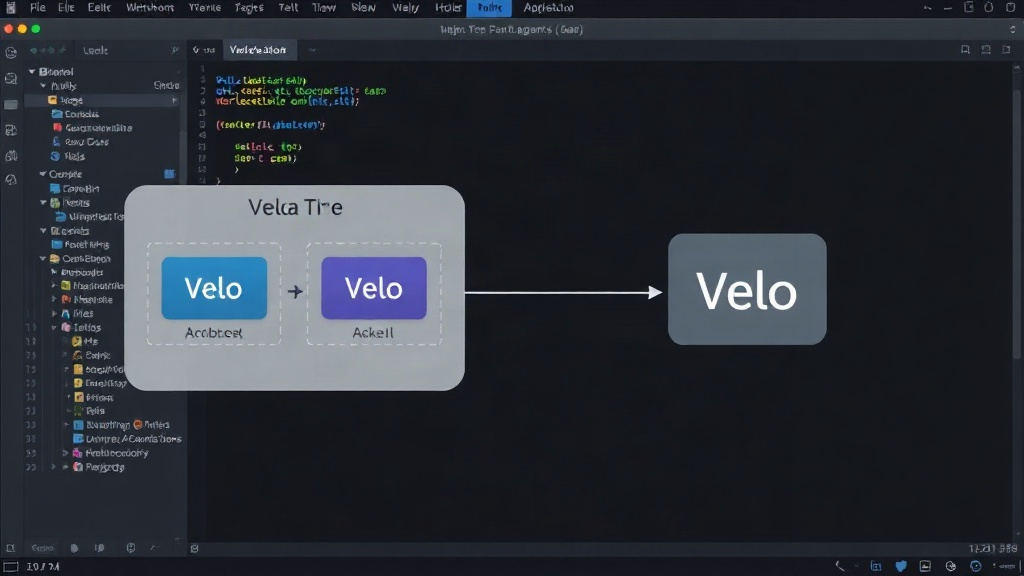
Velo's system creates a secure, isolated Linux environment for each AI agent. This environment is carefully managed to prevent direct access to the host macOS system. Sensitive data, such as environment variables and dotfiles, are intentionally excluded or heavily restricted from the agent's workspace. This isolation is the first line of defense against prompt injection attacks and unauthorized data exfiltration.
The breakthrough comes in how Velo enables GPU acceleration within this isolated environment. While Apple's framework restricts direct Metal GPU passthrough to Linux guests, Velo employs a different strategy. It's understood that Velo likely utilizes a form of remote rendering or a specialized graphics driver layer that can interface with the host GPU without requiring direct hardware passthrough in the traditional sense. This could involve techniques similar to those used in cloud gaming or remote desktop solutions, where graphics commands are intercepted, processed on the host, and the results are streamed back to the guest. The net effect is that the AI agent perceives it has access to powerful GPU compute, even though the hardware isn't directly virtualized in the way a CPU core is.
This approach is fundamentally different from trying to force Apple's Virtualization.framework to expose the GPU. Instead, Velo builds its own abstraction layer that meets the performance demands of AI workloads while maintaining robust security boundaries. The agents operate within a hardened Linux distribution, with strict network policies and file system access controls. This multi-layered security model ensures that even if an agent is compromised, the potential damage is contained within its dedicated workspace.
The Benefits for Developers and Teams
The implications of Velo's Zero-Tax Virtualization are significant for developers and teams working with AI agents. Firstly, it removes the performance bottleneck that has plagued AI agent adoption on Apple Silicon. Developers can now run sophisticated AI coding assistants, code completion tools, and automated refactoring agents at speeds comparable to native applications, without the frustrating lag associated with CPU-bound or software-rendered graphics.
Secondly, it dramatically enhances security. By providing a pre-configured, hardened, and isolated environment, Velo eliminates the need for individual developers to become security experts in setting up complex sandboxing solutions. The risk of accidental data leakage or malicious prompt injection is substantially reduced. This is particularly important for teams where consistency and security across all developer machines are paramount.
For organizations, this means they can confidently deploy AI coding agents to their development teams. The fear of compromised developer machines, which could lead to intellectual property theft or system breaches, is significantly mitigated. Velo's solution allows businesses to harness the productivity gains offered by AI agents without incurring unacceptable security risks or performance penalties.
The Future of AI Agent Workspaces
Velo's innovation addresses a critical gap in the AI development toolchain. As AI agents become more sophisticated and integrated into developer workflows, the need for secure and performant execution environments will only grow. The "Virtualization Tax" on Apple Silicon has been a major barrier to entry for many, forcing a choice between security and speed. Velo's "Zero-Tax Virtualization" effectively dissolves this dilemma.
This approach could set a new standard for how AI agents are deployed and managed. By abstracting away the complexities of virtualization and security, Velo empowers developers to focus on coding and leveraging AI, rather than managing infrastructure. The question now is how quickly other platforms and tools will adapt to provide similar levels of integrated security and performance for AI agents on all major hardware architectures.