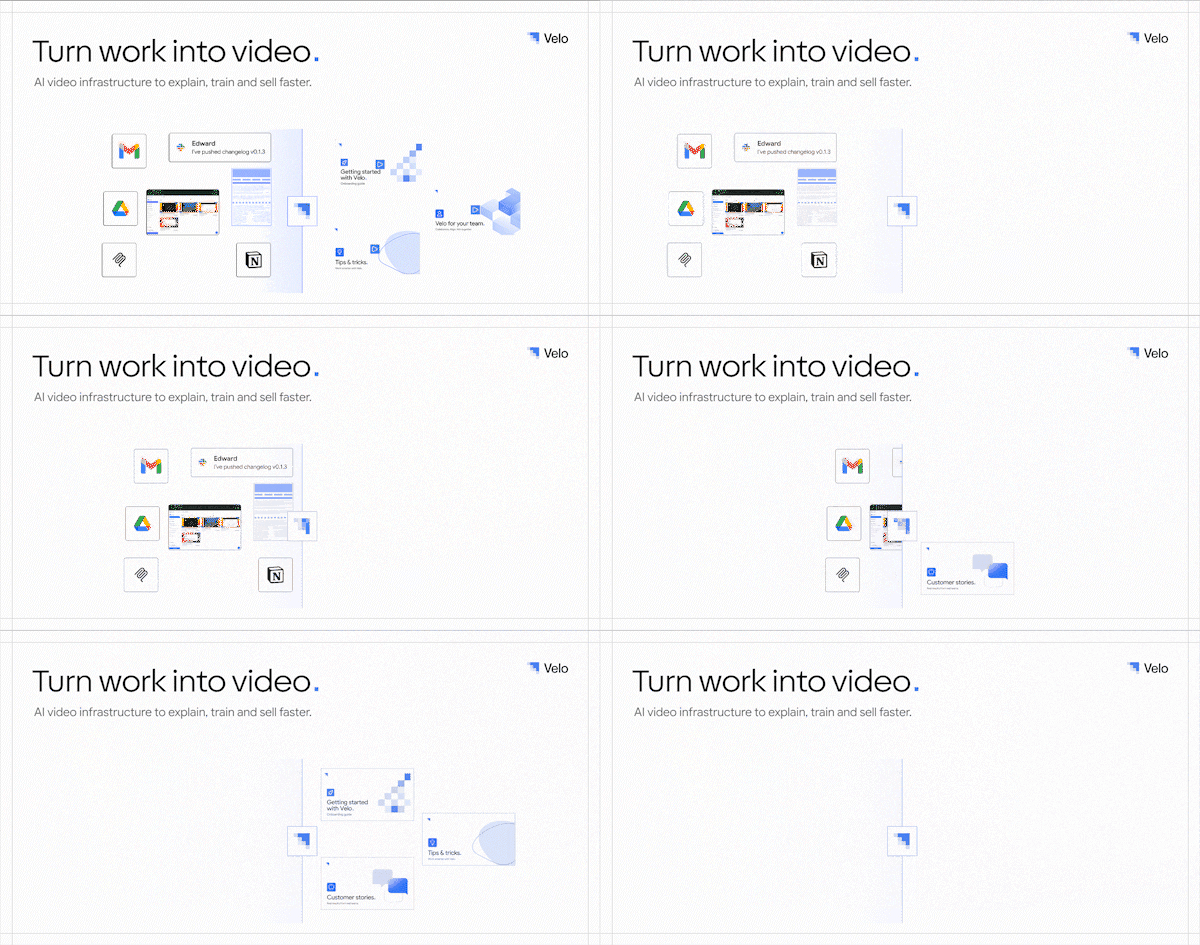
Velo 3.0: AI-Powered Video Infrastructure for Business Acceleration
Velo 3.0 has launched, introducing an AI-driven video infrastructure designed to accelerate business processes like sales enablement, employee training, and product explanation. The platform aims to transform how businesses leverage video content by automating key aspects of video creation, analysis, and distribution.
At its core, Velo 3.0 tackles the growing challenge businesses face in producing and managing high-quality video content efficiently. In today's digital landscape, video is a critical medium for communication, marketing, and education. However, the traditional video production pipeline is often slow, expensive, and resource-intensive. Velo 3.0 seeks to democratize advanced video capabilities by integrating artificial intelligence to streamline these workflows.
The platform's primary focus is on three key areas: explaining products, training employees, and facilitating sales. For product explanation, Velo 3.0 can generate explainer videos that break down complex features or use cases, making them more accessible to potential customers. In the realm of training, it offers tools to create engaging and effective learning modules, potentially reducing onboarding times and improving knowledge retention for employees. For sales, the infrastructure supports the creation of personalized video messages or product demonstrations, aiming to boost conversion rates and customer engagement.

Key Capabilities and AI Integration
Velo 3.0 distinguishes itself through its deep integration of AI across its functionalities. While specific technical details of the AI models are not fully disclosed, the company emphasizes their ability to automate content generation, analyze video performance, and personalize viewer experiences. This allows businesses to scale their video efforts without a proportional increase in human resources.
One of the significant advantages Velo 3.0 offers is the potential for rapid content creation. Instead of lengthy production cycles involving scripting, filming, and editing, the platform's AI can reportedly assist in generating video drafts or components based on input data or existing materials. This could involve turning text documents into narrated videos, creating animated explainers from product specifications, or automatically editing raw footage into polished segments.
Beyond creation, Velo 3.0 incorporates AI for video analytics. This goes beyond basic view counts and engagement metrics. The platform likely analyzes viewer behavior within videos, identifying points of interest, drop-off rates, and sentiment. This data can then inform future content strategy, helping businesses understand what resonates with their audience and where improvements are needed. Think of it less like a simple video player and more like a strategic advisor that watches your videos with your audience and tells you what they're thinking.
Personalization is another critical AI-driven feature. In sales and marketing, Velo 3.0 can enable the creation of videos tailored to individual prospects or customer segments. This could involve dynamically inserting names, company details, or specific product highlights into a video template, making the communication feel more direct and relevant. This level of personalization at scale was previously a significant hurdle for most organizations.
The Broader Impact on Business Video Strategy
The launch of Velo 3.0 signals a broader trend towards AI-powered automation in content creation and management. As businesses increasingly rely on video to connect with customers and employees, tools that reduce friction and increase efficiency become invaluable. Velo 3.0 positions itself as an end-to-end solution for video infrastructure, catering to companies that may not have dedicated video production teams or the budget for extensive outsourcing.
The platform's promise to accelerate training and sales processes is particularly noteworthy. Effective employee training is crucial for skill development and retention, while compelling sales videos can significantly impact revenue. By leveraging AI, Velo 3.0 aims to provide businesses with a competitive edge through enhanced communication and engagement strategies. This moves beyond simply hosting videos to actively using them as dynamic business tools.
What remains to be seen is how easily Velo 3.0 integrates with existing CRM, LMS, and marketing automation platforms. Seamless integration will be key to its adoption by businesses looking to embed AI-powered video into their established workflows. Without it, Velo 3.0 risks becoming another siloed tool rather than a foundational component of a business's digital strategy.
Velo 3.0's entry into the market suggests that AI will play an increasingly significant role in shaping the future of corporate communications. The ability to produce, analyze, and distribute video content more intelligently and efficiently will likely become a key differentiator for businesses across industries.